


.png?h=35&w=35&mode=stretch)
Study Abroad Content Specialist
Studying in the USA is an exciting opportunity, but the costs can be overwhelming, especially for international students. Cost of Studying in the USA can range from $20,000 to over $50,000 per year, and that’s not including room and board, textbooks, and other living expenses. For many international students, including those from India, financing an education abroad can be a significant challenge. Fortunately, work-study programs offer a practical solution to ease the financial burden while providing valuable work experience.
Work-study programs in the U.S. allow students to earn money while studying, helping cover tuition and living costs. On average, 40% of full-time undergraduate students in the U.S. participate in some form of work-study or student employment, according to the National Center for Education Statistics. These programs provide opportunities for part-time employment on or off-campus, and students can earn anywhere from $12 to $20 per hour depending on the institution and type of work.
Also Read: Cost of Living in USA
What are Work-Study Programs in the USA?
Work-study programs in the USA are designed to help students earn money while attending school. International students on F-1 visas can participate in these programs to help offset living and educational expenses. Work-study jobs can be on-campus or off-campus (if related to the student’s course of study).
- Federal Work-Study (FWS): Funded by the U.S. government.
- Institutional Work-Study: Funded by your university or college.
Both options allow students to work part-time, typically 10-20 hours a week, depending on their academic schedule.
Eligibility Criteria for Work-Study Programs in USA
To qualify for a work-study program in the USA, you must meet the following criteria:
- Visa: You must be on an F-1 visa.
- Financial Need: You need to demonstrate financial need by completing the FAFSA (Free Application for Federal Student Aid).
- Enrollment Status: Must be enrolled as a full-time student (usually 12+ credits per semester).
- Good Academic Standing: You must maintain a satisfactory GPA.
- Application for Aid: Submit FAFSA and check with your university’s financial aid office for eligibility.
Types of Work-Study Jobs in USA
Work-study jobs are generally categorized as follows:
| Job Type | Description |
|---|---|
| On-Campus Jobs | Library assistant, dining hall worker, research assistant |
| Administrative Roles | Office assistant, event coordinator, data entry |
| Research Assistant | Assist professors with research in your academic field |
| Tutoring | Help students in subjects you excel in |
| IT Support | Provide tech support in campus labs and offices |
Additionally, some universities offer off-campus work-study jobs in nonprofit organizations or positions related to your course of study.
Also Check: Part-time Jobs in USA
Benefits of Work-Study Programs in USA
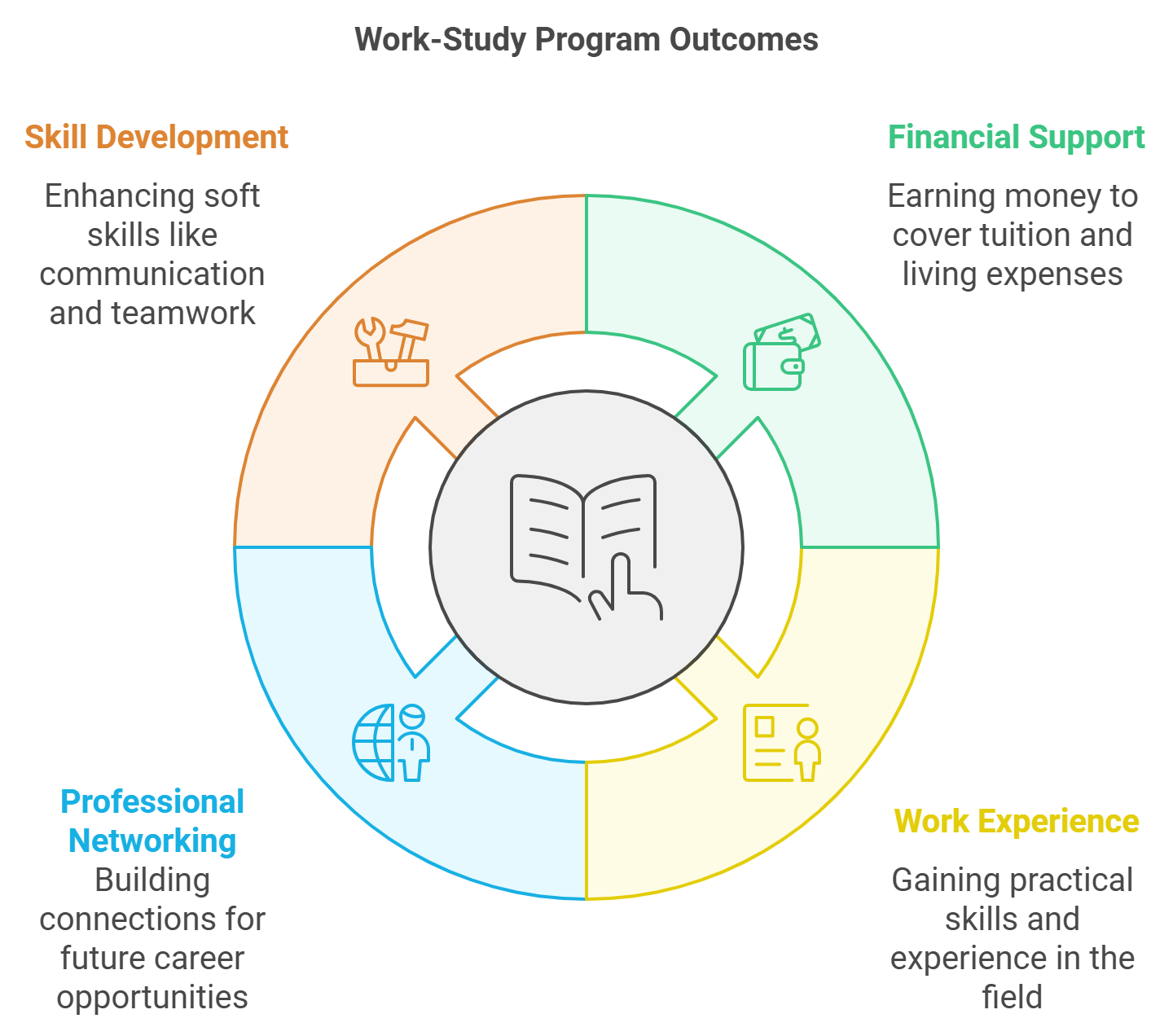
- Financial Support: Helps cover tuition, textbooks, and living expenses.
- Work Experience: Gaining experience in your field boosts your resume.
- Professional Networking: Develop connections that can help in your career post-graduation.
- Skill Development: Enhance soft skills like communication, teamwork, and time management.
- Flexibility: Work hours are typically scheduled around your classes (10-20 hours per week during term time).
How to Apply for Work-Study Programs in USA?
Here’s how to apply for a work-study program in the USA:
- Complete the FAFSA: Apply for federal financial aid by submitting your FAFSA form online.
- Check Eligibility: After FAFSA is processed, verify if you qualify for work-study. If yes, check with your school’s financial aid office about available positions.
- Search for Jobs: Browse the school’s career portal or financial aid office for available work-study positions.
- Apply for Jobs: Submit your applications for positions that align with your skills and interests.
- Attend Interviews: Some positions may require an interview. Be professional and prepared.
- Start Working: Once hired, follow the job guidelines and start earning!
Here are some Job Boards for Work-Study Opportunities in the USA:
| University Career Portals | Most U.S. universities have their own job boards for on-campus work-study, internships, and part-time jobs. Check your university’s career services website or financial aid portal. | [Check your university’s site] |
| Handshake | A platform for students to find on-campus and off-campus jobs and internships. Partnered with many U.S. universities. | handshake.com |
| Indeed | A popular job search site that features part-time, work-study, and student positions. Filter by location, type, and eligibility. | indeed.com |
| A professional networking platform that also posts part-time jobs and internships. Set job alerts for student-specific positions. | linkedin.com | |
| Snagajob | Specializes in hourly, part-time, and student jobs. A great resource for flexible, work-study jobs that fit around academic schedules. | snagajob.com |
| WayUp | A job board dedicated to college students and recent graduates, offering internships, work-study positions, and entry-level jobs. | wayup.com |
| SimplyHired | Similar to Indeed, SimplyHired aggregates job listings across the internet. You can filter for work-study jobs in specific categories. | simplyhired.com |
Top US Colleges with Best Work-Study Opportunities
Here are some of the best universities offering excellent work-study opportunities:
| University | Work-Study Opportunities | Hourly Pay | Other Details |
|---|---|---|---|
| Penn State | Offers FWS, community service, and academic-related work-study jobs. | $12/hr (undergrad) | Includes childcare, museums, and schools. |
| USC | Both FWS and institutional work-study programs available. | $14/hr (grad) | On-campus and local nonprofit jobs. |
| Cornell | FWS and community service jobs. Offers both FWS and Employment Earnings Eligibility. | $15/hr | Direct deposit of wages, academic flexibility. |
| Columbia | Offers FWS positions across various departments and community organizations. | $15–21.75/hr | Competitive hourly wages, bi-weekly payments. |
| University of Michigan | Offers both FWS and institutional work-study jobs. | $15/hr | Flexible job options with varying hours. |
| New York University (NYU) | FWS jobs in academic and non-academic departments. | Varies ($15-$21/hr) | Jobs in departments, gyms, libraries, etc. |
Note: Wage rates and opportunities may vary based on the university and the type of position. It is crucial to check your university’s career portal for specific details.
Things to Keep in Mind
- Working Hours: As an F-1 student, you can work up to 20 hours per week during the semester. During breaks, you may work full-time (40 hours/week).
- Taxes: Work-study income is taxable. Make sure to file your tax returns.
- Pay Rates: The pay for work-study jobs is generally at least the federal minimum wage ($7.25/hour), but it may be higher depending on the position and your qualifications.
- Job Flexibility: Some jobs may require more hours, especially during peak periods like exam weeks, so plan your schedule carefully.
- Job Competition: Work-study jobs can be competitive. Apply early, be proactive, and maintain a good academic record.
Work-study programs in the USA offer a fantastic opportunity for international students, especially Indian students, to gain financial independence while enhancing their academic experience. Whether you choose a federal work-study position or an institutional job, these opportunities provide more than just extra cash—they offer valuable work experience, professional development, and the chance to build your network in the USA. By following this guide and preparing thoroughly, you can maximize the benefits of work-study programs and have a successful academic journey in the USA
FAQs
Ques. Can Indian students apply for federal work-study (FWS) jobs directly, or do they need a separate application?
Ans. Indian students on F-1 visas cannot directly apply for Federal Work-Study (FWS) positions without going through the U.S. financial aid system. To be eligible for FWS, students must complete the FAFSA (Free Application for Federal Student Aid) to demonstrate financial need. Once processed, students can check their eligibility and inquire with the university's financial aid office about available FWS positions. If you're not eligible for FWS, you can still explore institutional work-study opportunities offered by your university.
Ques. How can Indian students balance their academic responsibilities and work-study jobs without affecting their grades?
Ans. Balancing work-study jobs and academic responsibilities is crucial. As an F-1 student, you're limited to working 20 hours per week during the semester, so it's important to manage your time effectively. Prioritize your studies by setting a clear schedule and planning your work hours around your classes. Many universities offer resources such as time management workshops and academic advisors who can help you organize your commitments. Additionally, make use of academic breaks to work extra hours if needed, while maintaining your focus on your coursework.
Ques. Are there any language barriers for Indian students in work-study jobs, especially those requiring communication with American staff or students?
Ans. Language barriers can sometimes be a challenge, especially in roles that require frequent communication, such as administrative or customer-facing positions. However, many universities offer language support programs to help international students improve their communication skills. It's important to practice English before applying for jobs, and if you're unsure, consider applying for positions that require less verbal interaction (e.g., research assistant, library assistant, or IT support). Additionally, employers in work-study programs are usually understanding and willing to help students develop their language skills.
Ques. How does earning through a work-study job impact my ability to apply for scholarships or financial aid in the future?
Ans. Earnings from work-study programs do not typically affect your eligibility for future scholarships or financial aid, as they are considered separate from scholarships or grants. However, it is important to note that work-study income is taxable, so you must report it when filing your tax returns. Make sure to manage your finances carefully, and keep track of all work-study earnings, as excessive income could affect your need-based financial aid in future semesters. Always check with your university’s financial aid office for specific guidelines related to your situation.
Ques. Can Indian students apply for off-campus work-study opportunities under the F-1 visa?
Ans. Under the F-1 visa, international students can apply for off-campus work-study positions if they meet certain criteria. Off-campus work-study jobs must be related to the student's field of study, and the student must have completed at least one academic year at a U.S. institution before applying. You will need approval from your Designated School Official (DSO) and must apply for authorization through USCIS before starting any off-campus work, even if it’s a work-study job. Always consult with your university’s international student office before seeking off-campus employment.
Ques. What are some cultural differences that Indian students should be aware of when working in the U.S. work-study environment?
Ans. Indian students should be aware that the U.S. workplace culture might be different from what they are accustomed to. The work environment in the U.S. often emphasizes independence, punctuality, and clear communication. Being proactive, taking initiative, and respecting others' time are key components of American work culture. In addition, while work-study jobs are often flexible, maintaining a professional demeanor and respecting workplace hierarchies is important. It’s also helpful to familiarize yourself with workplace etiquette, such as how to address supervisors and colleagues, and ensure that you communicate effectively, both in terms of work progress and any challenges you might face.











1691392229.png?tr=w-305,h-145,c-force?h=175&w=350&mode=stretch)

1569399056.jpg?tr=w-305,h-145,c-force?h=175&w=350&mode=stretch)



Comments