


Dr.D.Jeyakumari has been working as the Head of Electronics and Communication Engineering Department at RVS College of Engineering and Technology, Coimbatore, Tamil Nadu. She has 26+ years of rich experience in the education world. She has done BE in Electronics and Communication Engineering in 1997 from Mohamed Sathak Engineering College of Kilakarai, ME in Applied Electronics in 2005 from Government College of Technology, Coimbatore and Ph.D in Information and Communication Engineering in 2017 from Anna University of Chennai as part of her education.
In addition to this, she has done multiple certifications from NPTEL including Networks and Systems, Principles of Communication Systems, Principles of Signals and Systems, Discrete time signal processing, Digital Image Processing, Internet of Things, Multirate Digital Signal Processing, Statistical Signal Processing, Signal Processing Techniques and its Applications. Education for Sustainable Development, Ethics In Engineering Practice, Accreditation and Outcome Based Learning, Development Research Methods Also, she is a NPTEL Topper & Gold Medalist in Digital Image Processing and Gold Medal in Education for Sustainable Development, silver medal in Accreditation and Outcome Based Learning.SWAYAM - NPTEL Domain Certification in Communication and Signal Processing, Mentor for the NPTEL Online course - Discrete time signal processing and Internet of Things. She has published a book on Digital Image Processing, presented 19 papers in conferences and has also published 29 research papers in various national and international journals.
In addition to all this, she has conducted and participated in numerous webinars, workshops, national and international level training programs, guest lectures and faculty development programs etc.

How do you strategize and update the curriculum of your college to make it beneficial for the students?
Being the Head of the ECE department, while designing and updating the curriculum of our college, we thoroughly analyze and review the market trends, students academic and non-academic requirements and then make changes accordingly in our educational methodologies and practices. Apart from this, we have incorporated the feedback system and foster an ambiance of innovation and Entrepreneurship to develop the curriculum. This is how we ensure that best quality education can be delivered to students, required skills and attitude can be inculcated in them on time and they can be made ready for the unpredictable and dynamic needs of both the industrial and educational world.
What do you see as the greatest strengths of your college?
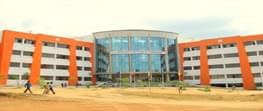
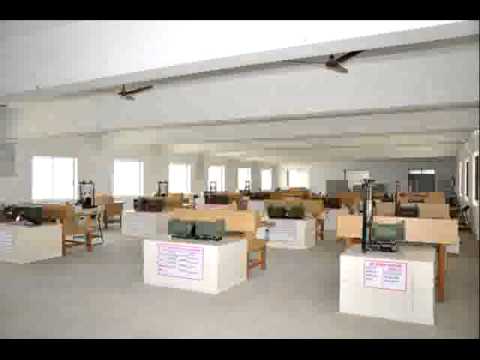
The main pillars of our college’s greatest strengths are our world-class and state-of-the-art infrastructure and highly qualified, trained and experienced faculty members. Because a well-designed academic environment followed by excellent and knowledgeable instructors contribute extensively in the personal and professional development of our students. We also have a Center for Research and Institute Innovation Cell, whose prime objective is to provide the right kind of environment to teachers and students to carry out experiments and research work.
How did you train yourself and your faculty members to efficiently deliver the programs to students?
I regularly motivate my faculty members to actively participate in ongoing professional development activities and to keep them updated with the latest happenings, trends and development of the industrial world, I organize a lot of events, guest lectures, seminars and training programs in collaboration with corporate experts and eminent academicians.
In addition to this, we emphasize a lot on research and innovation activities and provide all kinds of support to our teachers for that and also advise them to work on interdisciplinary initiatives and pursue their research passions to improve their teaching abilities. Faculty Development Sessions are also conducted from time to time where veteran teachers offer their knowledge and tips.
Check RVS College Of Engineering And Technology Courses & Fees
How do you establish a strong connection between your department courses and industry demands?
For the purpose of enforcing a strong connection between our Department programs and industrial requirements, we work together and have collaborated with renowned organizations, individuals and institutions related to the field of Electronics and Communication Engineering.
And since we know the value of internships and industrial training for young and innovative students, hence to offer them the real-world experience and exposure, we have signed MOUs with reputable businesses and industries. Last but not the least, experts from diverse Engineering domains are invited in college on a regular basis to deliver guest lectures and workshops etc.
How do the programs of your institute ensure the future readiness of students?
In our college, faculty members and business experts evaluate the projects and internships completed by students in each semester and a diverse range of co-curricular activities ranging from technical competitions, workshops, lectures, and apprenticeships are conducted by us on a regular basis to make students future ready, enhance their soft skills, help them connect with corporate executives and gain practical real-world experience outside of the classroom.
Apart from this, we regularly revise and update the curriculum of our college to stay compliant with industry standards and bridge any possible gaps between students' skills and corporate requirements, this is how we make them ready for the outside competitive, dynamic and unpredictable world.
When you joined the college, what was your vision for it and how are you trying to achieve the same?
My goal when I began working at RVS College of Engineering and Technology was to establish a dynamic academic environment that encourages innovation, excellence, and the total development of our students. Additionally, I have concentrated on enhancing partnerships between academia and industry and internships, industrial trips, and hands-on projects are provided to students from time to time in collaboration with top businesses and organizations. Last but not the least, we have established research centers and encourage multidisciplinary cooperation among faculty members and students for the purpose of their own and institution growth.
Being the Department Head, what are your core responsibilities towards the college and students?
As a Head of the Electronics and Communication Engineering Department of my college, my prime responsibility is to lead and manage everyone effectively and ensure that our department meets the highest standards of excellence in all its endeavors. Apart from this, supervising and monitoring the work of my faculty members, delegating work to relevant individuals and mentoring professors so that they can achieve their goals and work efficiently on research projects, also comes under the scope of my accountabilities.
How do you bring in a practical and industry oriented approach towards subjects?
My main objective is to make sure that our department's courses have a perfect blend of theoretical lectures and hands-on training programs. Hence I have adopted an interdisciplinary approach and help students comprehend how their knowledge relates to other disciplines in the best way possible.
And to make sure that our program remains industry oriented, I recommend students to take electives outside of their majors, work with peers from other fields, and engage in interdisciplinary initiatives so that they can broaden their knowledge horizons and acquire a comprehensive understanding of the real-time use of Engineering domains. Lastly, I guide faculty members to create such projects and assignments that ask students to analyze real-world issues and suggest workable answers.

.png?h=132&w=263&mode=stretch)
.png?h=132&w=263&mode=stretch)
.png?h=132&w=263&mode=stretch)
.png?h=132&w=263&mode=stretch)
.png?h=132&w=263&mode=stretch)


.png?h=78&w=78&mode=stretch)
.png?h=78&w=78&mode=stretch)









.png?h=72&w=72&mode=stretch)
.png?h=72&w=72&mode=stretch)
.png?h=72&w=72&mode=stretch)
.png?h=72&w=72&mode=stretch)

.png?h=72&w=72&mode=stretch)
.png?h=72&w=72&mode=stretch)





Comments