


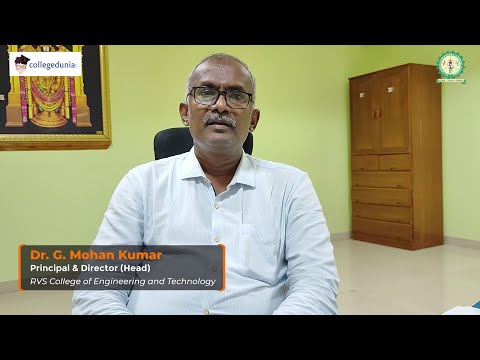
Dr. S.S.Sivaraju is the HOD of the Electronics and Electrical Engineering department. He is a PhD degree holder in Drives and Control, M.E. in Electrical Machines and a B.E. in Electronics and Electrical Engineering. Besides being an academic, Dr. Sivaraju is a research supervisor at Anna University, part of a doctoral committee and chairman of the Anna University Central Valuation EEE board among others.
Dr. Sivaraju has 13 different patents to his name and has published numerous technical textbooks. His latest awards include the Educational Excellence Award in 2019 by the Society of Scientific Research in Association with the Alumni Association of Indian Engineers and Assumption University of Thailand and the Innovative Academician Achievement Award in 2018 by Innovative Scientific Research Professional at Malaysia.
Furthermore, Dr. Sivaraju is on the editorial board of numerous national and international journals and has published in journals like the European Journal of Scientific Research, the International Journal of Electrical Engineering and the International Journal of Advanced and Innovative Research.

What are your roles and responsibilities as a HOD of EEE department?
As the head of the Electrical and Electronics Engineering (EEE) Department, my roles and responsibilities are diverse and encompass various aspects of academic administration, leadership, and faculty management. Firstly, I am responsible for providing strategic direction and vision to the department, aligning it with the overall goals and objectives of the institution. This involves setting goals, developing policies, and implementing strategies that foster excellence in education, research, and innovation within the EEE department.
How do you try to bring in a practical approach towards subjects?
My primary goal is to ensure that the subjects taught in our department have a practical approach. I promote a multidisciplinary approach to education and make students understand how their knowledge integrates with other fields. I encourage students to take elective courses outside their major, collaborate with students from different disciplines, and participate in interdisciplinary projects. This broadens their perspective and equips them with a holistic understanding of the practical applications of engineering. Lastly, I emphasize the importance of problem-based learning. I encourage faculty members to design assignments and projects that require students to analyse real-world problems and propose viable solutions.
What is the latest program that you are offering in your institute/dept which will help students outperform and stand apart from the crowd?
Our latest program, the "Advanced Robotics and Automation" specialization, is designed to provide students with a cutting-edge skill set and a strong foundation in emerging technologies. In addition, we have established strong ties with leading robotics and automation companies, both locally and globally.
By offering this specialization, we aim to equip our students with the expertise required to excel in a rapidly evolving technological landscape. The program not only enhances their employability but also prepares them to be at the forefront of innovation, contributing to advancements in robotics and automation. We are confident that this specialized program will enable our students to stand apart from the crowd and significantly impact their careers.
How do you strategize the curriculum to make it beneficial for the students?
As the Head of the EEE department, strategizing the curriculum involves considering industry trends, understanding students' needs, balancing theory and practice, promoting interdisciplinary learning, incorporating feedback mechanisms, and fostering innovation and entrepreneurship. By employing these strategies, the curriculum can be designed to benefit students by equipping them with the necessary skills, knowledge, and mindset required to excel in their field of study and contribute to the ever-evolving world of electrical and electronics engineering.
Check RVS College of Engineering and Technology Courses & Fees
How did you train yourself/faculty to deliver this program to the students?
To deliver our program, I encouraged the faculty members to actively engage in continuous professional development activities such as attending conferences, workshops, and seminars. Additionally, I facilitated collaborations with industry professionals and experts to ensure our teaching staff stays abreast of the latest industry practices and technologies. In addition to enhancing our teaching skills, we also focused on research and innovation.
I encourage faculty members to pursue their research interests and collaborate on interdisciplinary projects. Additionally, we conducted periodic faculty development programs where experienced educators shared their expertise and best practices. By investing in faculty training, we aim to provide our students with a well-rounded education that prepares them to excel in the ever-evolving field of electrical and electronic engineering.
How does the program ensure that students are being prepared for the future?
At the end of every semester, there is an evaluation for a project or internship in the curriculum itself by academicians as well as industry people. We encourage students to participate in co-curricular activities such as technical competitions, workshops, seminars, and industry internships. These opportunities allow them to enhance their soft skills, network with industry professionals, and gain valuable practical experience outside the classroom, further preparing them for future professional endeavors. This enables us to tailor our curriculum and teaching methodologies to bridge any gaps between academia and industry, ensuring that our graduates are well-prepared to meet future workplace demands.
How do you tend to build an industry connection with this program?
We actively seek collaborations and partnerships with industry leaders, organizations, and professionals in the field of electrical and electronics engineering. We establish communication channels, attend conferences and seminars, and participate in industry-specific events to network and interact with key stakeholders. Additionally, we emphasize the importance of industrial training and internships for our students.
We establish tie-ups with reputed companies and industries to provide our students with hands-on experience and exposure to real-world scenarios. To further facilitate industry connections, we invite professionals from various sectors to deliver guest lectures and conduct workshops. These sessions provide students with invaluable industry insights, enable them to learn from the experiences of experts, and expose them to the latest advancements in the field.
Click RVS College of Engineering and Technology Placements
What are the benefits and career options after pursuing this course?
In today's technologically advanced world, electrical and electronic systems are integral to almost every aspect of our lives. From power generation and distribution to the design and development of electronic devices, there is a constant need for skilled EEE engineers. It is a broad and versatile discipline that encompasses the study of electrical systems, electronics, power generation and distribution, control systems, telecommunications, and much more. As a result, graduates of EEE engineering possess a diverse skill set and have access to a wide range of career options. Whether it is as a HOD, researcher, entrepreneur, or industry professional, a career in EEE engineering offers both personal and professional fulfilment.

.png?h=132&w=263&mode=stretch)
.png?h=132&w=263&mode=stretch)

.png?h=132&w=263&mode=stretch)
.png?h=132&w=263&mode=stretch)


.png?h=78&w=78&mode=stretch)
.png?h=78&w=78&mode=stretch)














.png?h=72&w=72&mode=stretch)
.png?h=72&w=72&mode=stretch)
.png?h=72&w=72&mode=stretch)
.png?h=72&w=72&mode=stretch)

.png?h=72&w=72&mode=stretch)
.png?h=72&w=72&mode=stretch)





Comments