




Chemical reactions are fundamental to physical, inorganic, and organic chemistry. In JEE Mains, questions are frequently asked from chemical kinetics, electrochemistry, and equilibrium in physical chemistry.
- In organic chemistry, chemical reactions of aldehydes, amines, and alcohols, along with General Organic Chemistry (GOC), are very important.
- The total weightage of chemical reactions in JEE Main is 35-45% of the total chemistry questions.
Read More:
- JEE Main 2026 syllabus with chapter-wise weightage & deleted topics (PDF).
- Cover the important topics of chemistry for the JEE Main 2026 exam in 1 month
Most Important Chemical Reactions Topics for JEE Main 2026
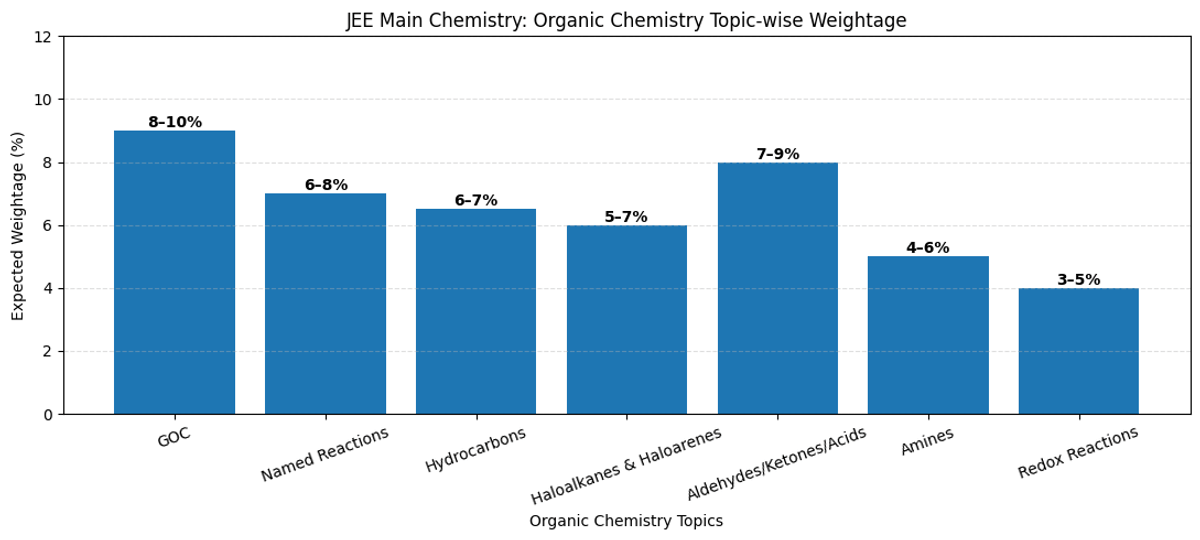
The topic-wise weightage for chemical reactions varies between 3% and 10% across different shifts each year. A good command over General Organic Chemistry, including topics such as nomenclature, hybridisation, and reaction mechanisms, can help you score 8–12 marks in the JEE Mains 2026 exam.
Read Also: Have you checked the complete breakdown of the JEE Main 2026 syllabus?
Ques: Which chemical reactions are important in Inorganic Chemistry for JEE Mains 2026?
Ans: For the JEE Mains 2026 exam, the chemical reactions in Inorganic Chemistry include topics from:
- Metallurgy
- Qualitative Analysis
- Industrial Processes
Read More: Check out the JEE Main Previous Year Chemistry Question Papers
Chemical Reactions Weightage Trend: Last 5 Years Analysis
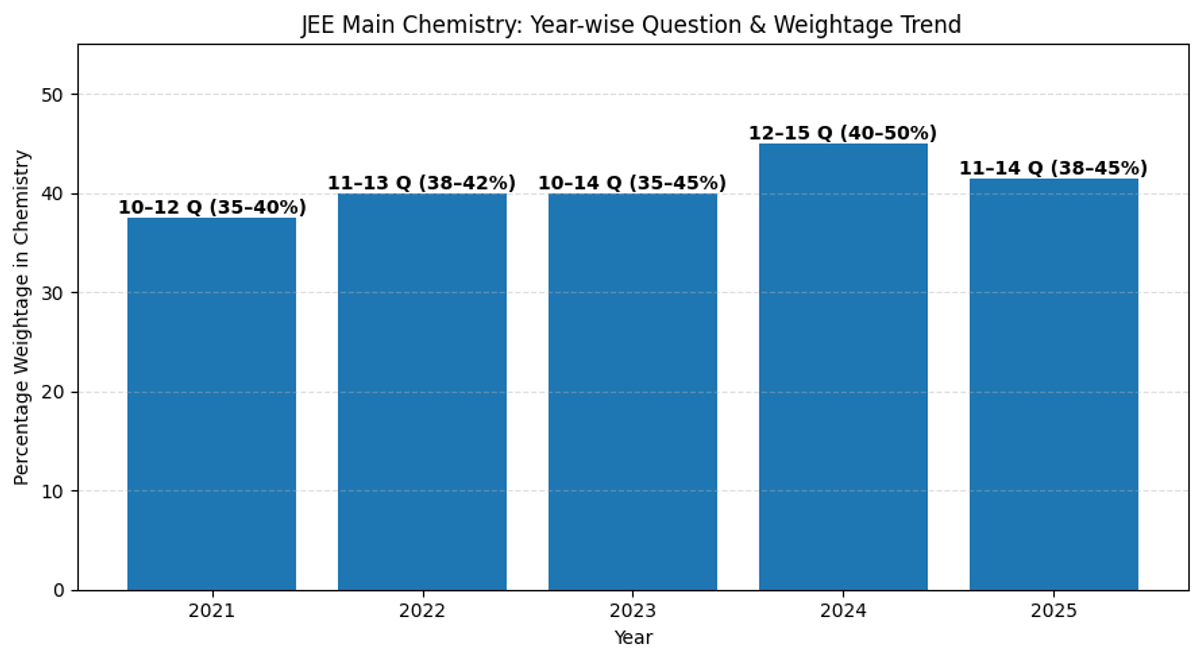
Over the past five years, there has been a shift in the weighting of questions related to chemical reactions. However, you can expect a total of approximately 10-12 questions (depending on the shift) across all three sections (physical, inorganic, and organic).
| Year | Approx. Questions | % of Chemistry |
|---|---|---|
| 2021 | 10-12 | 35-40% |
| 2022 | 11-13 | 38-42% |
| 2023 | 10-14 | 35-45% |
| 2024 | 12-15 | 40-50% |
| 2025 | 11-14 | 38-45% |
| Year | Question Paper PDF | Solution PDF |
|---|---|---|
| 2024 | Download | Download |
| 2023 | Download | Download |
| 2022 | Download | Download |
| 2021 | Download | Download |
| 2020 | Download | Download |
Ques: How can I easily memorise chemical reactions?
Ans: To memorise chemical reactions in chemistry, you need to follow these easy strategies:
- Create flowcharts for important reactions and their mechanisms.
- Revise them regularly, along with daily topic-wise practice questions.
Reddit & Student Insights: What Aspirants Say About Chemical Reactions
Students have realised that NCERT textbooks and exemplars are sufficient for understanding chemical reactions.
- “NCERT reactions + PYQs first, then only go beyond if you need more depth.”
Source: Reddit
Another user stated,
- “Chemistry in JEE Main is mostly NCERT + direct reaction questions — not super tricky.”
Source: Reddit
How to Prepare Chemical Reactions for JEE Main 2026 (Expert Strategy)
| Aspect | Details |
|---|---|
| Concept clarity first (NCERT reference) |
|
| Formula & constants list | Maintain a notebook for key reagents, reaction conditions, and oxidising/reducing agents |
| PYQs (minimum years to attempt) | Last 10-15 years (focus on 2020-2025 for recent trends) |
| Chapter-wise MCQs target (number) |
|
| Last week's revision approach |
|
Read More: Is it possible to crack JEE Main 2026 in 2 months? Check the best way to prepare for the exam.
Ques: Which books are recommended for practising chemical reaction problems?
Ans: According to students, NCERT is a sufficient resource for understanding the concepts. For practising problems, you can refer to O.P. Tandon's chemistry book.



Comments