




A new record of 13,00,368 candidates appeared for the JEE Main 2026 Session 1 exam alone. According to experts, this is expected to increase by around 16 lakhs for Session 2 exams. Based on past exam trends, not all registered candidates actually appear, but the attendance is usually high.
Now, the real problem comes here:
- The total available seats through JoSAA counselling at IITs, NITs, IIITs, and GFTIs is approximately 58,000.
- Out of these, only the top 2.5 lakh students become eligible for JEE Advanced.
- IITs open doors for only top performers (usually under 10,000 ranks).
- The remaining fight for the seats in NITs, IIITs, and GFTIs through JEE Main ranks.
With nearly 4% acceptance, students need to improve their score in Session 2 if they didn't perform well in Session 1. The 96% rejection rate and limited seats have now become a concern for students about Plan B.
Also Read:
Key Summary
- 13,00,368 students appeared in the JEE Main Session 1 exams 2026.
- The number will rise to 15-17 lakh for Session 2 exams, scheduled in April 2026.
- With approximately 58,000 seats across IITs, NITs, and GFTIs, competition will be tougher this year.
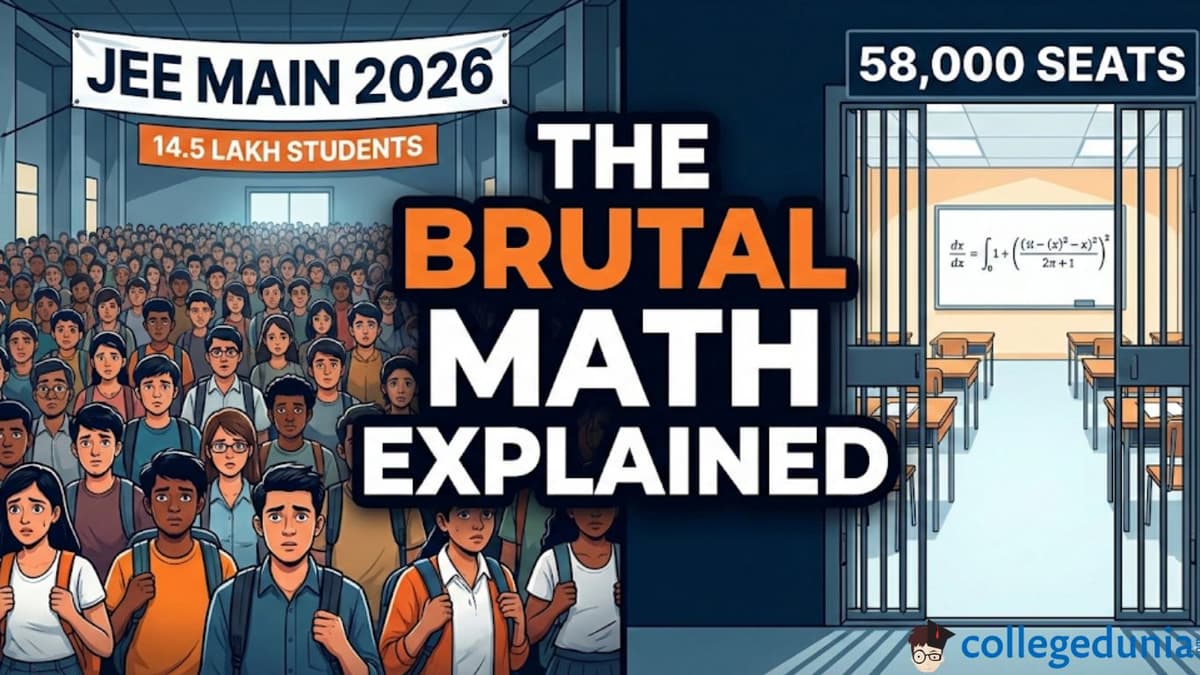
14.5 Lakh Students in JEE Main Session 1 for 58,000 Seats- "The Brutal Math"
To understand the brutal maths behind 58,000 seats, students must know the seat distribution across various engineering colleges.
| Particulars | Seats Matrix |
|---|---|
| Unique candidates | 13,00,368 |
| Seats in NITs | 24,000-25,000 |
| Seats in IIITs | 8,000-10,000 |
| Seats in GFTIs | 8,000-10,000 |
| Total NIT+ seats (through JEE Main) | 58,000 (Does not include a few supernumerary/female-only quotas) |
Source: JoSAA Seat Matrix 2025
Check How Many Students Appeared for the JEE Main 2026
For a lot of them, this "brutal math" translates into seeking alternatives: counselling at the state level or looking at private universities and newer NITs/IIITs with relatively lower cut-offs, or dropping out of engineering courses altogether. But the fantasy of a prestigious government engineering seat is still a high-stakes chase that calls for brilliant preparation.
Also Read:
- Check the JoSAA Counselling 2026 Process
Seats vs Appeared Candidates Ratio
- For every 25 students appearing in JEE Main 2026, only 1 gets a central government engineering seat
- There is only 0.77% chance of getting into IIT.
- The remaining 95.5% students must look at state counselling, private universities, or alternative pathways
| Metric | Calculated Reality |
|---|---|
| Total JEE Main Candidates | 13,00,368 |
| Total Seats via JoSAA | 58,000 (IITs + NITs + IIITs + GFTIs) |
| Seat-to-Candidate Ratio | 1 seat for every 25candidates |
| Candidates Eligible for JEE Advanced | 2,50,000 |
| Share Eligible for JEE Advanced | 19.2% |
| Total IIT Seats | 10,000 |
| Probability of Getting an IIT Seat | 0.77% (1 in 130 candidates) |
| Candidates Getting Any Central Govt Seat | 4.46% |
| Candidates Without IIT/NIT/IIIT/GFTI Seats | 95.5% |
Check: What will be the JoSAA Opening & Closing Rank 2026 for IITs, NITs, and GFTIs?
Example Scenario
Imagine a coaching batch of 130 serious JEE candidates:
- All 130 clear JEE Main
- About 25-26 students become eligible for JEE Advanced
- But only 1 student from that group will finally enter an IIT
- The remaining students must compete for NITs, IIITs, GFTIs, or explore state counselling, private universities, or alternate career paths.
JEE Mains Registration Trends (2020-2025)
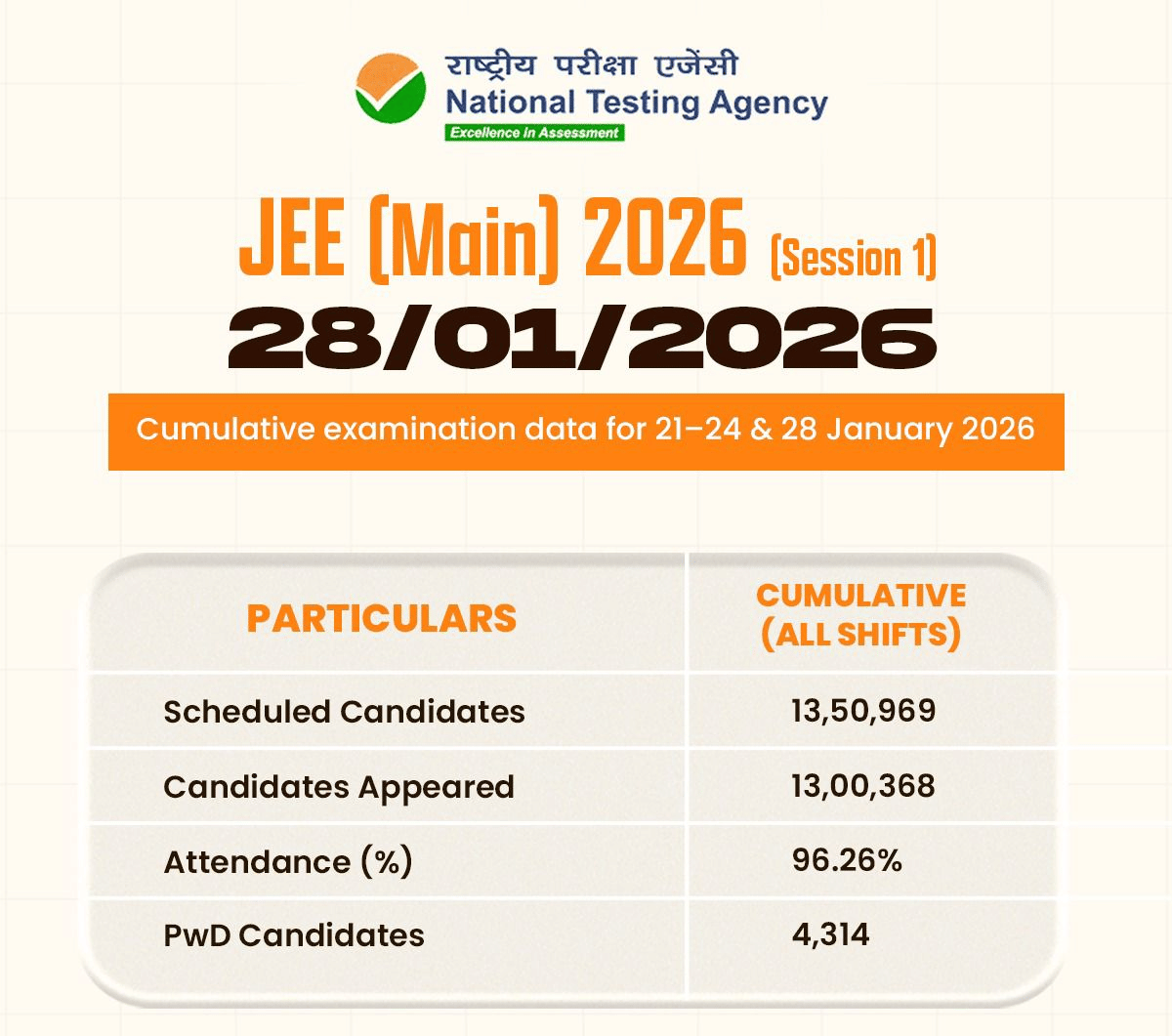
In JEE Main 2026, a total of 13,50,969 candidates and with 96.26% attendance rate 13,00,368 candidates appeared for the exam.
Source: NTA X
The number of total unique registrations in the JEE Main exam has shown a drastic increase over the last five years (2020–2025). Below we have provided the approximate data for students who appeared in these years across both sessions (Session 1 & Session 2):
| Year | Session 1 Registrations | Session 2 Registrations | Total Unique Registrations |
|---|---|---|---|
| 2025 | 13,11,544 | 12,58,136 (est. new) | 15,39,848 |
| 2024 | 12,31,874 | 12,80,569 | 14,76,557 |
| 2023 | 8,60,064 | 9,31,334 | 11,62,398 |
| 2022 | 8,72,970 | 6,22,034 | 10,26,799 |
| 2021 | 6,52,628 (Feb) + 6,19,641 (Mar) | 7,09,611 (Jul) + 7,32,000 (Aug) | 10,48,012 |
| 2020 | 9,41,000 (Jan) | 7,18,000 (Sep) | 11,74,000 |
Source: JEE Mains Registration Statistics
Check:
- JEE Main Shift Wise Marks vs Percentile 2026
- JEE Main Shift Wise Marks vs Percentile 2025
- JEE Main Shift Wise Marks vs Percentile 2024
Why Plan B Has Become Necessary in JEE Main 2026?
| Factor | What It Means for Students |
|---|---|
| Limited Seats vs Rising Applicants | With 13+ lakh candidates and only 58,000 seats, a large majority will not secure IIT/NIT/IIIT/GFTI seats despite qualifying for JEE Main. |
| High Uncertainty Due to Normalisation | Same marks can lead to very different percentiles depending on shift difficulty, making outcomes unpredictable. |
| Counselling Delays & Branch Compromises | Many students are forced to accept non-preferred branches or colleges late in JoSAA counselling rounds. |
| Pressure of Drop Years | Repeating a year adds financial burden, mental stress, and no guaranteed improvement in rank. |
| Narrow Margin for Error | Even a 1-2 percentile drop can push a candidate out of the top NITs or preferred branches. |
| Growing Competition from Repeaters | A large share of top ranks comes from droppers, raising the bar for first-time candidates. |
Competition is tougher than ever before - due to factors like: An increased number of candidates (by population), growing consciousness about the job prospects of engineering, and provision of multiple attempts (two sessions per year).
With JEE Main Session 1 exams not too far away now, it’s important to remember that while numbers can create a tough reality, consistency and smart strategy still have a way of seeing the odds defeated.
Related News:



Comments