




JEE Main 2026 April 6 Shift 2 chemistry question paper is available here with answer key and solutions. NTA conducted the second shift of the day on April 6, 2026, from 3:00 PM to 6:00 PM.
- The JEE Main Chemistry Question Paper contains a total of 25 questions.
- Each correct answer gets you 4 marks while incorrect answers gets you a negative mark of 1.
Candidates can download the JEE Main 2026 April 6 Shift 2 chemistry question paper along with detailed solutions to analyze their performance and understand the exam pattern better.
JEE Main 2026 April 6 Shift 2 Chemistry Question Paper with Solution PDF
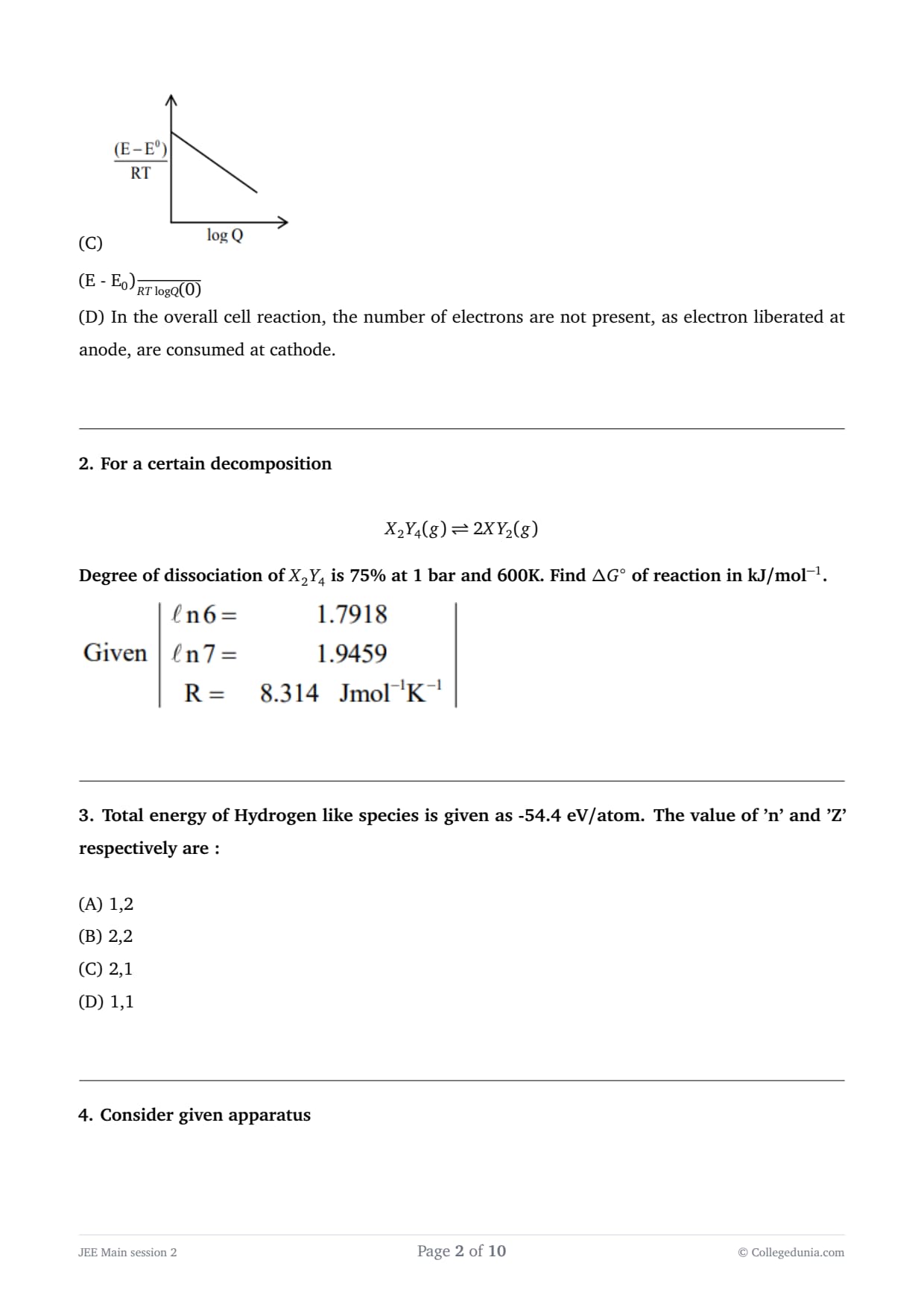
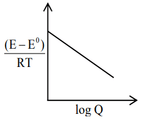
- Select incorrect option :
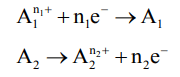
(A) Overall cell reaction:
\(n_2 A_1^{n_1^+} + n_1 A_2 \rightarrow n_2 A_1 + n_1 A_2^{n_2^+}\) - (B) Electrical work done by the cell = charge \(\times\) potential difference.
- (C)
![]()
- (D) In the overall cell reaction, the number of electrons are not present, as electron liberated at anode, are consumed at cathode.
View Solution
Step 1: Understanding the Cell Reaction.
In the given question, the overall cell reaction is the combination of half-reactions at the anode and cathode. The electrons are transferred between the two reactions, which represent the redox process in a cell.
Step 2: Analyzing the Electrical Work.
The electrical work done by the cell is indeed the charge multiplied by the potential difference, which is a fundamental concept in electrochemistry.
Step 3: Analysis of the Graph.
Option (C) shows a relationship between the cell potential and the reaction quotient, represented as a plot. This is not correctly depicting the Nernst equation, as the slope of such a plot should be the negative of \(nF/RT\) and not in the current form.
Step 4: Electron Transfer Clarification.
In option (D), the statement about the electrons not being present in the overall cell reaction is incorrect. Electrons are transferred from anode to cathode, and they are indeed a part of the overall reaction.
Final Answer: Option (C) is incorrect as it misrepresents the Nernst equation graph. Quick Tip: The Nernst equation describes the relationship between the cell potential and the concentrations of the reacting species. The slope of a graph based on the Nernst equation depends on the number of electrons involved and the temperature.
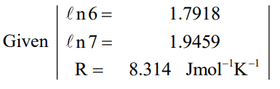
For a certain decomposition
\[ X_2 Y_4 (g) \rightleftharpoons 2 XY_2 (g) \]
Degree of dissociation of \( X_2 Y_4 \) is 75% at 1 bar and 600K. Find \( \Delta G^\circ \) of reaction in kJ/mol\(^{-1}\).
Total energy of Hydrogen like species is given as -54.4 eV/atom. The value of 'n' and 'Z' respectively are :
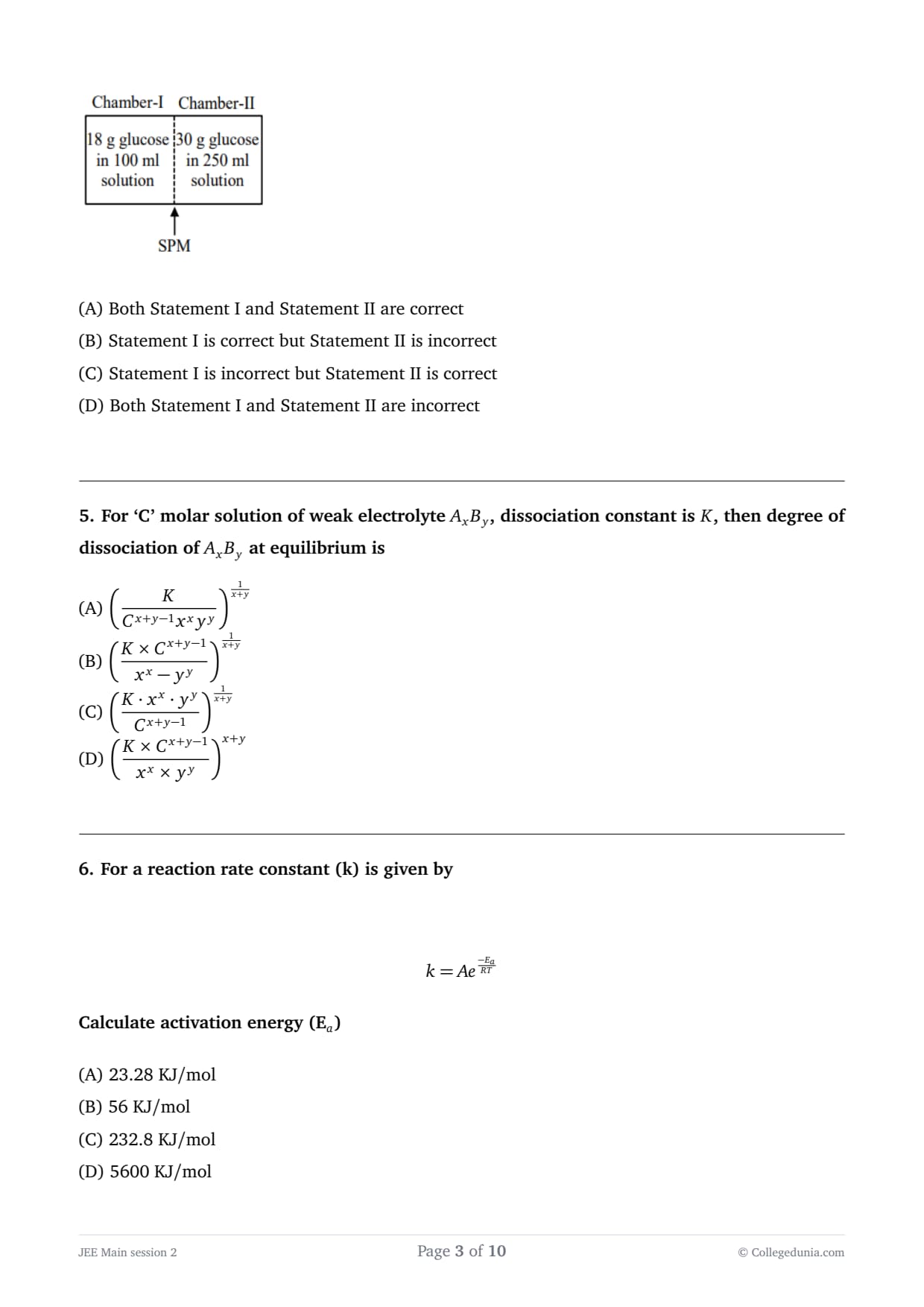
Consider given apparatus
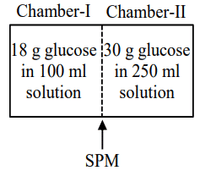
For `C' molar solution of weak electrolyte \( A_xB_y \), dissociation constant is \( K \), then degree of dissociation of \( A_xB_y \) at equilibrium is
For a reaction rate constant (k) is given by
\[ k = A e^{\frac{-E_a}{RT}} \]
Calculate activation energy (E\(_a\))
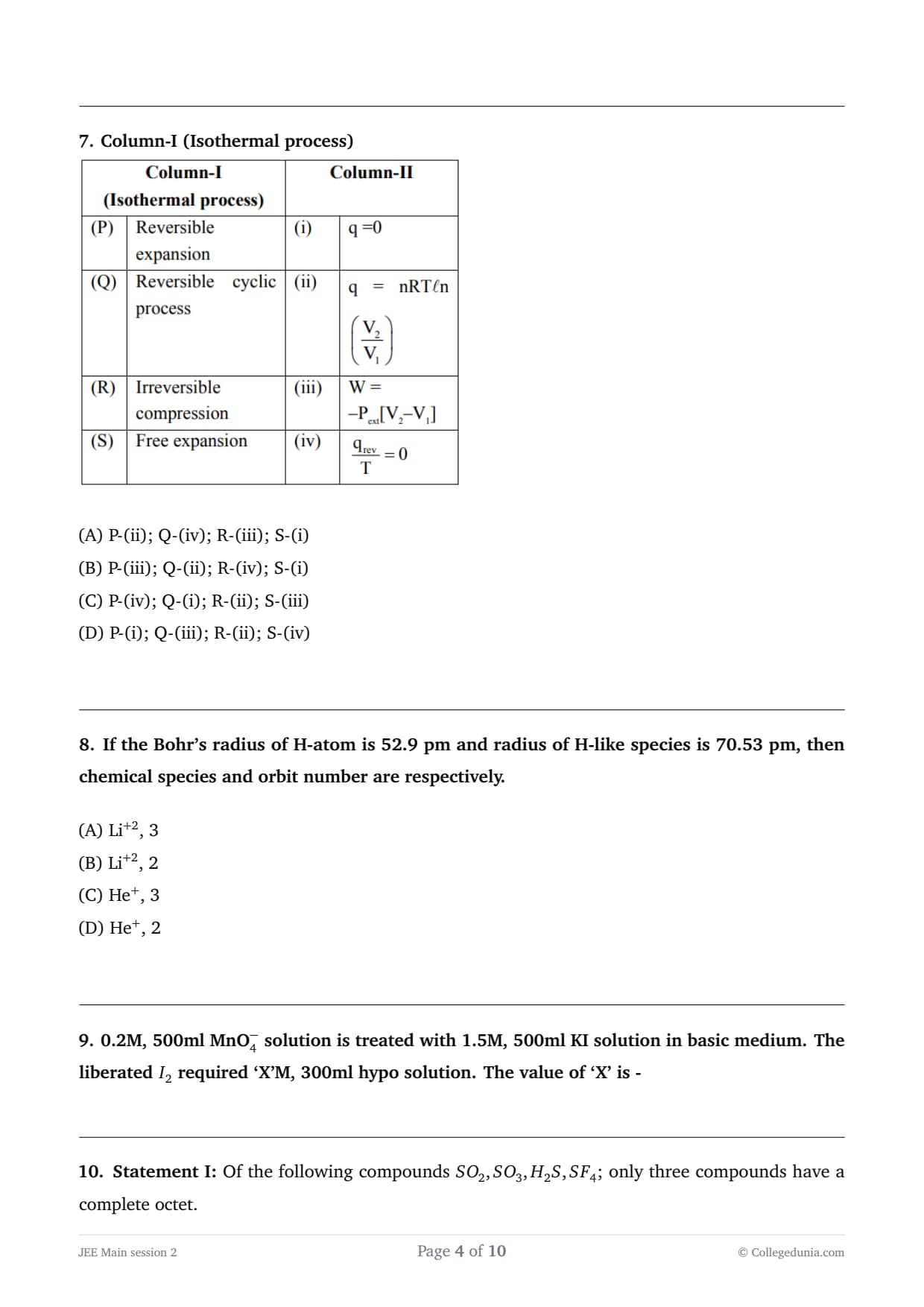
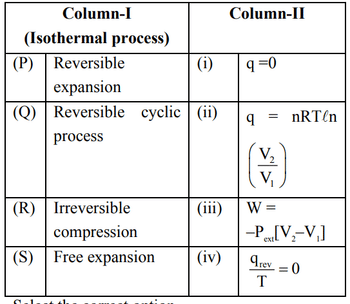
Column-I (Isothermal process)
If the Bohr's radius of H-atom is 52.9 pm and radius of H-like species is 70.53 pm, then chemical species and orbit number are respectively.
0.2M, 500ml MnO\(_4^-\) solution is treated with 1.5M, 500ml KI solution in basic medium. The liberated \(I_2\) required ‘X’M, 300ml hypo solution. The value of ‘X’ is -
Statement I: Of the following compounds \( SO_2, SO_3, H_2S, SF_4 \); only three compounds have a complete octet.
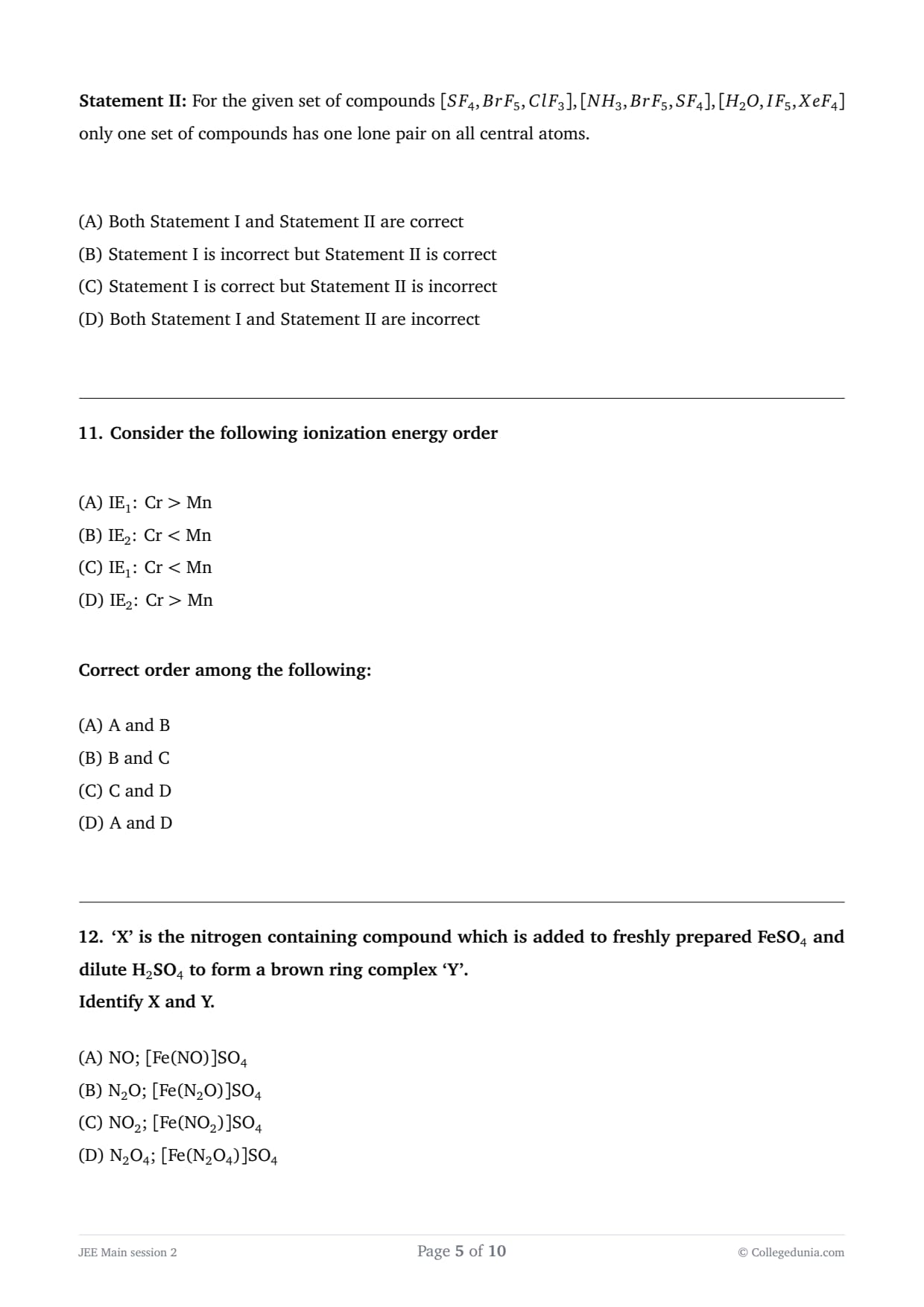
Statement II: For the given set of compounds \([SF_4, BrF_5, ClF_3], [NH_3, BrF_5, SF_4], [H_2O, IF_5, XeF_4]\) only one set of compounds has one lone pair on all central atoms.
Consider the following ionization energy order
(A) IE\(_1\): Cr \(>\) Mn
(B) IE\(_2\): Cr \(<\) Mn
(C) IE\(_1\): Cr \(<\) Mn
(D) IE\(_2\): Cr \(>\) Mn
Correct order among the following:
‘X’ is the nitrogen containing compound which is added to freshly prepared FeSO\(_4\) and dilute H\(_2\)SO\(_4\) to form a brown ring complex ‘Y’.
Identify X and Y.
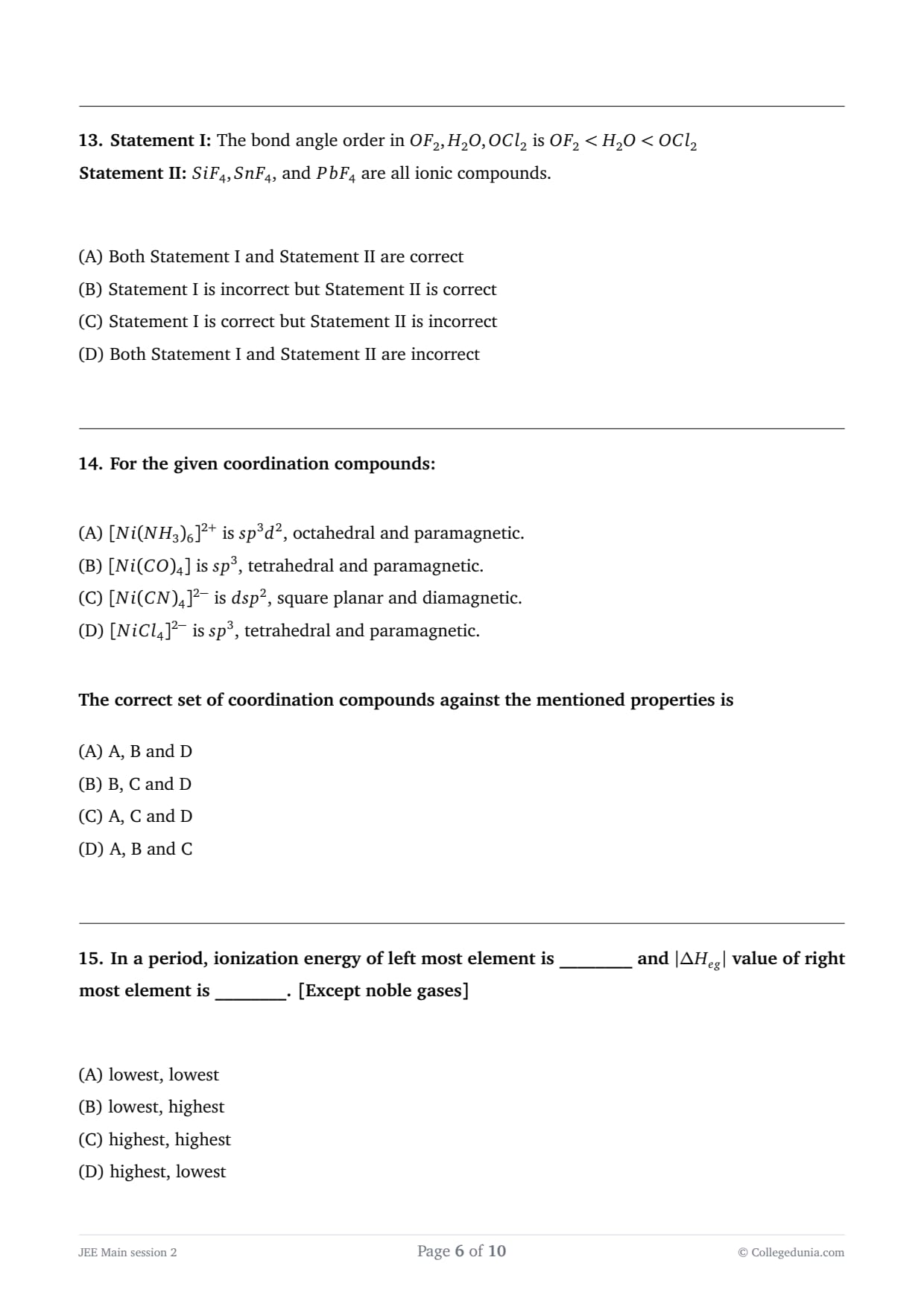
Statement I: The bond angle order in \( OF_2, H_2O, OCl_2 \) is \( OF_2 < H_2O < OCl_2 \)
Statement II: \( SiF_4, SnF_4, \) and \( PbF_4 \) are all ionic compounds.
For the given coordination compounds:
(A) \([Ni(NH_3)_6]^{2+}\) is \(sp^3d^2\), octahedral and paramagnetic.
(B) \([Ni(CO)_4]\) is \(sp^3\), tetrahedral and paramagnetic.
(C) \([Ni(CN)_4]^{2-}\) is \(dsp^2\), square planar and diamagnetic.
(D) \([NiCl_4]^{2-}\) is \(sp^3\), tetrahedral and paramagnetic.
The correct set of coordination compounds against the mentioned properties is
In a period, ionization energy of left most element is _____ and \(|\Delta H_{eg}|\) value of right most element is _____ . [Except noble gases]
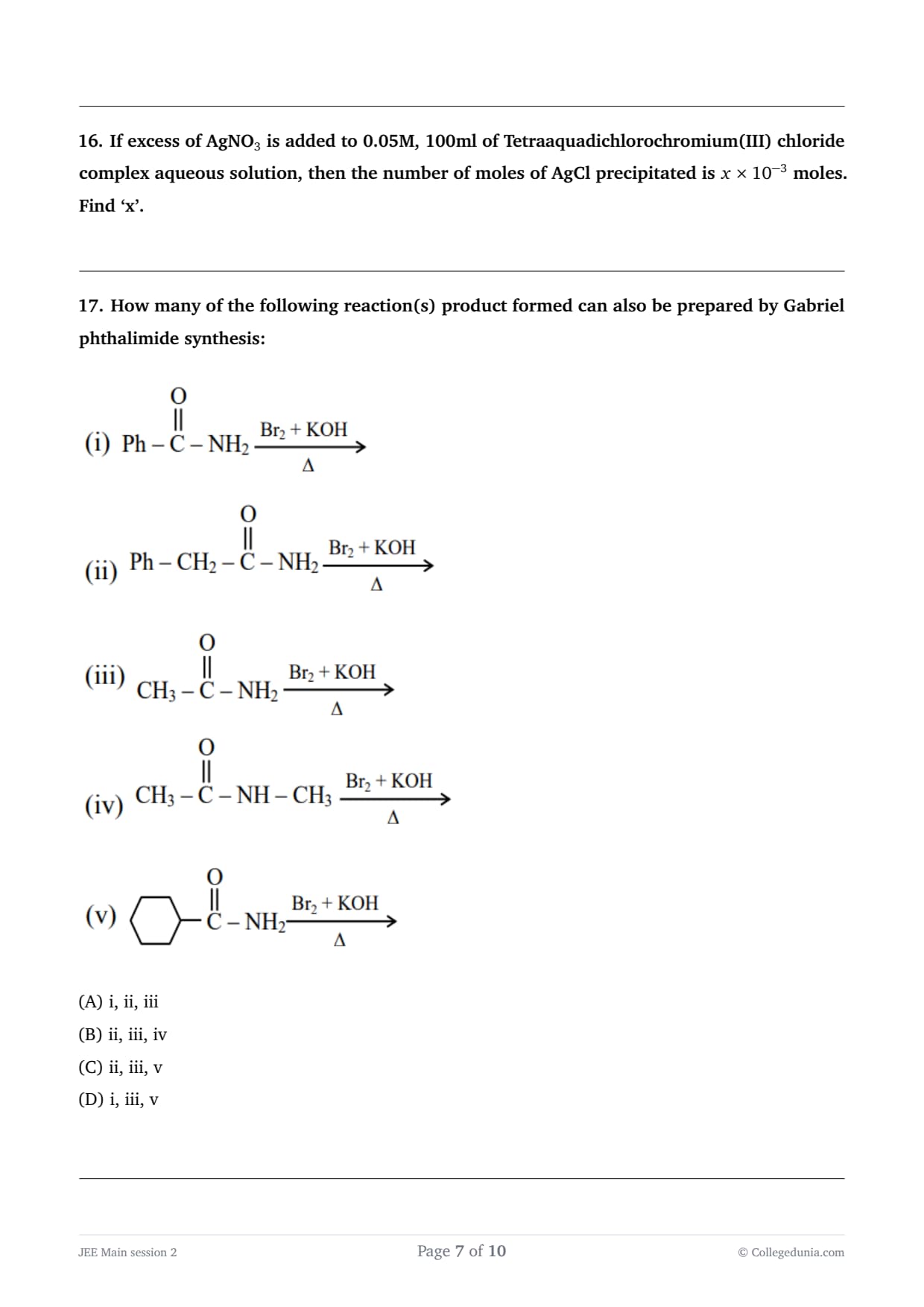
If excess of AgNO\(_3\) is added to 0.05M, 100ml of Tetraaquadichlorochromium(III) chloride complex aqueous solution, then the number of moles of AgCl precipitated is \( x \times 10^{-3} \) moles. Find ‘x’.
How many of the following reaction(s) product formed can also be prepared by Gabriel phthalimide synthesis:
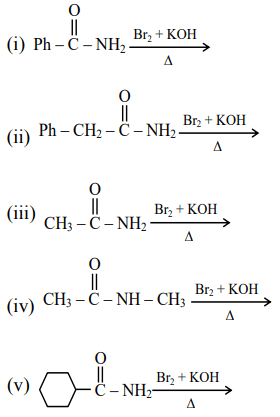
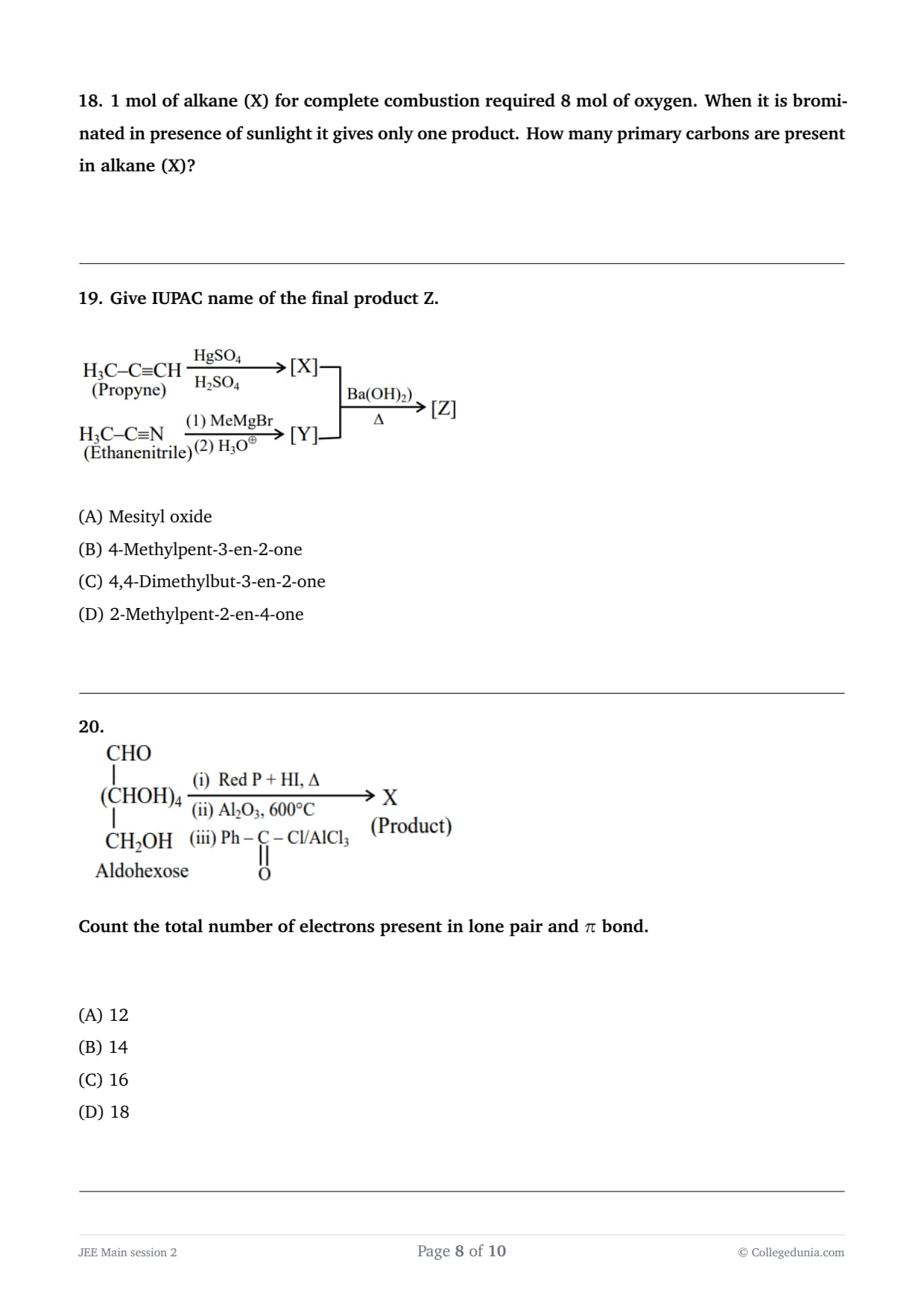
1 mol of alkane (X) for complete combustion required 8 mol of oxygen. When it is brominated in presence of sunlight it gives only one product. How many primary carbons are present in alkane (X)?
Give IUPAC name of the final product Z.
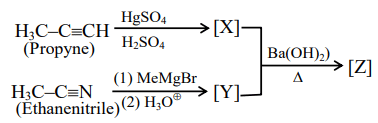
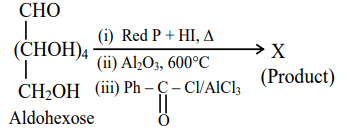
Count the total number of electrons present in lone pair and \( \pi \) bond.
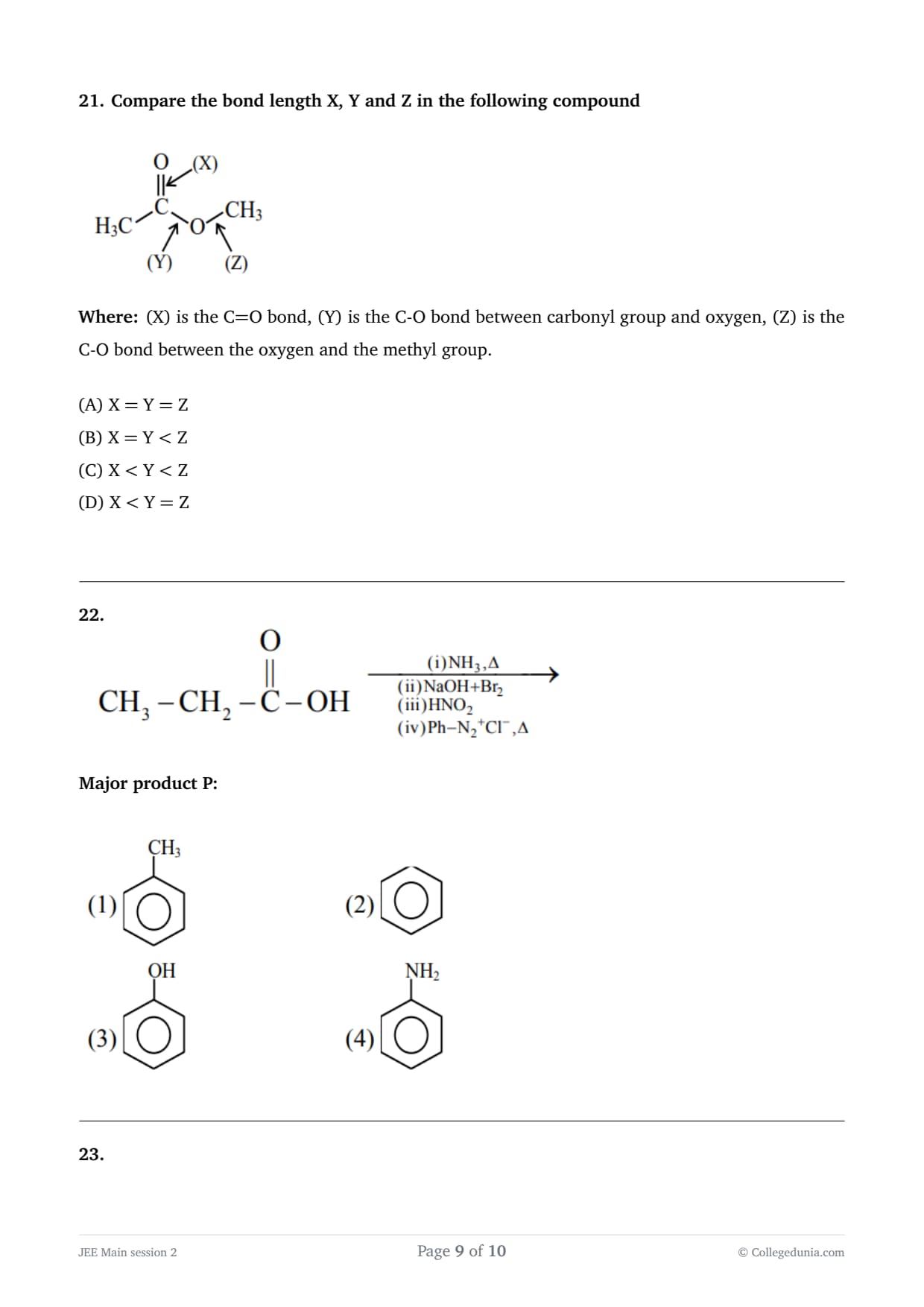
Compare the bond length X, Y and Z in the following compound
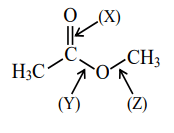
Where:
(X) is the C=O bond,
(Y) is the C-O bond between carbonyl group and oxygen,
(Z) is the C-O bond between the oxygen and the methyl group.
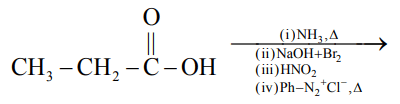
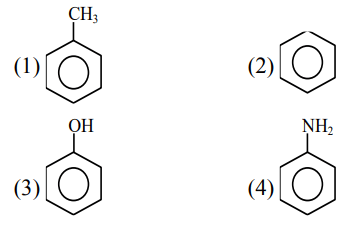
Major product P:
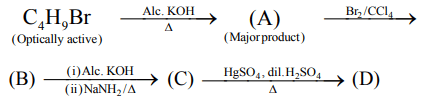
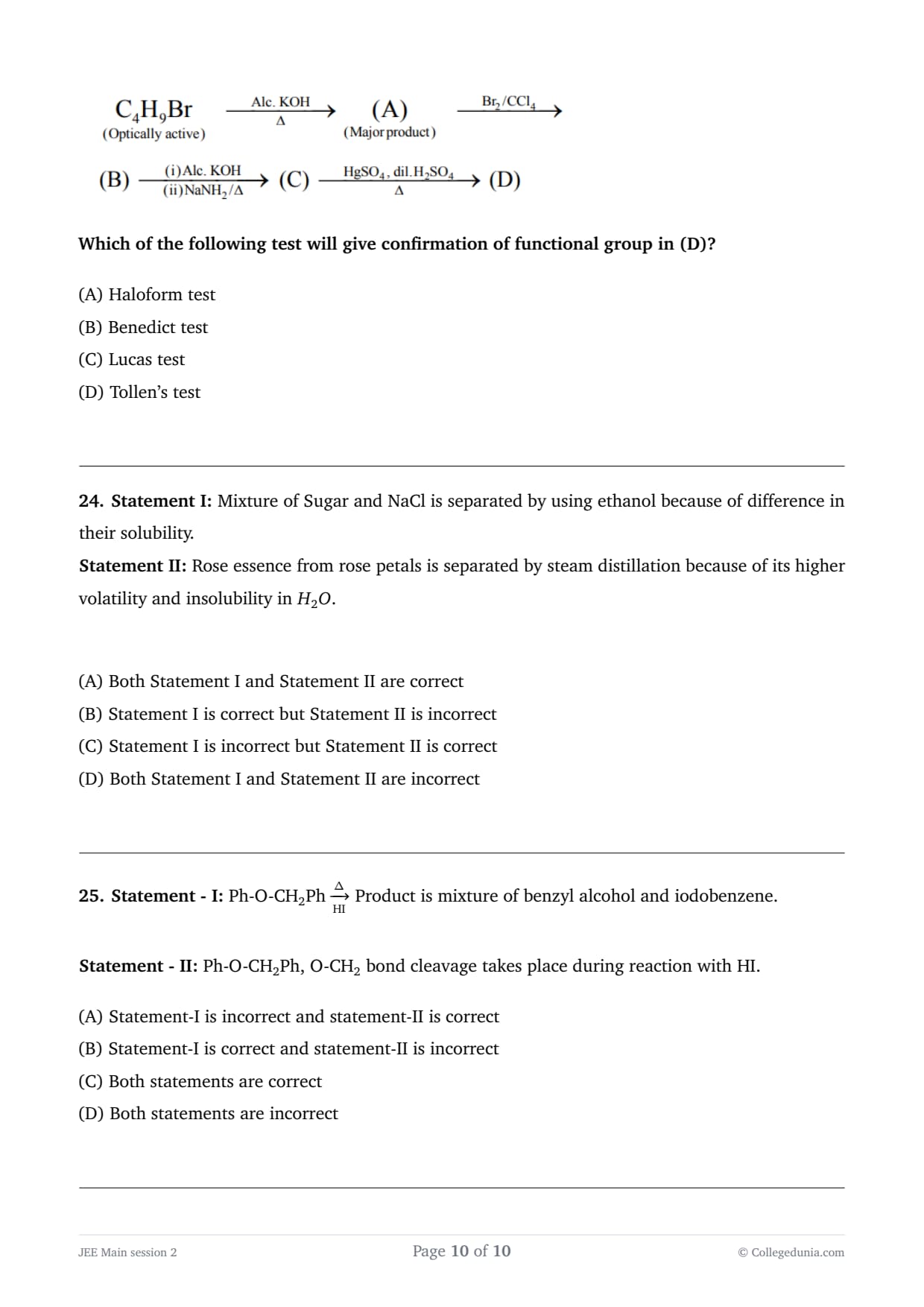
Which of the following test will give confirmation of functional group in (D)?
Statement I: Mixture of Sugar and NaCl is separated by using ethanol because of difference in their solubility.
Statement II: Rose essence from rose petals is separated by steam distillation because of its higher volatility and insolubility in \( H_2O \).
Statement - I: \(Ph-O-CH_2Ph \xrightarrow[HI]{\Delta}\)
Product is mixture of benzyl alcohol and iodobenzene.
Statement - II: \(Ph-O-CH_2Ph\), O-CH\(_2\) bond cleavage takes place during reaction with HI.
Also Check:
JEE Main 2026 Chemistry Exam Pattern
| Particulars | Details |
|---|---|
| Exam Mode | Online (Computer-Based Test) |
| Paper | B.E./B.Tech |
| Medium of Exam | 13 languages: English, Hindi, Gujarati, Bengali, Tamil, Telugu, Kannada, Marathi, Malayalam, Odia, Punjabi, Assamese, Urdu |
| Type of Questions | Multiple Choice Questions (MCQs) + Numerical Value Questions |
| Total Marks | 100 marks |
| Marking Scheme | +4 for correct answer & -1 for incorrect MCQ and Numerical Value-based Questions |
| Total Questions | 25 Questions |
JEE Main 2026 Chemistry Revision





Comments