




The NEET Biology 2026 syllabus has a total of 38 chapters, which are further divided into 10 major units. These 10 units cover topics from both Botany and Zoology. This answers the most asked question, which is How Many Chapters in NEET Biology 2026. It carries around 50% weightage, which includes 90 out of 180 questions. The syllabus for NEET Biology is vast, but NCERT has organised it across Class 11 and Class 12 with 10 vital units.
- Botany and Zoology contribute equally to the exam. They contribute 19 chapters from Class 11 and 19 chapters from Class 12.
- You need to understand the NEET Biology chapters, as they will help you to plan your strategy more effectively.
Related Links:
Key Summary
- The NEET Biology syllabus for the year 2026 consists of a total of 10 units from both standard 11 and 12.
- The syllabus consists of 38 chapters.
- There are 90 questions in the NEET exam. It covers both Botany and Zoology.
- Deleted topics such as Transport in Plants and Reproduction in Organisms make the revised syllabus more focused.
- How Many Chapters in NEET Biology 2026: Unit-Wise Chapter List
- Total Chapters in NEET Biology 2026
- How Many Chapters in NEET Biology 2026: Topic-Wise Weightage
- Why Knowing NEET Biology Chapters is Important
- How Many Chapters in NEET Biology 2026: High Scoring Topics in NEET Biology 2026
- What is NEET 2026 Biology Syllabus?
- How Many Chapters in NEET Biology 2026 FAQS
- Related News
How Many Chapters in NEET Biology 2026: Unit-Wise Chapter List
To know the answer to the question, How many chapters in NEET Biology 2026, let’s go through the unit-wise distribution of chapters. The table below is aligned with the NCERT textbooks. These textbooks are the primary source for the candidates to help them prepare for the NEET exam.
Class 11 Biology Chapters
| Unit | Chapter Name |
|---|---|
| Diversity in the Living World | The Living World, Biological Classification, Plant Kingdom, Animal Kingdom |
| Structural Organisation in Animals & Plants | Morphology of Flowering Plants, Anatomy of Flowering Plants, Structural Organisation in Animals |
| Cell Structure and Function | Cell: The Unit of Life, Biomolecules, Cell Cycle and Cell Division |
| Plant Physiology | Transport in Plants (deleted), Mineral Nutrition (deleted), Photosynthesis in Higher Plants, Respiration in Plants, Plant Growth and Development |
| Human Physiology | Digestion and Absorption (deleted), Breathing and Exchange of Gases, Body Fluids and Circulation, Excretory Products and their Elimination, Locomotion and Movement, Neural Control and Coordination, Chemical Coordination and Integration |
Class 11 contributes 19 chapters (after deleted topics).
Class 12 Biology Chapters
| Unit | Chapter Name |
|---|---|
| Reproduction | Reproduction in Organisms (deleted), Sexual Reproduction in Flowering Plants, Human Reproduction, Reproductive Health |
| Genetics and Evolution | Principles of Inheritance and Variation, Molecular Basis of Inheritance, Evolution |
| Biology and Human Welfare | Human Health and Disease, Strategies for Enhancement in Food Production (deleted), Microbes in Human Welfare |
| Biotechnology and Its Applications | Biotechnology: Principles and Processes, Biotechnology and Its Applications |
| Ecology and Environment | Organisms and Populations, Ecosystem, Biodiversity and Conservation, Environmental Issues (deleted) |
Class 12 contributes about 19 chapters (after deleted topics).
Total Chapters in NEET Biology 2026
There are some doubts regarding how many chapters in NEET Biology 2026 are on the minds of the candidates. Below is a list of the total number of units and chapters:
● 10 units from Class 11 and Class 12.
● 38 effective chapters (some topics and units have been deleted by NMC).
● There is a balanced weightage between Botany and Zoology.
How Many Chapters in NEET Biology 2026: Topic-Wise Weightage
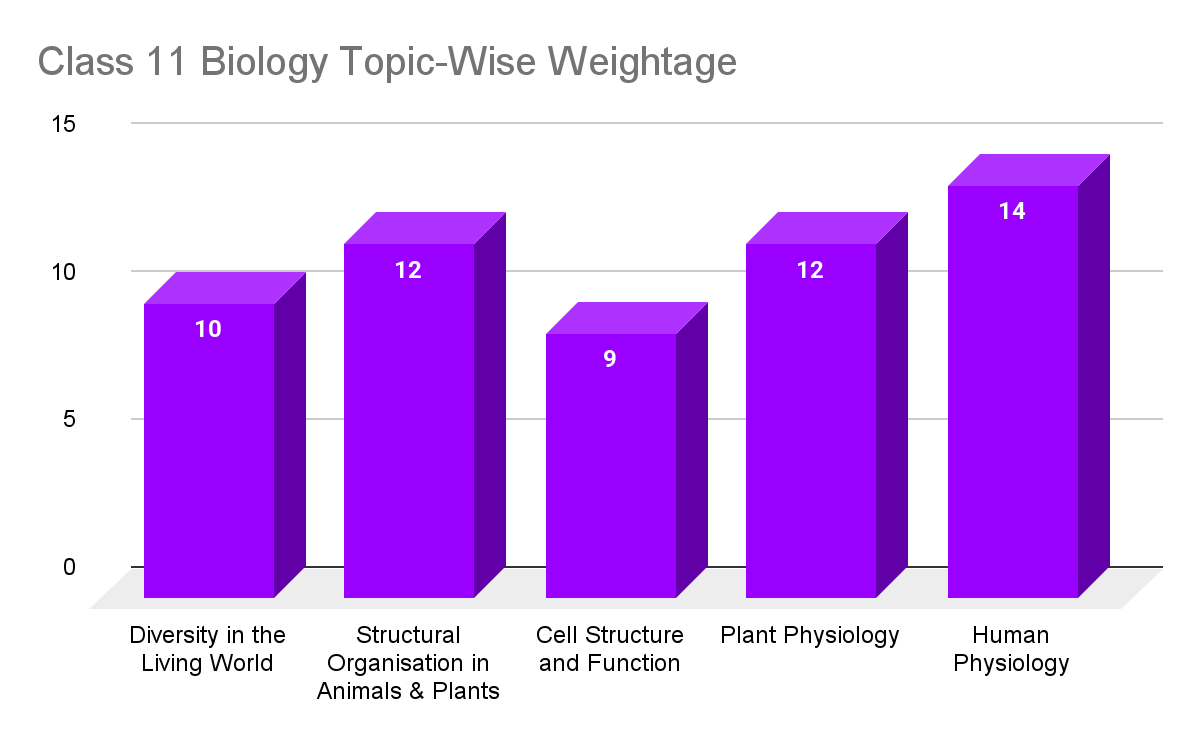
Class 11 Biology Topic-Wise Weightage
| Unit/Topic | Key Concepts | Approximate Weightage |
|---|---|---|
| Diversity in the Living World | Classification of Life Forms, Five Kingdoms, Phyla of Animals, Plant Classification | 8-10% |
| Structural Organisation in Animals & Plants | Morphology of Plants, Animal Tissues, Plant Anatomy, Animal Anatomy | 10-12% |
| Cell Structure and Function | Cell Theory, Prokaryotic & Eukaryotic Cells, Organelles, Cell Cycle | 7-9% |
| Plant Physiology | Photosynthesis, Respiration, Transport in Plants, Growth and Development | 10-12% |
| Human Physiology | Digestion, Breathing, Blood Circulation, Excretion, Locomotion | 12-14% |
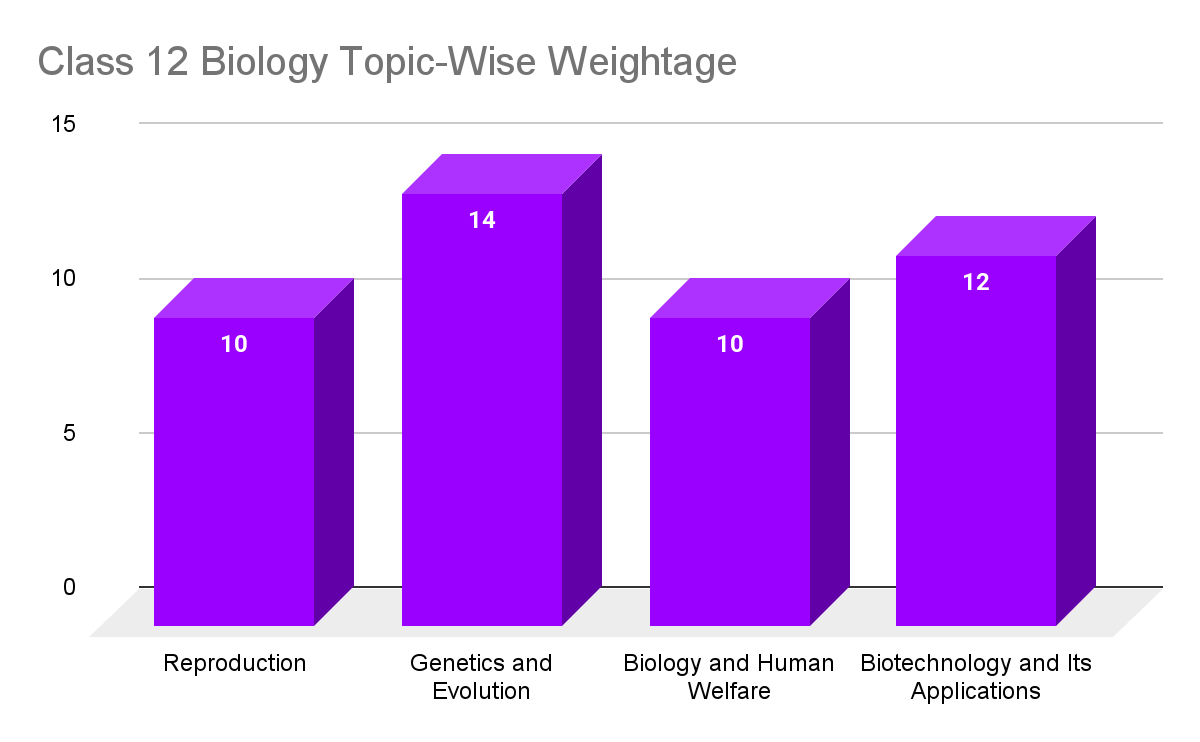
Class 12 Biology Topic-Wise Weightage
| Unit/Topic | Key Concepts | Approximate Weightage |
|---|---|---|
| Reproduction | Sexual and Asexual Reproduction, Human Reproductive System | 8-10% |
| Genetics and Evolution | Heredity, Mendel’s Laws, Molecular Genetics, Evolution | 12-14% |
| Biology and Human Welfare | Genetic Engineering, Applications in Medicine & Agriculture | 8-10% |
| Biotechnology and Its Applications | Ecosystems, Biodiversity, Environmental Issues, Pollution | 10-12% |
Check:
| NEET 2025 Botany Question Paper with Solutions | Check Solutions |
|---|---|
| NEET 2025 Zoology Question Paper with Solutions | Check Solutions |
Why Knowing NEET Biology Chapters is Important
- Strategic Planning: In order to create a strategic plan, the candidates are required to divide the 38 chapters into units, which will help them create an informative timetable.
- Focus on High-Weightage Topics: The candidates should focus on units like Human Physiology, Genetics, and Ecology. These units carry excess questions. These units carry excess questions.
- Class-Wise Balance: The topics and subjects from Class 11 and Class 12 are equally important. The candidates are advised not to skip either subject, as it will highly affect their ranks.
- NCERT Priority: The exam strictly follows NCERT-based chapters. This makes chapter-wise coverage a requirement for the candidates.
- Revision Efficiency: If the candidates break their preparation into 10 units, they will be able to conduct a systematic revision before exams.
How Many Chapters in NEET Biology 2026: High Scoring Topics in NEET Biology 2026
| Class | Topic | Why It’s High-Scoring |
|---|---|---|
| 11 | Diversity in the Living World | Frequent direct questions on classification and examples. |
| Cell Structure and Function | High conceptual clarity yields straightforward questions. | |
| Plant Physiology | Covers processes like photosynthesis and respiration, often asked in exams. | |
| Human Physiology | A vast topic but with repeated and direct question patterns. | |
| 12 | Genetics and Evolution | Includes key concepts like Mendel’s laws and molecular genetics. |
| Ecology and Environment | High weightage with relatively simple and application-based questions. | |
| Biotechnology and Its Applications | Focus on genetic engineering and its practical uses in medicine. | |
| Reproduction | Direct questions on human and plant reproduction. |
Read More:
Deleted Syllabus of NEET 2026 BiologyWhat is NEET 2026 Biology Syllabus?
Class 11th NEET Biology Syllabus
| Unit | Topics | Subtopics |
|---|---|---|
| UNIT 1: Diversity in Living World | Living and Classification | What is Living?; Biodiversity; Taxonomy & Systematics; Concept of species and taxonomical hierarchy; Binomial nomenclature |
| Five Kingdom Classification | Classification of Monera, Protista, Fungi, and Viruses; Characteristics and examples of each group | |
| Plant Classification | Algae, Bryophytes, Gymnosperms, Pteridophytes (salient features and examples of each) | |
| Animal Classification | Classification of non-chordates up to phyla level and chordates up to classes level (examples of each) | |
| UNIT 2: Structural Organisation in Animals and Plants | Plant Morphology & Anatomy | Morphology of root, stem, leaf, inflorescence, flower, fruit, seed; Modifications and relevant practical examples (e.g., Malvaceae, Cruciferae) |
| Animal Tissues | Morphology and anatomy of systems in frogs (digestive, circulatory, respiratory, nervous, reproductive) | |
| UNIT 3: Cell Structure and Function | Cell Theory and Structure | Prokaryotic and eukaryotic cells; Plant and animal cells; Organelles like mitochondria, Golgi bodies, lysosomes, nucleus |
| Biomolecules | Structure and function of proteins, carbohydrates, lipids, nucleic acids; Enzymes and enzyme action | |
| Cell Division | Cell cycle, mitosis, meiosis; Significance of these processes | |
| UNIT 4: Plant Physiology | Photosynthesis | Process of photosynthesis, C3 and C4 pathways, factors affecting photosynthesis |
| Respiration | Cellular respiration (glycolysis, TCA cycle, and electron transport chain); Energy production and respiratory quotient | |
| Plant Growth & Development | Seed germination, plant growth phases, differentiation; Role of growth regulators (auxins, gibberellins, cytokinin) | |
| UNIT 5: Human Physiology | Breathing & Respiration | Mechanism of breathing, gas exchange, transport of gases, regulation of respiration, respiratory disorders |
| Body Fluids & Circulation | Blood composition, blood groups, circulatory system, cardiac cycle, ECG, hypertension, coronary artery disease | |
| Excretory System | Excretion types, human excretory system, urine formation, osmoregulation, kidney function regulation | |
| Locomotion & Movement | Types of movement, skeletal muscle, skeletal system, joints, disorders like arthritis, osteoporosis | |
| Nervous System | Structure and function of neurons, nervous system (CNS, PNS), nerve impulse generation and conduction | |
| Chemical Coordination | Endocrine glands, hormones, regulation of hormone action, disorders related to hormones (e.g., diabetes, goiter) |
Class 12th NEET Biology Syllabus
| Unit | Topics | Subtopics |
|---|---|---|
| UNIT 6: Reproduction | Sexual Reproduction in Plants | Flower structure, male & female gametophytes, pollination types, pollen-pistil interaction, double fertilization, apomixis, parthenocarpy, polyembryony, significance of seed & fruit formation |
| Human Reproduction | Male and female reproductive systems, gametogenesis (spermatogenesis & oogenesis), menstrual cycle, fertilization, embryo development, pregnancy, placenta formation, parturition, lactation | |
| Reproductive Health | Importance of reproductive health, prevention of STDs, birth control methods, contraception, MTP, amniocentesis, infertility treatments (IVF, ZIFT, GIFT) | |
| UNIT 7: Genetics and Evolution | Heredity & Variation | Mendelian inheritance, deviations (incomplete dominance, co-dominance, multiple alleles, polygenic inheritance), chromosome theory, sex determination, linkage & crossing over, Mendelian disorders (e.g., Thalassemia, Hemophilia), chromosomal disorders (Down’s syndrome, Turner’s syndrome) |
| Molecular Basis of Inheritance | DNA & RNA structure, DNA replication, central dogma, transcription, translation, Lac Operon, human genome project, DNA fingerprinting, protein synthesis | |
| Evolution | Origin of life, biological evolution, evidence from paleontology, anatomy, embryology, molecular evidence, Darwin’s theory, natural selection, Hardy-Weinberg principle, gene flow, human evolution | |
| UNIT 8: Biology and Human Welfare | Health & Disease | Pathogens causing human diseases (e.g., malaria, tuberculosis, HIV, cancer), immunology basics, vaccines, drug and alcohol abuse, tobacco use |
| Microbes in Human Welfare | Role of microbes in food processing, industrial production, sewage treatment, biocontrol agents, and biofertilizers | |
| UNIT 9: Biotechnology and Its Applications | Biotechnology Principles | Genetic engineering (recombinant DNA technology) |
| Applications in Health & Agriculture | Human insulin & vaccine production, gene therapy, genetically modified organisms (Bt crops, transgenic animals), biosafety issues (biopiracy, patents) | |
| UNIT 10: Ecology and Environment | Organisms and Environment | Population interactions (mutualism, competition, predation, parasitism), population growth, birth and death rates, and age distribution |
| Ecosystem | Ecosystem patterns and components, energy flow, productivity, decomposition, pyramids of number, biomass, and energy | |
| Biodiversity and Conservation | Concept and patterns of biodiversity, importance, threats, conservation methods, hotspots, endangered species, biosphere reserves, national parks, Red Data Book, sacred groves |
Read More:
NEET Biology Preparation TipsHow Many Chapters in NEET Biology 2026 FAQS
Ques. How many chapters in NEET Biology 2026?
Ans. The NEET Biology syllabus 2026 consists of 38 chapters. These are then further divided into 10 principal units from the Class 11 and Class 12 NCERT books. The chapters contain topics from both Botany and Zoology, which form the backbone of the examination.
Ques. Which class has more weightage - Class 11 or Class 12 Biology?
Ans. In the NEET Biology 2026 exam, both Class 11 and Class 12 are equally important, with each contributing approximately 50%. Questions are almost equally divided, so ignoring either year's syllabus can hamper scores and ranks. Equal attention to both classes provides full coverage and more accuracy in the exam.
Ques. Are there deleted topics in NEET Biology 2026?
Ans. Yes, the NEET 2026 Biology syllabus also contains a couple of deleted topics. They are Transport in Plants, Reproduction in Organisms, Improvement in Food Production, and Environmental Issues. Candidates are advised to refer to the new NMC guidelines to study only the revised syllabus for further preparation.
Ques. Why is Biology important in NEET?
Ans. Biology has the maximum weightage in the NEET exam, which consists of 90 questions out of 180. Clear knowledge of all the chapters increases overall performance to a great extent. Having a good hold over Biology enhances rank, along with solid conceptual clarity for studying further medicine.
Ques. What is the best way to cover all the Biology chapters?
Ans. The candidates are advised to study the NCERT syllabus intensively, by making unit-wise notes, and revising regularly. The candidates are advised to solve any previous year's papers and mock tests. Putting emphasis on high-weightage chapters such as Genetics, Physiology, and Ecology will help retain more marks.
NEET Biology 2026 Study Notes



Comments