




NEET 2023 Zoology Question Paper with Solutions PDF G5 is available for download. NEET 2023 G5 Zoology Question Paper comprises 50 MCQs out of which only 45 are to be attempted. NEET 2023 question G5 Zoology is divided into 2 sections- A (35 questions) and B (15 questions).
You can download NEET 2023 Zoology question paper with answer key and solutions PDF for G5 using the links given below.
NEET 2023 Zoology Question Paper with Solutions PDF G5
| NEET 2023 Zoology G5 Question Paper with Solutions PDF | Download PDF | Check Solutions |

Given below are two statements: one is labelled as Assertion A and the other is labelled as Reason R.
Assertion A: Amniocentesis for sex determination is one of the strategies of Reproductive and Child Health Care Programme.
Reason R: Ban on amniocentesis checks increasing menace of female foeticide.
In the light of the above statements, choose the correct answer from the options given below:
View Solution
Step 1: Understanding the Question:
The question presents an Assertion (A) and a Reason (R) related to the medical procedure amniocentesis. We need to evaluate the truthfulness of both statements and determine if R is the correct explanation for A.
Step 2: Evaluating Assertion A:
Assertion A states that amniocentesis for sex determination is a strategy of the Reproductive and Child Health Care (RCH) Programme. This is false. Amniocentesis is a prenatal diagnostic technique used to detect genetic abnormalities in the fetus. However, its use for sex determination is legally banned in India and is not a part of any government healthcare strategy. The RCH programme focuses on improving reproductive and child health, and promoting sex determination goes against its objectives of preventing female foeticide.
Step 3: Evaluating Reason R:
Reason R states that a ban on amniocentesis checks the increasing menace of female foeticide. This is true. The misuse of amniocentesis to determine the sex of the fetus, followed by abortion if the fetus is female, led to a significant increase in female foeticide. To curb this social evil, the government of India enacted the Pre-conception and Pre-natal Diagnostic Techniques (PCPNDT) Act, 1994, which bans the use of this technique for sex determination.
Step 4: Final Answer:
Since Assertion A is false and Reason R is true, the correct option is (1).
Quick Tip: Remember that while amniocentesis itself is a valid medical procedure for detecting chromosomal abnormalities (like Down's syndrome), its misuse for sex determination is illegal and is the primary reason for the statutory ban. Government programs like RCH promote health, not practices that lead to social evils like female foeticide.
Vital capacity of lung is ______
View Solution
Step 1: Understanding the Question:
The question asks for the correct formula representing the Vital Capacity (VC) of the lungs.
Step 2: Key Formula or Approach:
Vital Capacity is defined as the maximum volume of air a person can breathe out after a forced inspiration. It is the sum of three respiratory volumes:
Tidal Volume (TV): Volume of air inspired or expired during a normal respiration (approx. 500 mL).
Inspiratory Reserve Volume (IRV): Additional volume of air a person can inspire by a forcible inspiration (approx. 2500-3000 mL).
Expiratory Reserve Volume (ERV): Additional volume of air a person can expire by a forcible expiration (approx. 1000-1100 mL).
The formula for Vital Capacity is:
\[ VC = IRV + ERV + TV \]
Step 3: Detailed Explanation:
Let's analyze the components:
A forced inspiration fills the lungs with TV + IRV.
A forced expiration from this point empties the lungs of IRV + TV + ERV.
This total exhaled volume is the Vital Capacity.
The other options are:
(2) IRV + ERV: This sum is part of VC but omits the Tidal Volume.
(3) IRV + ERV + TV + RV: This sum represents the Total Lung Capacity (TLC), which includes the Residual Volume (RV).
(4) IRV + ERV + TV - RV: This is not a standard respiratory capacity.
Step 4: Final Answer:
The correct formula for the vital capacity of the lung is IRV + ERV + TV.
Quick Tip: Remember the key respiratory capacities: \textbf{Vital Capacity (VC)} = TV + IRV + ERV (Maximum exchangeable air) \textbf{Total Lung Capacity (TLC)} = VC + RV (All air in the lungs) \textbf{Inspiratory Capacity (IC)} = TV + IRV \textbf{Functional Residual Capacity (FRC)} = ERV + RV
Match List I with List II.
List I & List II
A. P-wave & I. & Beginning of systole
B. Q-wave & II. & Repolarisation of ventricles
C. QRS complex & III. & Depolarisation of atria
D. T-wave & IV. & Depolarisation of ventricles
Choose the correct answer from the options given below:
View Solution
Step 1: Understanding the Question:
The question requires matching the different waves of an Electrocardiogram (ECG) in List I with the cardiac events they represent in List II.
Step 2: Detailed Explanation:
Let's analyze each component of the ECG from List I:
A. P-wave: This small upward wave represents the electrical excitation, or depolarisation of the atria, which leads to the contraction of both atria. So, A matches with III.
C. QRS complex: This complex starts shortly after the P-wave and represents the depolarisation of the ventricles, which initiates ventricular contraction (systole). So, C matches with IV.
B. Q-wave: The Q-wave is the initial downward deflection of the QRS complex. Since the QRS complex as a whole initiates ventricular systole, the Q-wave marks the very beginning of systole. So, B matches with I.
D. T-wave: This wave represents the return of the ventricles from the excited to the normal state, which is called repolarisation of the ventricles. The end of the T-wave marks the end of systole. So, D matches with II.
Step 3: Final Matching:
The correct pairings are:
A \(\rightarrow\) III
B \(\rightarrow\) I
C \(\rightarrow\) IV
D \(\rightarrow\) II
This set of matches corresponds to option (2).
Quick Tip: Remember the sequence: Atrial Depolarization (P-wave) \(\rightarrow\) Ventricular Depolarization (QRS complex) \(\rightarrow\) Ventricular Repolarization (T-wave). Depolarization leads to contraction (systole), and repolarization leads to relaxation (diastole).
Given below are two statements:
Statement I: A protein is imagined as a line, the left end represented by first amino acid (C-terminal) and the right end represented by last amino acid (N-terminal)
Statement II: Adult human haemoglobin, consists of 4 subunits (two subunits of \(\alpha\) type and two subunits of \(\beta\) type.)
In the light of the above statements, choose the correct answer from the options given below:
View Solution
Step 1: Understanding the Question:
The question presents two statements, one about the representation of protein structure and the other about the composition of hemoglobin. We need to evaluate the correctness of each statement.
Step 2: Evaluating Statement I:
Statement I describes the convention for representing a polypeptide chain. It claims the left end is the C-terminal and the right end is the N-terminal. This is false. By universal biochemical convention, a protein or polypeptide chain is written starting with the amino-terminal (N-terminal) end on the left and ending with the carboxyl-terminal (C-terminal) end on the right. The first amino acid is the N-terminal residue, and the last is the C-terminal residue.
Step 3: Evaluating Statement II:
Statement II describes the structure of adult human hemoglobin (HbA). It states that it consists of 4 subunits: two of \(\alpha\) type and two of \(\beta\) type. This is true. Adult hemoglobin is a tetrameric protein with a quaternary structure, composed of two \(\alpha\)-globin chains and two \(\beta\)-globin chains (\(\alpha_2\beta_2\)).
Step 4: Final Answer:
Since Statement I is false and Statement II is true, the correct option is (1).
Quick Tip: Remember the N to C convention for proteins. The N-terminus has a free amino group (-\(NH_2\)) and is considered the beginning. The C-terminus has a free carboxyl group (-\(COOH\)) and is the end. Think of it as reading from "N" to "C".
Which of the following functions is carried out by cytoskeleton in a cell?
View Solution
Step 1: Understanding the Question:
The question asks to identify a function performed by the cytoskeleton from the given options.
Step 2: Detailed Explanation:
The cytoskeleton is a network of protein filaments and tubules in the cytoplasm of many living cells, giving them shape and coherence. Its primary functions include:
Mechanical Support: Maintaining the shape of the cell.
Motility: This includes the movement of the entire cell (e.g., amoeboid movement, crawling) and the movement of structures within the cell. Cilia and flagella, which are responsible for cell movement, are made of microtubules (a component of the cytoskeleton).
Intracellular Transport: It acts as a track for motor proteins to move vesicles and organelles around the cell.
Cell Division: The formation of the mitotic spindle, which separates chromosomes during nuclear division (mitosis and meiosis), is a critical function of microtubules.
Step 3: Evaluating the Options:
(1) Transportation: This is a function (intracellular transport), but "Motility" is a more direct and encompassing term for movement.
(2) Nuclear division: The cytoskeleton is essential for this (spindle formation).
(3) Protein synthesis: This is the function of ribosomes, not the cytoskeleton.
(4) Motility: This is a major and well-recognized function of the cytoskeleton.
Both (1), (2), and (4) are functions of the cytoskeleton. However, in multiple-choice questions, we often need to choose the most prominent or direct function. Motility is a classic, defining feature of the cytoskeleton's role. Many textbooks highlight mechanical support and motility as the key functions. Therefore, Motility is the best answer among the choices.
Step 4: Final Answer:
Among the given options, motility is a key function carried out by the cytoskeleton.
Quick Tip: Associate the cytoskeleton with "Structure and Movement." It's the cell's skeleton and muscle system combined. Remember its three main components: microfilaments (cell shape, muscle contraction), intermediate filaments (anchorage), and microtubules (cell division, motility via cilia/flagella).
Select the correct group/set of Australian Marsupials exhibiting adaptive radiation.
View Solution
Step 1: Understanding the Question:
The question asks to identify the option that contains only Australian marsupials, which are a classic example of adaptive radiation.
Step 2: Detailed Explanation:
Adaptive radiation is the evolution of different species from a common ancestor, each adapted to a different ecological niche. Australian marsupials are a prime example, having evolved from a common ancestor to fill niches occupied by placental mammals elsewhere in the world. We need to find the group that consists exclusively of these marsupials.
Step 3: Evaluating the Options:
(1) Lemur, Anteater, Wolf: Lemurs are primates. Anteaters and wolves are placental mammals. This group is incorrect.
(2) Tasmanian wolf, Bobcat, Marsupial mole: Tasmanian wolf (Thylacine) and Marsupial mole are marsupials. However, the Bobcat is a placental mammal (a feline). This group is incorrect.
(3) Numbat, Spotted cuscus, Flying phalanger: The Numbat (or marsupial anteater), the Spotted cuscus (a type of possum), and the Flying phalanger (a glider) are all native Australian marsupials. This group is correct.
(4) Mole, Flying squirrel, Tasmanian tiger cat: The Mole and the Flying squirrel are placental mammals that show convergent evolution with the Marsupial mole and Flying phalanger, respectively. The Tasmanian tiger cat (thylacine) is a marsupial. This group contains placental mammals and is incorrect.
Step 4: Final Answer:
The only set containing entirely Australian marsupials is Numbat, Spotted cuscus, and Flying phalanger.
Quick Tip: To answer questions on adaptive radiation, be familiar with the key examples: Darwin's finches in the Galapagos, and Australian marsupials. Differentiate between marsupials and their placental mammal counterparts (e.g., Marsupial Mole vs. Placental Mole; Sugar Glider vs. Flying Squirrel).
Given below are two statements:
Statement I: RNA mutates at a faster rate.
Statement II: Viruses having RNA genome and shorter life span mutate and evolve faster.
In the light of the above statements, choose the correct answer from the options given below:
View Solution
Step 1: Understanding the Question:
The question asks us to evaluate two statements about the mutation and evolution rates of RNA and RNA viruses.
Step 2: Evaluating Statement I:
Statement I: RNA mutates at a faster rate. This statement is true. RNA is chemically less stable than DNA (due to the 2'-hydroxyl group on the ribose sugar). More importantly, the enzymes that replicate RNA (RNA-dependent RNA polymerases) lack the proofreading capabilities that DNA polymerases have. This lack of a "spell-check" function results in a much higher error rate during replication, leading to a faster mutation rate.
Step 3: Evaluating Statement II:
Statement II: Viruses having RNA genome and shorter life span mutate and evolve faster. This statement is also true. As established in Statement I, RNA genomes have a high mutation rate, which provides the raw material for natural selection. Combined with a very short generation time (life span), this allows for rapid evolutionary change. New variants can arise and be selected for in a very short period, as seen with viruses like influenza and coronaviruses.
Step 4: Final Answer:
Both statements are scientifically correct. Therefore, the correct option is (2).
Quick Tip: Remember the link: Unstable RNA + No proofreading enzyme \(\rightarrow\) High mutation rate. High mutation rate + Short generation time \(\rightarrow\) Rapid evolution. This is why developing long-lasting vaccines against RNA viruses is challenging.
Once the undigested and unabsorbed substances enter the caecum, their backflow is prevented by-
View Solution
Step 1: Understanding the Question:
The question asks to identify the anatomical structure that prevents the backflow of material from the caecum (the beginning of the large intestine) into the small intestine.
Step 2: Detailed Explanation:
The digestive tract is equipped with several sphincters or valves that regulate the one-way flow of food and waste. Let's examine the location and function of each option:
(1) Pyloric sphincter: Located between the stomach and the duodenum (the first part of the small intestine). It controls the passage of chyme from the stomach into the small intestine.
(2) Sphincter of Oddi: Located at the junction of the common bile duct/pancreatic duct and the duodenum. It controls the flow of bile and pancreatic juices into the small intestine.
(3) Ileo-caecal valve: Located at the junction of the ileum (the last part of the small intestine) and the caecum (the first part of the large intestine). Its primary function is to allow the passage of digested food from the ileum to the caecum and to prevent the backflow of fecal matter into the ileum.
(4) Gastro-oesophageal sphincter: Also known as the cardiac sphincter, it is located between the oesophagus and the stomach. It prevents the acidic contents of the stomach from moving back up into the oesophagus.
Step 3: Final Answer:
The structure that prevents backflow from the caecum is the Ileo-caecal valve.
Quick Tip: To remember the locations of digestive valves, trace the path of food: Oesophagus \(\rightarrow\) [Gastro-oesophageal sphincter] \(\rightarrow\) Stomach \(\rightarrow\) [Pyloric sphincter] \(\rightarrow\) Small Intestine (Ileum) \(\rightarrow\) [Ileo-caecal valve] \(\rightarrow\) Large Intestine (Caecum).
Which one of the following techniques does not serve the purpose of early diagnosis of a disease for its early treatment?
View Solution
Step 1: Understanding the Question:
The question asks to identify which of the listed diagnostic techniques is generally not used for the *early* diagnosis of a disease, especially compared to the other options.
Step 2: Detailed Explanation:
Let's evaluate the sensitivity of each technique for early detection:
(1) ELISA: This technique is based on antigen-antibody interactions and is highly sensitive. It can detect very low concentrations of antigens (like viral proteins) or antibodies produced by the body in response to an infection, often before symptoms are severe. It is used for the early diagnosis of diseases like HIV.
(2) Recombinant DNA Technology: This technology allows the creation of DNA/RNA probes that can bind to the genetic material of a pathogen or a mutated gene. This allows for detection at the molecular level, which is a very early stage.
(3) Serum and Urine analysis: These are conventional methods. They typically measure physiological or biochemical parameters (e.g., glucose in urine, liver enzymes in serum). Often, significant changes in these parameters occur only after the disease has progressed to a point where the pathogen concentration is high or organ damage has begun. Therefore, they are generally less sensitive for very early diagnosis compared to molecular techniques.
(4) PCR: This is a molecular technique that can amplify a minute amount of DNA or RNA by millions of times. This makes it possible to detect the presence of a pathogen's genetic material even when it is present in very low numbers, long before the body mounts a detectable immune response or shows clinical symptoms. It is a cornerstone of early diagnosis.
Step 3: Final Answer:
Compared to the highly sensitive molecular techniques of ELISA, PCR, and Recombinant DNA technology, conventional serum and urine analysis is generally less effective for the *early* diagnosis of many diseases.
Quick Tip: Remember that modern molecular techniques like PCR and ELISA are designed for high sensitivity and specificity, allowing detection of pathogens or biomarkers at very low concentrations. This is the key to "early diagnosis." Conventional tests often require a higher concentration or a more advanced disease state to yield a positive result.
Given below are statements: one is labelled as Assertion A and the other is labelled as Reason R.
Assertion A: Nephrons are of two types: Cortical & Juxta medullary, based on their relative position in cortex and medulla.
Reason R: Juxta medullary nephrons have short loop of Henle whereas, cortical nephrons have longer loop of Henle.
In the light of the above statements, choose the correct answer from the options given below:
View Solution
Step 1: Understanding the Question:
This is an Assertion-Reason question about the types of nephrons in the kidney. We need to assess if Assertion (A) and Reason (R) are individually correct.
Step 2: Evaluating Assertion A:
Assertion A states that nephrons are categorized into two types, Cortical and Juxtamedullary, based on their position in the cortex and medulla. This statement is true. The majority of nephrons are cortical, with their glomeruli in the outer cortex. Juxtamedullary nephrons have their glomeruli close to the junction of the cortex and medulla.
Step 3: Evaluating Reason R:
Reason R states that Juxtamedullary nephrons have short loops of Henle, while cortical nephrons have long loops of Henle. This statement is false. The opposite is true.
Cortical nephrons have short loops of Henle that extend only a little way into the medulla.
Juxtamedullary nephrons have very long loops of Henle that extend deep into the medulla. This feature is crucial for creating the concentration gradient in the medulla, which allows for the production of concentrated urine.
Step 4: Final Answer:
Since Assertion A is true and Reason R is false, the correct option is (4).
Quick Tip: Associate "Juxtamedullary" with "juxtaposed to the medulla" and "long loop". These long loops are essential for the counter-current mechanism and concentrating urine. Cortical nephrons, being mostly in the cortex, have shorter loops.
Which one of the following common sexually transmitted diseases is completely curable when detected early and treated properly?
View Solution
Step 1: Understanding the Question:
The question asks to identify which of the given sexually transmitted diseases (STDs) is completely curable, especially with early detection and treatment. The key distinction is between curable and manageable diseases.
Step 2: Detailed Explanation:
Let's analyze the treatability of each disease:
(1) HIV Infection: Caused by the Human Immunodeficiency Virus (HIV). It is a viral disease that currently has no cure. However, it can be effectively managed with Antiretroviral Therapy (ART).
(2) Genital herpes: Caused by the Herpes Simplex Virus (HSV). It is a viral infection that is not curable. The virus remains dormant in the body and can cause recurrent outbreaks. Antiviral medications can manage symptoms and reduce the frequency of outbreaks.
(3) Gonorrhoea: Caused by the bacterium \textit{Neisseria gonorrhoeae. As a bacterial infection, it is completely curable with a course of appropriate antibiotics. Early treatment is crucial to prevent complications like pelvic inflammatory disease (PID) and infertility.
(4) Hepatitis-B: Caused by the Hepatitis B Virus (HBV). Acute infection may resolve on its own, but it can become chronic, for which there is no cure. The chronic infection can be managed with antiviral drugs. A vaccine is available for prevention.
Step 3: Final Answer:
Among the given options, only Gonorrhoea, being a bacterial infection, is completely curable with proper antibiotic treatment.
Quick Tip: A general rule for STDs: bacterial infections (like Gonorrhoea, Syphilis, Chlamydia) are generally curable with antibiotics. Viral infections (like HIV, Herpes, Hepatitis-B, HPV) are generally not curable, but can often be managed or prevented with vaccines.
Which of the following statements are correct regarding female reproductive cycle?
A. In non-primate mammals cyclical changes during reproduction are called oestrus cycle.
B. First menstrual cycle begins at puberty and is called menopause.
C. Lack of menstruation may be indicative of pregnancy.
D. Cyclic menstruation extends between menarche and menopause.
Choose the most appropriate answer from the options given below:
View Solution
Step 1: Understanding the Question:
The question asks to identify the correct statements about the female reproductive cycle from a list of four statements.
Step 2: Detailed Explanation:
Let's evaluate each statement:
Statement A: In non-primate mammals cyclical changes during reproduction are called oestrus cycle. This is correct. Mammals like cows, sheep, dogs, etc., have an oestrus cycle, characterized by a period of "heat" or oestrus when the female is sexually receptive. Primates (monkeys, apes, humans) have a menstrual cycle.
Statement B: First menstrual cycle begins at puberty and is called menopause. This is incorrect. The first menstrual cycle is called menarche. Menopause is the permanent cessation of the menstrual cycle, which occurs later in life.
Statement C: Lack of menstruation may be indicative of pregnancy. This is correct. Amenorrhea, or the absence of menstruation, is one of the primary and earliest signs of pregnancy. (Though it can also be caused by stress, poor health, etc.)
Statement D: Cyclic menstruation extends between menarche and menopause. This is correct. The reproductive phase in human females is marked by the menstrual cycle, which starts at menarche and ends at menopause.
Step 3: Final Answer:
The correct statements are A, C, and D. This corresponds to option (1).
Quick Tip: Memorize the key terms for the female reproductive life stages: \textbf{Menarche} = Beginning of menstruation. \textbf{Menopause} = Cessation of menstruation. Differentiate clearly between the menstrual cycle (in primates) and the oestrus cycle (in non-primates).
Given below are two statements:
Statement I: Low temperature preserves the enzyme in a temporarily inactive state whereas high temperature destroys enzymatic activity because proteins are denatured by heat.
Statement II: When the inhibitor closely resembles the substrate in its molecular structure and inhibits the activity of the enzyme, it is known as competitive inhibitor.
In the light of the above statements, choose the correct answer from the options given below:
View Solution
Step 1: Understanding the Question:
The question presents two statements about enzyme kinetics and asks to evaluate their correctness.
Step 2: Evaluating Statement I:
Statement I describes the effect of temperature on enzyme activity. It states that low temperatures cause temporary inactivation, while high temperatures cause permanent destruction (denaturation). This is true. At low temperatures, enzymes become temporarily inactive because molecules have less kinetic energy, but their structure is preserved. Upon warming, their activity is restored. At high temperatures, the thermal energy breaks the weak bonds (like hydrogen bonds) that maintain the protein's specific three-dimensional structure. This irreversible change is called denaturation, and it destroys the enzyme's catalytic activity.
Step 3: Evaluating Statement II:
Statement II defines a competitive inhibitor. It states that a competitive inhibitor closely resembles the substrate and inhibits the enzyme. This is the correct definition of competitive inhibition. The inhibitor molecule competes with the normal substrate for binding to the active site of the enzyme.
Step 4: Final Answer:
Both Statement I and Statement II are correct and fundamental principles of enzymology. Therefore, the correct option is (2).
Quick Tip: For enzyme kinetics, remember: \textbf{Temperature:} Low temp = inactive, High temp = denatured. \textbf{pH:} Each enzyme has an optimal pH; extreme pH causes denaturation. \textbf{Inhibition:} Competitive inhibitors mimic the substrate and bind to the active site. Non-competitive inhibitors bind elsewhere (allosteric site) and change the enzyme's shape.
Match List I with List II.
List I & List II
A. Taenia & I. & Nephridia
B. Paramoecium & II. & Contractile vacuole
C. Periplaneta & III. & Flame cells
D. Pheretima & IV. & Urecose gland
Choose the correct answer from the options give below:
View Solution
Step 1: Understanding the Question:
The question requires matching organisms from List I with their corresponding excretory or osmoregulatory structures from List II.
Step 2: Detailed Explanation:
Let's analyze each organism in List I and identify its correct structure from List II.
A. Taenia (Tapeworm): It belongs to the phylum Platyhelminthes. The excretory system in Platyhelminthes consists of specialized cells called Flame cells (or protonephridia). So, A matches with III.
B. Paramoecium: This is a single-celled protozoan. It lives in freshwater and uses a specialized organelle, the Contractile vacuole, for osmoregulation (to pump out excess water). So, B matches with II.
C. Periplaneta (Cockroach): It belongs to the phylum Arthropoda. The primary excretory organs are Malpighian tubules. However, cockroaches also have fat bodies and Urecose glands which are involved in the storage and excretion of uric acid. So, C matches with IV.
D. Pheretima (Earthworm): It belongs to the phylum Annelida. The excretory organs in annelids are coiled tubular structures called Nephridia. So, D matches with I.
Step 3: Final Matching:
The correct pairings are:
A \(\rightarrow\) III
B \(\rightarrow\) II
C \(\rightarrow\) IV
D \(\rightarrow\) I
This set of matches corresponds to option (4).
Quick Tip: Create a table of major animal phyla and their characteristic excretory structures. Key pairings to remember: Platyhelminthes \(\rightarrow\) Flame Cells Annelida \(\rightarrow\) Nephridia Arthropoda (Insects) \(\rightarrow\) Malpighian Tubules Protozoa (freshwater) \(\rightarrow\) Contractile Vacuole
Which one of the following symbols represents mating between relatives in human pedigree analysis?

View Solution
Step 1: Understanding the Question:
The question asks to identify the standard symbol used in a human pedigree chart to represent consanguineous mating, which is mating between closely related individuals.
Step 2: Detailed Explanation of Pedigree Symbols:
In pedigree analysis, specific symbols are used to represent individuals, their relationships, and their traits.
A square represents a male.
A circle represents a female.
A horizontal line connecting a square and a circle represents mating.
A filled symbol represents an affected individual (possessing the trait of interest).
An unfilled symbol represents an unaffected individual.
A double horizontal line connecting a square and a circle specifically indicates a consanguineous mating (mating between relatives).
Step 3: Evaluating the Options:
Option (1) shows a mating between an affected male and an affected female. The single line indicates they are not necessarily relatives.
Option (2) shows a mating between an unaffected male and an unaffected female. The single line indicates they are not necessarily relatives.
Option (3) shows a mating between an unaffected male and an unaffected female, connected by a double line. This is the correct symbol for consanguineous mating.
Option (4) shows a mating between an affected male and an unaffected female. The single line indicates they are not necessarily relatives.
Step 4: Final Answer:
The symbol with a double line between the male and female represents mating between relatives.
Quick Tip: In pedigree charts, pay close attention to the connecting lines. A single horizontal line is for a standard mating, while a double horizontal line specifically signifies a consanguineous mating. This is often a key clue for identifying recessive genetic disorders.
Given below are two statements:
Statement I: Vas deferens receives a duct from seminal vesicle and opens into urethra as the ejaculatory duct.
Statement II: The cavity of the cervix is called cervical canal which along with vagina forms birth canal.
In the light of the above statements, choose the correct answer from the options given below:
View Solution
Step 1: Understanding the Question:
The question asks to evaluate the correctness of two statements related to the human male and female reproductive systems.
Step 2: Evaluating Statement I:
This statement describes a part of the male reproductive tract. The vas deferens is the tube that carries sperm from the epididymis. It loops over the urinary bladder and receives a duct from the seminal vesicle. The union of the vas deferens and the duct of the seminal vesicle forms the ejaculatory duct. This ejaculatory duct then passes through the prostate gland and opens into the urethra. The statement accurately describes this anatomical pathway. Thus, Statement I is true.
Step 3: Evaluating Statement II:
This statement describes a part of the female reproductive tract. The cervix is the lower, narrow part of the uterus. The cavity within the cervix is called the cervical canal. During childbirth (parturition), the baby passes from the uterus, through the cervical canal, and then through the vagina to the outside. The combination of the cervical canal and the vagina constitutes the birth canal. This statement is also anatomically correct. Thus, Statement II is true.
Step 4: Final Answer:
Since both statements are correct, the correct option is (2).
Quick Tip: For anatomy questions, it's helpful to visualize or sketch the pathways. For the male tract, trace the path of sperm: Seminiferous tubules \(\rightarrow\) Epididymis \(\rightarrow\) Vas deferens \(\rightarrow\) Ejaculatory duct \(\rightarrow\) Urethra. For the female tract, remember that the birth canal is a composite structure: Cervical canal + Vagina.
Match List I with List II.
List I & List II
A. CCK & I. & Kidney
B. GIP & II. & Heart
C. ANF & III. & Gastric gland
D. ADH & IV. & Pancreas
Choose the correct answer from the options given below:
View Solution
Step 1: Understanding the Question:
The question requires matching hormones/peptides in List I with their target organs or sites of action in List II.
Step 2: Detailed Explanation:
Let's analyze each item in List I and find its correct match in List II.
A. CCK (Cholecystokinin): This is a gastrointestinal hormone released from the duodenum. It acts on two main organs: the gallbladder (to release bile) and the Pancreas (to release digestive enzymes). So, A matches with IV.
B. GIP (Gastric Inhibitory Peptide): This is another gastrointestinal hormone. As its name suggests, it inhibits gastric secretion and motility. Therefore, it acts on the Gastric gland. So, B matches with III.
C. ANF (Atrial Natriuretic Factor): This peptide hormone is secreted by the atrial walls of the Heart in response to high blood pressure. It causes vasodilation and excretion of sodium and water by the kidneys, thus lowering blood pressure. So, C matches with II.
D. ADH (Antidiuretic Hormone): Also known as vasopressin, this hormone is released from the posterior pituitary. It acts primarily on the distal convoluted tubules (DCT) and collecting ducts of the Kidney, promoting water reabsorption. So, D matches with I.
Step 3: Final Matching:
The correct matching is:
A \(\rightarrow\) IV
B \(\rightarrow\) III
C \(\rightarrow\) II
D \(\rightarrow\) I
This corresponds to option (2).
Quick Tip: Focus on the names of the hormones as they often give clues to their function. Cholecysto-kinin: "Cholecysto" = gallbladder, "kinin" = movement. Gastric Inhibitory Peptide: Self-explanatory. Atrial Natriuretic Factor: "Atrial" = from heart atria. Anti-diuretic Hormone: "Anti-diuresis" = against urination.
Given below are two statements: one is labelled as Assertion A and the other is labelled as Reason R.
Assertion A: Endometrium is necessary for implantation of blastocyst.
Reason R: In the absence of fertilization, the corpus luteum degenerates that causes disintegration of endometrium.
In the light of the above statements, choose the correct answer from the options given below:
View Solution
Step 1: Understanding the Question:
This is an Assertion-Reason question about the female reproductive cycle, specifically concerning the endometrium, implantation, and the corpus luteum.
Step 2: Evaluating Assertion A:
Assertion A states that the endometrium is necessary for the implantation of the blastocyst. This is true. The endometrium is the inner lining of the uterus, which becomes thick, vascularized, and rich in glands under the influence of progesterone. This prepared lining is essential for the blastocyst to attach and embed itself, a process called implantation.
Step 3: Evaluating Reason R:
Reason R describes what happens if fertilization does not occur. It states that the corpus luteum degenerates, which causes the disintegration of the endometrium. This is also true. The corpus luteum produces progesterone, which maintains the endometrium. If fertilization does not happen, the corpus luteum degenerates after about 10-12 days. The subsequent sharp decline in progesterone levels leads to the breakdown and shedding of the endometrial lining, resulting in menstruation.
Step 4: Linking Assertion and Reason:
Now, we must check if Reason R is the correct explanation for Assertion A.
Assertion A is about what is needed for implantation (\textit{when fertilization occurs).
Reason R is about what happens in the \textit{absence of fertilization.
Reason R explains why menstruation occurs, but it does not explain why the endometrium is necessary for implantation. The correct explanation for Assertion A would be that the endometrium provides the necessary nutrients and structural support for the developing embryo. Since R describes a different scenario (no fertilization), it is not the correct explanation for A.
Step 5: Final Answer:
Both statements are individually true, but the reason does not correctly explain the assertion. Therefore, the correct option is (3).
Quick Tip: For Assertion-Reason questions, first validate each statement. If both are true, carefully check the link. Ask: "Does Reason R explain why Assertion A is true?" In this case, R explains menstruation, while A is about implantation. These are related but distinct events in the menstrual cycle.
Match List I with List II.
List I & List II
A. Gene 'a' & I. & \(\beta\)-galactosidase
B. Gene 'y' & II. & Transacetylase
C. Gene 'i' & III. & Permease
D. Gene 'z' & IV. & Repressor protein
Choose the correct answer from the options given below:
View Solution
Step 1: Understanding the Question:
The question requires matching the genes of the lac operon (List I) with the proteins they code for (List II).
Step 2: Detailed Explanation:
The lac operon in E. coli consists of several genes involved in lactose metabolism.
Gene 'i' (Regulator gene): This gene is not part of the operon itself but regulates it. It codes for the Repressor protein. The repressor binds to the operator region to switch the operon off. So, C matches with IV.
Gene 'z' (Structural gene): This gene codes for the enzyme \(\beta\)-galactosidase, which breaks down lactose into glucose and galactose. So, D matches with I.
Gene 'y' (Structural gene): This gene codes for the protein Permease, which is a transmembrane protein that facilitates the transport of lactose into the cell. So, B matches with III.
Gene 'a' (Structural gene): This gene codes for the enzyme Transacetylase, whose role in lactose metabolism is not fully understood but is believed to be involved in detoxification. So, A matches with II.
Step 3: Final Matching:
The correct matching is:
A \(\rightarrow\) II
B \(\rightarrow\) III
C \(\rightarrow\) IV
D \(\rightarrow\) I
This corresponds to option (3).
Quick Tip: Remember the order of the structural genes in the lac operon: z, y, a. And their products: \textbf{z} \(\rightarrow\) \(\beta\)-galactosidase \textbf{y} \(\rightarrow\) permease \textbf{a} \(\rightarrow\) transacetylase Also, remember the regulator \textbf{i} gene produces the \textbf{repressor}.
Which of the following is not a cloning vector?
View Solution
Step 1: Understanding the Question:
The question asks to identify which of the given options is not used as a cloning vector in biotechnology. A cloning vector is a DNA molecule that can carry foreign DNA into a host cell and replicate there.
Step 2: Detailed Explanation:
Let's analyze each option:
(1) Probe: A DNA or RNA probe is a short, single-stranded sequence of nucleic acid that is labeled (e.g., with a radioactive isotope or a fluorescent tag). It is used to detect the presence of a complementary sequence in a sample of DNA or RNA through hybridization. It is a detection tool, not a cloning vector.
(2) BAC (Bacterial Artificial Chromosome): This is a high-capacity cloning vector based on the F-plasmid of E. coli. It can carry large DNA inserts (100-300 kilobase pairs) and is used in genome sequencing projects. It is a cloning vector.
(3) YAC (Yeast Artificial Chromosome): This is another high-capacity cloning vector that can be replicated in yeast cells. It can carry very large DNA inserts (up to a million base pairs or more). It is a cloning vector.
(4) pBR322: This is one of the first widely used E. coli cloning vectors. It is a plasmid and is used for cloning smaller DNA fragments. It is a classic example of a cloning vector.
Step 3: Final Answer:
BAC, YAC, and pBR322 are all types of cloning vectors used to carry and replicate foreign DNA. A probe is a tool used for detection, not for cloning. Therefore, 'Probe' is not a cloning vector.
Quick Tip: Associate "vector" with "vehicle". Cloning vectors are DNA vehicles used to carry genes into cells. Common vectors include plasmids, bacteriophages, cosmids, BACs, and YACs. A "probe" is like a "detector" or "sensor" used to find a specific gene sequence.
In which blood corpuscles, the HIV undergoes replication and produces progeny viruses?
View Solution
Step 1: Understanding the Question:
The question asks to identify the specific type of blood cell in which the Human Immunodeficiency Virus (HIV) primarily replicates.
Step 2: Detailed Explanation:
HIV is a retrovirus that attacks the immune system. Its life cycle involves the following key steps:
The virus primarily targets cells that have the CD4 protein on their surface.
The most important of these cells are the Helper T-lymphocytes, also known as T\(_H\) cells or CD4\(^+\) T cells. Macrophages are also infected.
After entering a T\(_H\) cell, the virus uses its reverse transcriptase enzyme to convert its RNA genome into DNA.
This viral DNA is then integrated into the host cell's DNA.
The infected T\(_H\) cell is then forced to produce new virus particles (progeny viruses).
These new viruses are released from the cell, often killing it in the process, and go on to infect other T\(_H\) cells.
The progressive destruction of T\(_H\) cells severely weakens the immune system, leading to Acquired Immuno Deficiency Syndrome (AIDS).
Step 3: Evaluating the Options:
(1) Eosinophils, (3) B-lymphocytes, and (4) Basophils are other types of white blood cells, but they are not the primary targets for HIV replication. The key target is the T\(_H\) cell.
Step 4: Final Answer:
HIV replicates and produces progeny viruses primarily within Helper T-cells (T\(_H\) cells).
Quick Tip: Remember that HIV's main target is the "commander" of the immune system: the Helper T-cell (T\(_H\) cell). By destroying these cells, HIV cripples the body's ability to coordinate an immune response, leading to AIDS. The term "CD4 count" refers to the number of these specific cells.
Broad palm with single palm crease is visible in a person suffering from-
View Solution
Step 1: Understanding the Question:
The question asks to identify the genetic disorder characterized by a specific physical feature: a broad palm with a single transverse palmar crease (also known as a simian crease).
Step 2: Detailed Explanation:
Let's analyze the characteristic features of the given disorders:
(1) Thalassemia: This is an inherited blood disorder characterized by less hemoglobin and fewer red blood cells than normal. Its symptoms are related to anemia, not specific physical features like palm creases.
(2) Down's syndrome: This is a chromosomal disorder caused by the presence of a full or partial extra copy of chromosome 21 (Trisomy 21). It is characterized by a distinct set of physical features, including a small round head, a flattened facial profile, partially open mouth with a protruding furrowed tongue, and short stature. A very characteristic feature is a broad palm with a single transverse palmar crease.
(3) Turner's syndrome: This is a chromosomal disorder in females caused by the absence of one of the X chromosomes (XO karyotype). Features include short stature, webbed neck, and rudimentary ovaries.
(4) Klinefelter's syndrome: This is a chromosomal disorder in males caused by an extra X chromosome (XXY karyotype). Features include tall stature, overall masculine development but with some feminine characteristics (like gynecomastia), and sterility.
Step 3: Final Answer:
A broad palm with a single palmar crease is a classic diagnostic feature of Down's syndrome.
Quick Tip: Create a table for common chromosomal disorders (Down's, Turner's, Klinefelter's) and list their cause (e.g., Trisomy 21, XO, XXY) and 3-4 key characteristic physical features for each. The single palmar crease is a very specific and frequently tested feature of Down's syndrome.
Match List I with List II.
List I & List II
A. Heroin & I. & Effect on cardiovascular system
B. Marijuana & II. & Slow down body function
C. Cocaine & III. & Painkiller
D. Morphine & IV. & Interfere with transport of dopamine
Choose the correct answer from the options given below:
View Solution
Step 1: Understanding the Question:
The question requires matching drugs from List I with their primary physiological effects or mechanisms of action from List II.
Step 2: Detailed Explanation:
Let's analyze each drug in List I:
A. Heroin: Also known as diacetylmorphine, it is an opioid and a powerful depressant of the central nervous system. Its primary effect is to slow down body function. So, A matches with II.
B. Marijuana: The active components are cannabinoids. These substances are known to have a significant effect on the cardiovascular system, often increasing heart rate and affecting blood pressure. So, B matches with I.
C. Cocaine: This is a powerful central nervous system stimulant. Its mechanism of action involves blocking the reuptake of neurotransmitters, particularly dopamine, in the brain's reward pathway. Thus, it does interfere with the transport of dopamine. So, C matches with IV.
D. Morphine: This is a potent opioid analgesic (painkiller) extracted from the opium poppy. It is widely used in medicine to relieve severe pain. So, D matches with III (Painkiller).
Step 3: Final Matching:
The correct matching is:
A \(\rightarrow\) II
B \(\rightarrow\) I
C \(\rightarrow\) IV
D \(\rightarrow\) III
This corresponds to option (2).
Quick Tip: Categorize common drugs into classes: \textbf{Opioids (Depressants/Painkillers):} Morphine, Heroin. They slow down body functions. \textbf{Stimulants:} Cocaine, Amphetamines. They interfere with neurotransmitters like dopamine. \textbf{Cannabinoids:} Marijuana, Hashish. Known for cardiovascular and psychoactive effects. \textbf{Hallucinogens:} LSD, Datura. Cause hallucinations.
Match List I with List II.
List I (Type of Joint) & List II (Found between)
A. Cartilaginous Joint & I. & Between flat skull bones
B. Ball and Socket Joint & II. & Between adjacent vertebrae in vertebral column
C. Fibrous Joint & III. & Between carpal and metacarpal of thumb
D. Saddle Joint & IV. & Between Humerus and Pectoral girdle
Choose the correct answer from the options given below:
View Solution
Step 1: Understanding the Question:
The question requires matching different types of joints from List I with their correct location in the human skeleton from List II.
Step 2: Detailed Explanation:
Let's analyze each joint type in List I:
A. Cartilaginous Joint: These joints have bones connected by cartilage and allow for limited movement. A prime example is the joints between adjacent vertebrae in the vertebral column, where intervertebral discs (made of fibrocartilage) are found. So, A matches with II.
B. Ball and Socket Joint: This is a type of synovial joint that allows for a wide range of motion. It is formed when the ball-shaped head of one bone fits into the cup-like socket of another. The shoulder joint, between the Humerus and the Pectoral girdle (specifically, the glenoid cavity of the scapula), is a classic example. So, B matches with IV.
C. Fibrous Joint: These joints are connected by dense fibrous connective tissue and allow for no movement. The sutures between the flat skull bones are a perfect example. So, C matches with I.
D. Saddle Joint: This is another type of synovial joint that allows for movement in two planes (biaxial). The best example in the human body is the first carpometacarpal joint, i.e., the joint between the carpal (trapezium) and the metacarpal of the thumb. So, D matches with III.
Step 3: Final Matching:
The correct matching is:
A \(\rightarrow\) II
B \(\rightarrow\) IV
C \(\rightarrow\) I
D \(\rightarrow\) III
This corresponds to option (3).
Quick Tip: For joints, focus on the degree of movement and one key example for each type: \textbf{Fibrous (immovable):} Skull sutures. \textbf{Cartilaginous (slightly movable):} Vertebrae. \textbf{Synovial (freely movable):} Ball and Socket (shoulder, hip) Hinge (elbow, knee) Saddle (thumb) Pivot (atlas/axis)
Match List I with List II with respect to human eye.
List I & List II
A. Fovea & I. & Visible coloured portion of eye that regulates diameter of pupil.
B. Iris & II. & External layer of eye formed of dense connective tissue.
C. Blind spot & III. & Point of greatest visual acuity or resolution.
D. Sclera & IV. & Point where optic nerve leaves the eyeball and photoreceptor cells are absent.
Choose the correct answer from the options given below:
View Solution
Step 1: Understanding the Question:
The question requires matching parts of the human eye from List I with their corresponding descriptions or functions from List II.
Step 2: Detailed Explanation:
Let's analyze each part of the eye from List I:
A. Fovea: The fovea is a small depression in the retina's yellow spot (macula lutea). It is densely packed with only cones and is responsible for sharp, detailed central vision. It is the point of greatest visual acuity or resolution. So, A matches with III.
B. Iris: This is the pigmented part of the eye that gives it its color. It is a muscular diaphragm that surrounds the pupil and regulates the diameter of the pupil, controlling the amount of light entering the eye. So, B matches with I.
C. Blind spot: This is the point on the retina where the axons of the ganglion cells converge to form the optic nerve and exit the eyeball. At this location, there are no photoreceptor cells (rods or cones), hence it is insensitive to light. So, C matches with IV.
D. Sclera: This is the tough, white, opaque outer layer of the eyeball. It is composed of dense connective tissue and serves to protect the eye and maintain its shape. So, D matches with II.
Step 3: Final Matching:
The correct matching is:
A \(\rightarrow\) III
B \(\rightarrow\) I
C \(\rightarrow\) IV
D \(\rightarrow\) II
This corresponds to option (2).
Quick Tip: Remember the key functional spots on the retina: \textbf{Fovea/Macula Lutea:} Best vision (only cones). \textbf{Blind Spot:} No vision (no photoreceptors, only optic nerve exit). And the layers of the eye from outside in: Sclera \(\rightarrow\) Choroid \(\rightarrow\) Retina.
Given below are two statements:
Statement I: Ligaments are dense irregular tissue.
Statement II: Cartilage is dense regular tissue.
In the light of the above statements, choose the correct answer from the options given below:
View Solution
Step 1: Understanding the Question:
The question asks us to evaluate two statements about the classification of connective tissues, specifically ligaments and cartilage.
Step 2: Evaluating Statement I:
Statement I claims that ligaments are dense irregular tissue. This is false. Ligaments are examples of dense regular connective tissue. In this tissue, the collagen fibers are arranged in parallel bundles, providing great tensile strength in one direction, which is necessary to connect bones to other bones. Dense irregular tissue, found in the dermis of the skin, has collagen fibers arranged randomly to resist tension from multiple directions.
Step 3: Evaluating Statement II:
Statement II claims that cartilage is dense regular tissue. This is also false. Cartilage is a type of specialized connective tissue. It is distinct from both dense regular and dense irregular connective tissue. Cartilage has a pliable matrix due to chondroitin salts and contains cells called chondrocytes enclosed in lacunae. It does not fit the description of dense regular tissue.
Step 4: Final Answer:
Since both statements incorrectly classify the tissues, both Statement I and Statement II are false.
Quick Tip: For connective tissues, remember the main categories and key examples: \textbf{Loose Connective Tissue:} Areolar, Adipose. \textbf{Dense Connective Tissue:} \textbf{Regular:} Tendons (muscle to bone), Ligaments (bone to bone). Fibers are parallel. \textbf{Irregular:} Dermis of skin. Fibers are randomly arranged. \textbf{Specialized Connective Tissue:} Cartilage, Bone, Blood.
Match List I with List II.
List I & List II
A. Vasectomy & I. & Oral method
B. Coitus interruptus & II. & Barrier method
C. Cervical caps & III. & Surgical method
D. Saheli & IV. & Natural method
Choose the correct answer from the options given below:
View Solution
Step 1: Understanding the Question:
The question requires matching different contraceptive methods from List I with their correct category from List II.
Step 2: Detailed Explanation:
Let's analyze each contraceptive method in List I:
A. Vasectomy: This is a permanent method of contraception in males where the vas deferens is cut and tied. This prevents sperm from entering the semen. It is a Surgical method. So, A matches with III.
B. Coitus interruptus: Also known as the withdrawal method, this involves the male withdrawing the penis from the vagina before ejaculation to prevent deposition of semen. This is a traditional Natural method of contraception. So, B matches with IV.
C. Cervical caps: These are devices made of rubber that are inserted into the vagina to cover the cervix before intercourse. They physically prevent sperm from entering the uterus. This is a type of Barrier method. So, C matches with II.
D. Saheli: This is a contraceptive pill developed in India. It is a non-steroidal preparation taken once a week. As it is a pill taken by mouth, it is an Oral method. So, D matches with I.
Step 3: Final Matching:
The correct matching is:
A \(\rightarrow\) III
B \(\rightarrow\) IV
C \(\rightarrow\) II
D \(\rightarrow\) I
This corresponds to option (3).
Quick Tip: Categorize contraceptive methods for easy recall: \textbf{Natural:} Periodic abstinence, Coitus interruptus, Lactational amenorrhea. \textbf{Barrier:} Condoms, Diaphragms, Cervical caps, Vaults. \textbf{IUDs:} Non-medicated (Lippes loop), Copper-releasing (CuT), Hormone-releasing (Progestasert). \textbf{Oral/Hormonal:} Pills (Saheli, Mala-D), Injections, Implants. \textbf{Surgical (Sterilization):} Vasectomy (male), Tubectomy (female).
Match List I with List II.
List I (Interacting species) & List II (Name of Interaction)
A. A Leopard and a Lion in a forest/grassland & I. & Competition
B. A Cuckoo laying egg in a Crow's nest & II. & Brood parasitism
C. Fungi and root of a higher plant in Mycorrhizae & III. & Mutualism
D. A cattle egret and a Cattle in a field & IV. & Commensalism
Choose the correct answer from the options given below:
View Solution
Step 1: Understanding the Question:
The question requires matching pairs of interacting species from List I with the correct ecological term for their interaction from List II.
Step 2: Detailed Explanation:
Let's analyze each interaction in List I:
A. A Leopard and a Lion in a forest/grassland: Both are top predators that may hunt similar prey (e.g., deer, zebra). Since they share and compete for the same limited food resources, their interaction is Competition (-/-). So, A matches with I.
B. A Cuckoo laying egg in a Crow's nest: The cuckoo lays its eggs in the nest of another species (the crow), which then incubates the eggs and raises the cuckoo chick, often at the expense of its own offspring. This is a classic example of Brood parasitism (+/-). So, B matches with II.
C. Fungi and root of a higher plant in Mycorrhizae: This is a symbiotic association where the fungus helps the plant with nutrient and water absorption from the soil, and the plant provides carbohydrates (food) to the fungus. Both partners benefit. This interaction is Mutualism (+/+). So, C matches with III.
D. A cattle egret and a Cattle in a field: The egret follows the cattle and feeds on insects that are stirred up from the vegetation as the cattle graze. The egret benefits (gets food easily), while the cattle is neither harmed nor benefited. This interaction is Commensalism (+/0). So, D matches with IV.
Step 3: Final Matching:
The correct matching is:
A \(\rightarrow\) I
B \(\rightarrow\) II
C \(\rightarrow\) III
D \(\rightarrow\) IV
This corresponds to option (2), as all pairs are matched with their correct definitions.
Quick Tip: Use a simple notation to remember population interactions: \textbf{Mutualism (+/+):} Both benefit (e.g., Lichens, Mycorrhizae). \textbf{Competition (-/-):} Both are harmed. \textbf{Predation/Parasitism (+/-):} One benefits, one is harmed. \textbf{Commensalism (+/0):} One benefits, one is unaffected (e.g., Orchid on a mango tree). \textbf{Amensalism (-/0):} One is harmed, one is unaffected (e.g., Penicillium and bacteria).
Match List I with List II.
List I & List II
A. Ringworm & I. & Haemophilus influenzae
B. Filariasis & II. & Trichophyton
C. Malaria & III. & Wuchereria bancrofti
D. Pneumonia & IV. & Plasmodium vivax
Choose the correct answer from the options given below:
View Solution
Step 1: Understanding the Question:
The question requires matching diseases from List I with their causative organisms from List II.
Step 2: Detailed Explanation:
Let's analyze each disease in List I and find its pathogen in List II.
A. Ringworm: Despite its name, ringworm is not caused by a worm. It is a common fungal infection of the skin. The fungi responsible belong to genera like Trichophyton, \textit{Microsporum, and \textit{Epidermophyton. So, A matches with II.
B. Filariasis (Elephantiasis): This is a parasitic disease caused by a filarial worm. The most common causative agent is Wuchereria bancrofti. So, B matches with III.
C. Malaria: This is a protozoan disease transmitted by the female \textit{Anopheles mosquito. The causative agent is a species of Plasmodium, such as Plasmodium vivax or \textit{P. falciparum. So, C matches with IV.
D. Pneumonia: This is an infection of the lungs that can be caused by various microorganisms. A common bacterial cause of pneumonia is Haemophilus influenzae (another is \textit{Streptococcus pneumoniae). So, D matches with I.
Step 3: Final Matching:
The correct matching is:
A \(\rightarrow\) II
B \(\rightarrow\) III
C \(\rightarrow\) IV
D \(\rightarrow\) I
This corresponds to option (2).
Quick Tip: For disease questions, create a table with four columns: Disease, Causative Organism, Type of Organism (Virus, Bacterium, Protozoan, Fungus, Helminth), and Mode of Transmission/Vector. This organized approach helps in memorizing and recalling information accurately.
Radial symmetry is NOT found in adults of phylum ______
View Solution
Step 1: Understanding the Question:
The question asks to identify the animal phylum whose adult members do not exhibit radial symmetry.
Step 2: Detailed Explanation:
Symmetry is a fundamental feature in animal classification.
Radial symmetry: The body can be divided into two equal halves by any plane passing through the central axis.
Bilateral symmetry: The body can be divided into identical right and left halves in only one plane.
Let's analyze the symmetry of the given phyla:
(1) Echinodermata: A unique feature of this phylum (e.g., starfish, sea urchins) is that the adults are radially symmetrical (usually pentamerous), while their larvae are bilaterally symmetrical.
(2) Ctenophora (Comb jellies): These animals are exclusively marine and exhibit radial symmetry (specifically, biradial symmetry).
(3) Hemichordata (e.g., Balanoglossus): These are worm-like marine animals. They are exclusively bilaterally symmetrical throughout their life. They do not show radial symmetry.
(4) Coelenterata (Cnidaria, e.g., jellyfish, corals): These animals typically exhibit radial symmetry.
Step 3: Final Answer:
Adults of the phylum Hemichordata are bilaterally symmetrical, not radially symmetrical.
Quick Tip: Remember the three major radially symmetrical phyla: Coelenterata (Cnidaria), Ctenophora, and adult Echinodermata. Most other higher phyla, including Hemichordata and Chordata, are bilaterally symmetrical.
Given below are two statements:
Statement I: Electrostatic precipitator is most widely used in thermal power plant.
Statement II: Electrostatic precipitator in thermal power plant removes ionising radiations
In the light of the above statements, choose the most appropriate answer from the options given below:
View Solution
Step 1: Understanding the Question:
The question asks to evaluate two statements about the use and function of electrostatic precipitators, particularly in thermal power plants.
Step 2: Evaluating Statement I:
Statement I claims that the electrostatic precipitator is the most widely used device in thermal power plants. This is true. Thermal power plants burn coal, which produces a large amount of fly ash and other particulate matter. The electrostatic precipitator is a highly efficient device (over 99% efficiency) for removing these suspended particulate matter (SPM) from the exhaust gas before it is released into the atmosphere. Due to its high efficiency, it is a standard and essential component of such plants.
Step 3: Evaluating Statement II:
Statement II claims that the electrostatic precipitator removes ionizing radiations. This is false. The function of an electrostatic precipitator is to remove particulate matter (like dust, fly ash, soot) from a gas stream. It works by charging the particles using a corona discharge and then collecting them on oppositely charged plates. It has no mechanism to remove ionizing radiation (like gamma rays, X-rays, or alpha/beta particles). Ionizing radiation is a concern for nuclear power plants, not primarily thermal power plants, and requires different shielding methods (like lead or concrete).
Step 4: Final Answer:
Statement I is correct, but Statement II is incorrect. Therefore, the correct option is (4).
Quick Tip: Associate "Electrostatic Precipitator" with "Particulate Matter" or "SPM" removal. Think of it as an "electric dust magnet" for industrial smoke. It does not deal with gases or radiation. For removing gaseous pollutants like \(SO_2\), a "scrubber" is used.
Given below are two statements:
Statement I: In prokaryotes, the positively charged DNA is held with some negatively charged proteins in a region called nucleoid.
Statement II: In eukaryotes, the negatively charged DNA is wrapped around the positively charged histone octamer to form nucleosome.
In the light of the above statements, choose the correct answer from the options given below:
View Solution
Step 1: Understanding the Question:
The question presents two statements about the organization of DNA in prokaryotic and eukaryotic cells, focusing on the charges of DNA and associated proteins.
Step 2: Evaluating Statement I:
Statement I describes DNA organization in prokaryotes. It claims that positively charged DNA is held with negatively charged proteins. This is incorrect for two reasons. First, DNA is negatively charged due to the phosphate groups in its backbone. Second, the proteins associated with DNA in the nucleoid (nucleoid-associated proteins, NAPs) are generally believed to be positively charged (or have positive domains) to be able to bind to the negatively charged DNA. Therefore, the statement has the charges reversed.
Step 3: Evaluating Statement II:
Statement II describes DNA organization in eukaryotes. It states that negatively charged DNA is wrapped around a positively charged histone octamer to form a nucleosome. This is true. Eukaryotic DNA, which is negatively charged, is highly organized by wrapping around a core of eight histone proteins (a histone octamer). Histones are rich in positively charged amino acids (lysine and arginine), which allows them to bind tightly to the negatively charged DNA. This fundamental unit of DNA packaging is called a nucleosome.
Step 4: Final Answer:
Statement I is incorrect, and Statement II is correct. Therefore, the correct option is (1).
Quick Tip: A fundamental fact to remember: \textbf{DNA is always negatively charged} due to its phosphate (\(PO_4^{3-}\)) backbone. Therefore, any protein that needs to bind directly and tightly to it (like histones) must be \textbf{positively charged}.
Which of the following statements is correct?
View Solution
Step 1: Understanding the Question:
The question asks to identify the correct statement among the four options related to water pollution and ecology.
Step 2: Detailed Explanation:
Let's analyze each statement:
(1) Algal Bloom decreases fish mortality: This is incorrect. Algal blooms lead to a massive increase in dead organic matter. The decomposition of this matter by bacteria consumes large amounts of dissolved oxygen in the water, leading to hypoxia or anoxia and causing a massive increase in fish mortality.
(2) Eutrophication refers to increase in domestic sewage and waste water in lakes.: This is an imprecise and thus incorrect definition. Eutrophication is the natural aging of a lake by nutrient enrichment of its water. While domestic sewage is a major cause of cultural (accelerated) eutrophication, the term itself refers to the nutrient enrichment (primarily with nitrates and phosphates) and its consequences, not the sewage itself.
(3) Biomagnification refers to increase in concentration of the toxicant at successive trophic levels.: This is the precise and correct definition of biomagnification (or bioamplification). It describes the process whereby certain non-biodegradable substances, such as DDT or mercury, become more concentrated in organisms at successively higher levels in a food chain.
(4) Presence of large amount of nutrients in water restricts 'Algal Bloom': This is incorrect. The presence of large amounts of nutrients (especially nitrogen and phosphorus) is the primary cause that promotes or triggers an algal bloom, it does not restrict it.
Step 3: Final Answer:
The only correct statement is (3).
Quick Tip: Differentiate these key pollution terms: \textbf{Eutrophication: Nutrient enrichment leading to ecosystem changes. \textbf{Algal Bloom:} A rapid increase in algae population, a consequence of eutrophication. \textbf{BOD (Biochemical Oxygen Demand):} A measure of organic pollution; high BOD means high pollution and low dissolved oxygen. \textbf{Biomagnification:} Increase in toxin concentration up the food chain.
Which of the following are NOT considered as the part of endomembrane system?
A. Mitochondria
B. Endoplasmic Reticulum
C. Chloroplasts
D. Golgi complex
E. Peroxisomes
Choose the most appropriate answer from the options given below:
View Solution
Step 1: Understanding the Question:
The question asks to identify which of the listed cell organelles are not part of the endomembrane system.
Step 2: Detailed Explanation:
The endomembrane system is a group of membranes and organelles in eukaryotic cells that work together via vesicles to modify, package, and transport lipids and proteins. The components of this system are:
Endoplasmic Reticulum (ER)
Golgi complex (or Golgi apparatus)
Lysosomes
Vacuoles
These organelles are considered a single functional unit because their membranes are either directly connected or exchange material through vesicle transport.
Now let's evaluate the given organelles:
A. Mitochondria: NOT part of the endomembrane system. It is a semi-autonomous organelle with its own DNA and ribosomes, and its function (cellular respiration) is not coordinated with the endomembrane system.
B. Endoplasmic Reticulum: IS part of the endomembrane system.
C. Chloroplasts: NOT part of the endomembrane system. Like mitochondria, it is a semi-autonomous organelle involved in photosynthesis.
D. Golgi complex: IS part of the endomembrane system.
E. Peroxisomes: NOT part of the endomembrane system. They are involved in metabolic processes like breaking down fatty acids and detoxifying harmful substances, but their functions are not integrated with the ER-Golgi pathway.
Step 3: Final Answer:
The organelles that are not part of the endomembrane system are Mitochondria (A), Chloroplasts (C), and Peroxisomes (E).
Quick Tip: Remember the core components of the endomembrane system: ER, Golgi, Lysosomes, and Vacuoles. A simple mnemonic could be "Very Large Green Elephants" (Vacuoles, Lysosomes, Golgi, ER). Organelles like Mitochondria, Chloroplasts, and Peroxisomes are functionally distinct and not included.
Match List I with List II.
List I (Cells) & List II (Secretion)
A. Peptic cells & I. & Mucus
B. Goblet cells & II. & Bile juice
C. Oxyntic cells & III. & Proenzyme pepsinogen
D. Hepatic cells & IV. & HCl and intrinsic factor for absorption of vitamin B\(_12\)
Choose the correct answer from the options given below:
View Solution
Step 1: Understanding the Question:
The question requires matching different types of cells from the digestive system (List I) with their respective secretions (List II).
Step 2: Detailed Explanation:
Let's analyze each cell type from List I:
A. Peptic cells: Also known as chief cells or zymogen cells, these are found in the gastric glands of the stomach. They secrete the inactive enzyme precursor Proenzyme pepsinogen. So, A matches with III.
B. Goblet cells: These are specialized mucus-secreting cells found interspersed in the epithelial lining of many organs, including the intestines and respiratory tracts. Their primary secretion is Mucus, which serves a protective function. So, B matches with I.
C. Oxyntic cells: Also known as parietal cells, these are also found in the gastric glands of the stomach. They are responsible for secreting Hydrochloric acid (HCl) and intrinsic factor. The intrinsic factor is essential for the absorption of vitamin B\(_{12}\). So, C matches with IV.
D. Hepatic cells (Hepatocytes): These are the main cells of the liver. One of their many functions is to produce and secrete Bile juice, which is stored in the gallbladder and aids in fat digestion. So, D matches with II.
Step 3: Final Matching:
The correct matching is:
A \(\rightarrow\) III
B \(\rightarrow\) I
C \(\rightarrow\) IV
D \(\rightarrow\) II
This corresponds to option (4).
Quick Tip: Memorize the three main cell types of gastric glands and their secretions: \textbf{Mucus neck cells:} Secrete mucus. \textbf{Peptic/Chief cells:} Secrete pepsinogen. \textbf{Oxyntic/Parietal cells:} Secrete HCl and Intrinsic Factor. Also remember, Goblet cells are the primary mucus producers in the intestine.
Which one of the following is NOT an advantage of inbreeding?
View Solution
Step 1: Understanding the Question:
The question asks to identify the statement that is NOT an advantage of inbreeding. Note that option (A) describes a disadvantage, while the question asks for something that is NOT an advantage. This could be a disadvantage or simply an incorrect statement about the effects of inbreeding.
Step 2: Detailed Explanation:
Inbreeding is the mating of closely related individuals. Let's analyze its effects as described in the options.
(1) It decreases the productivity of inbred population, after continuous inbreeding. This phenomenon is known as inbreeding depression. It is a major disadvantage of inbreeding, not an advantage.
(2) It decreases homozygosity. This statement is factually incorrect. Inbreeding, by its very nature (mating between related individuals who are more likely to share the same alleles), increases homozygosity. It makes it more likely for offspring to receive identical alleles from both parents, thus increasing the frequency of homozygous genotypes (both dominant and recessive). Since this statement is false, it cannot be an advantage.
(3) It exposes harmful recessive genes that are eliminated by selection. This is a key advantage of a controlled inbreeding program. By increasing homozygosity, it brings harmful recessive alleles together in homozygous individuals, who can then be identified and culled (removed) from the breeding population.
(4) Elimination of less desirable genes and accumulation of superior genes takes place due to it. This is another major advantage. Through selection of superior individuals and elimination of undesirable ones (as exposed by inbreeding), this process helps to create a pure line or breed with desired characteristics.
Step 3: Final Answer:
The question asks what is NOT an advantage.
- Option (1) is a disadvantage.
- Option (2) is a false statement.
- Options (3) and (4) are advantages. Quick Tip: Remember the dual nature of inbreeding: \textbf{Advantage:} Increases homozygosity, helps create pure lines, and exposes bad recessive alleles for selection. \textbf{Disadvantage:} Can lead to inbreeding depression (loss of vigor and productivity) if harmful recessive alleles become fixed.
In cockroach, excretion is brought about by-
A. Phallic gland
B. Urecose gland
C. Nephrocytes
D. Fat body
E. Collaterial glands
Choose the correct answer from the options given below:
View Solution
Step 1: Understanding the Question:
The question asks to identify the structures involved in the process of excretion in cockroaches from the given list.
Step 2: Detailed Explanation:
The primary excretory organs in cockroaches are the Malpighian tubules, which are not listed. However, several other structures also play a role in excretion. Let's analyze the listed options:
A. Phallic gland: This is a part of the male reproductive system and is involved in forming the outer layer of the spermatophore. It has no excretory function.
B. Urecose glands: These glands are found in some species of cockroaches. They are associated with the male reproductive system but are primarily involved in the storage and excretion of uric acid. They are considered excretory in function.
C. Nephrocytes: These are specialized cells found in the body cavity (haemocoel) that are thought to absorb and process nitrogenous waste products from the hemolymph, playing a role analogous to parts of the vertebrate kidney. They are excretory.
D. Fat body: This is a large, diffuse organ in the cockroach's body cavity. In addition to storing nutrients, the cells of the fat body (trophocytes and urate cells) are involved in the synthesis and storage of uric acid, which is the main nitrogenous waste. It is considered an excretory organ.
E. Collaterial glands: These are part of the female reproductive system. Their secretion forms the hard protective casing (ootheca) around the eggs. They have no excretory function.
Step 3: Final Answer:
The structures involved in excretion among the given options are the Urecose glands (B), Nephrocytes (C), and the Fat body (D).
Quick Tip: In cockroaches, remember that excretion is not limited to the Malpighian tubules. The fat body, nephrocytes, and urecose glands also play important roles. Differentiate these from reproductive structures like the phallic gland (male) and collaterial glands (female).
Which one of the following is the sequence on corresponding coding strand, if the sequence on mRNA formed is as follows
5' AUCGAUCGAUCGAUCGAUCG AUCG AUCG 3'?
View Solution
Step 1: Understanding the Question:
The question provides an mRNA sequence and asks for the sequence of the corresponding coding strand of the DNA.
Step 2: Key Formula or Approach:
Let's clarify the terminology:
Template Strand (or anti-sense strand): The DNA strand that is read by RNA polymerase to synthesize mRNA. Its sequence is complementary to the mRNA sequence (with T instead of U).
Coding Strand (or sense strand): The other DNA strand. Its sequence is not used as a template during transcription. Its sequence is identical to the mRNA sequence, with the only difference being that Thymine (T) is present in DNA instead of Uracil (U) in RNA. It has the same 5' to 3' polarity as the mRNA.
Step 3: Detailed Explanation:
The given mRNA sequence is:
mRNA: 5' - AUCGAUCGAUCGAUCGAUCG AUCG AUCG - 3'
The coding strand has the same sequence and polarity as the mRNA, except that U is replaced by T.
So, we simply need to take the mRNA sequence and substitute every 'U' with a 'T'.
mRNA: \quad 5' - A U C G A U C G ... - 3'
Replace U with T:
Coding Strand: 5' - A T C G A T C G ... - 3'
Applying this to the full sequence:
mRNA: \quad 5' AUCGAUCGAUCGAUCGAUCG AUCG AUCG 3'
Coding Strand: 5' ATCGATCGATCGATCGATCG ATCGATCG 3'
Step 4: Evaluating the Options:
(1) 3' ATCG... 5': This has the correct sequence but the wrong polarity. This would be the template strand.
(2) 5' UAGCU... 3': This sequence contains U, so it's an RNA sequence, not DNA.
(3) 3' UAGCU... 5': This is also an RNA sequence with the wrong polarity.
(4) 5' ATCGATCGATCGATCGATCG ATCGATCG 3': This has the correct sequence (T instead of U) and the correct 5' to 3' polarity. This is the correct coding strand. Quick Tip: Remember: \textbf{Coding strand = mRNA strand (with T instead of U)}. They both run in the same direction (5' to 3'). The template strand is complementary and runs in the opposite direction for reading (3' to 5').
Match List I with List II.
List I & List II
A. Logistic growth & I. & Unlimited resource availability condition
B. Exponential growth & II. & Limited resource availability condition
C. Expanding age pyramid & III. & The percent individuals of pre-reproductive age is largest
& followed by reproductive and post reproductive age groups
D. Stable age pyramid & IV. & The percent individuals of pre-reproductives and reproductive age group are same
Choose the correct answer from the options given below:
View Solution
Step 1: Understanding the Question:
The question requires matching ecological concepts (growth models and age pyramids) from List I with their correct descriptions from List II.
Step 2: Detailed Explanation:
Let's analyze each item in List I:
A. Logistic growth: This model describes population growth in an environment with finite resources. As the population approaches the carrying capacity (K), its growth rate slows down. This corresponds to a Limited resource availability condition. The resulting growth curve is S-shaped. So, A matches with II.
B. Exponential growth: This model describes population growth under ideal conditions, where resources are not a limiting factor. The rate of growth is proportional to the size of the population. This corresponds to an Unlimited resource availability condition. The resulting growth curve is J-shaped. So, B matches with I.
C. Expanding age pyramid: This is a triangular-shaped pyramid with a broad base and a narrow top. It indicates that the percentage of pre-reproductive individuals is the largest, followed by the reproductive and then the post-reproductive age groups. This signifies a rapidly growing population. So, C matches with III.
D. Stable age pyramid: This is a bell-shaped pyramid. It indicates that the percentage of pre-reproductive and reproductive individuals is roughly the same or similar, with the post-reproductive group being smaller. This signifies a population that is not growing or growing very slowly (zero or near-zero growth). The description in List II (IV) states the pre-reproductive and reproductive groups are the same, which corresponds to a stable pyramid. So, D matches with IV.
Step 3: Final Matching:
The correct matching is:
A \(\rightarrow\) II
B \(\rightarrow\) I
C \(\rightarrow\) III
D \(\rightarrow\) IV
This corresponds to option (2).
Quick Tip: Associate growth curves with resource availability: \textbf{Exponential (J-shaped):} Unlimited resources, "ideal" world. \textbf{Logistic (S-shaped):} Limited resources, "realistic" world with carrying capacity (K). Associate age pyramid shapes with population status: \textbf{Triangle (Expanding):} Broad base (many young). \textbf{Bell (Stable):} Base and middle are similar. \textbf{Urn (Declining):} Narrow base (few young).
Match List I with List II.
List I & List II
A. Mast cells & I. & Ciliated epithelium
B. Inner surface of bronchiole & II. & Areolar connective tissue
C. Blood & III. & Cuboidal epithelium
D. Tubular parts of nephron & IV. & specialised connective tissue
Choose the correct answer from the options give below:
View Solution
Step 1: Understanding the Question:
The question requires matching structures or cells from List I with the type of tissue they are or are composed of from List II.
Step 2: Detailed Explanation:
Let's analyze each item in List I:
A. Mast cells: These are resident cells of several types of tissues and contain granules rich in histamine and heparin. They are found in connective tissue, specifically Areolar connective tissue, where they are involved in inflammatory and allergic reactions. So, A matches with II.
B. Inner surface of bronchiole: The smaller bronchioles are lined by Ciliated epithelium (specifically, ciliated cuboidal or columnar epithelium). The cilia help to move mucus and trapped particles out of the respiratory tract. So, B matches with I.
C. Blood: Blood is considered a fluid specialised connective tissue. It consists of cells (RBCs, WBCs, platelets) suspended in a fluid matrix (plasma). So, C matches with IV.
D. Tubular parts of nephron: The different parts of the nephron's tubule are lined by different types of epithelium. The proximal convoluted tubule (PCT) and distal convoluted tubule (DCT) are lined by simple Cuboidal epithelium. The PCT has a brush border of microvilli. So, D matches with III.
Step 3: Final Matching:
The correct matching is:
A \(\rightarrow\) II
B \(\rightarrow\) I
C \(\rightarrow\) IV
D \(\rightarrow\) III
This corresponds to option (4).
Quick Tip: For histology questions, create a mental map or a table linking key locations to their specific tissue types. \textbf{Ciliated Epithelium:} Respiratory tract (bronchioles, trachea). \textbf{Cuboidal Epithelium:} Gland ducts, Tubular parts of nephrons. \textbf{Specialized Connective Tissue:} Blood, Bone, Cartilage. \textbf{Areolar Connective Tissue:} Found beneath epithelia, contains mast cells, macrophages, fibroblasts.
Given below are two statements:
Statement I: During G\(_0\) phase of cell cycle, the cell is metabolically inactive.
Statement II: The centrosome undergoes duplication during S phase of interphase.
In the light of the above statements, choose the most appropriate answer from the options given below:
View Solution
Step 1: Understanding the Question:
The question asks to evaluate two statements about events in the cell cycle.
Step 2: Evaluating Statement I:
Statement I claims that a cell in the G\(_0\) phase is metabolically inactive. This is incorrect. The G\(_0\) phase, or quiescent stage, is a non-dividing state that cells enter from the G\(_1\) phase. While the cell has exited the proliferative cycle, it remains metabolically active. It performs its specialized functions, grows in size, and carries out all necessary metabolic processes to live. It is only inactive with respect to cell division.
Step 3: Evaluating Statement II:
Statement II claims that the centrosome duplicates during the S phase of interphase. This is correct. The S phase (Synthesis phase) is primarily known for DNA replication. However, another crucial event that occurs during the S phase in animal cells is the duplication of the centrosome. This ensures that each daughter cell will receive a centrosome to organize its microtubules during the subsequent mitosis.
Step 4: Final Answer:
Statement I is incorrect, while Statement II is correct. Therefore, the correct option is (1).
Quick Tip: Remember the key events of the cell cycle phases: \textbf{G\(_1\):} Cell growth, metabolic activity. \textbf{S:} DNA replication and centrosome duplication. \textbf{G\(_2\):} Protein synthesis (e.g., tubulin), preparation for mitosis. \textbf{M:} Mitosis (nuclear division) and cytokinesis. \textbf{G\(_0\):} Metabolically active but non-proliferating state.
Which of the following statements are correct?
A. Basophils are most abundant cells of the total WBCs
B. Basophils secrete histamine, serotonin and heparin
C. Basophils are involved in inflammatory response
D. Basophils have kidney shaped nucleus
E. Basophils are agranulocytes
Choose the correct answer from the options given below:
View Solution
Step 1: Understanding the Question:
The question asks to identify the correct statements about basophils from a given list.
Step 2: Detailed Explanation:
Let's evaluate each statement about basophils, a type of white blood cell (WBC):
Statement A: Basophils are most abundant cells of the total WBCs. This is incorrect. Basophils are the least abundant WBCs, making up only about 0.5-1% of the total count. The most abundant WBCs are neutrophils (60-65%).
Statement B: Basophils secrete histamine, serotonin and heparin. This is correct. The granules of basophils contain these chemicals, which are mediators of inflammation.
Statement C: Basophils are involved in inflammatory response. This is correct. By releasing histamine, serotonin, and heparin, basophils play a key role in initiating and mediating inflammatory and allergic reactions.
Statement D: Basophils have kidney shaped nucleus. This is incorrect. Basophils typically have a bilobed or S-shaped nucleus, which is often obscured by their large, coarse granules. A kidney-shaped nucleus is characteristic of monocytes.
Statement E: Basophils are agranulocytes. This is incorrect. Basophils are classified as granulocytes, along with neutrophils and eosinophils, because their cytoplasm contains prominent granules. The agranulocytes are lymphocytes and monocytes.
Step 3: Final Answer:
The only correct statements are B and C. Therefore, the correct option is (4).
Quick Tip: Remember the WBC abundance order with the mnemonic "Never Let Monkeys Eat Bananas": \textbf{Neutrophils > \textbf{L}ymphocytes > \textbf{M}onocytes > \textbf{E}osinophils > \textbf{B}asophils. Also, classify them: \textbf{Granulocytes:} Neutrophils, Eosinophils, Basophils (the "-phils"). \textbf{Agranulocytes:} Lymphocytes, Monocytes (the "-cytes").
Which of the following statements are correct?
A. An excessive loss of body fluid from the body switches off osmoreceptors.
B. ADH facilitates water reabsorption to prevent diuresis.
C. ANF causes vasodilation.
D. ADH causes increase in blood pressure.
E. ADH is responsible for decrease in GFR.
Choose the correct answer from the options given below:
View Solution
Step 1: Understanding the Question:
The question asks to identify the correct statements related to the hormonal regulation of kidney function and blood pressure.
Step 2: Detailed Explanation:
Let's evaluate each statement:
Statement A: An excessive loss of body fluid from the body switches off osmoreceptors. This is incorrect. Excessive fluid loss leads to dehydration, which increases the osmolarity (solute concentration) of the blood. This change switches on or stimulates the osmoreceptors in the hypothalamus, leading to the release of ADH.
Statement B: ADH facilitates water reabsorption to prevent diuresis. This is correct. Antidiuretic Hormone (ADH) increases the permeability of the distal convoluted tubules and collecting ducts to water, promoting water reabsorption from the filtrate back into the blood. This conserves water and prevents diuresis (excessive urine production).
Statement C: ANF causes vasodilation. This is correct. Atrial Natriuretic Factor (ANF) is released by the heart atria in response to high blood pressure. It acts as a vasodilator (widens blood vessels), which helps to decrease blood pressure.
Statement D: ADH causes increase in blood pressure. This is correct. ADH, also known as vasopressin, has a vasoconstrictor effect on arterioles at high concentrations, which increases peripheral resistance and thus raises blood pressure. Its water reabsorption effect also increases blood volume, contributing to increased blood pressure.
Statement E: ADH is responsible for decrease in GFR. This is incorrect. ADH's primary role is on water reabsorption in the later parts of the nephron. While its vasoconstrictor effect could potentially affect the Glomerular Filtration Rate (GFR), the renin-angiotensin-aldosterone system has a more direct and potent effect. In general, mechanisms that raise blood pressure (like ADH) tend to maintain or increase GFR, not decrease it.
Step 3: Final Answer:
The correct statements are B, C, and D. Therefore, the correct option is (3).
Quick Tip: Remember the opposing actions of ADH/RAAS and ANF on blood pressure: \textbf{ADH and RAAS (Renin-Angiotensin-Aldosterone System):} Work to increase blood pressure by vasoconstriction and increasing blood volume (water/salt retention). \textbf{ANF (Atrial Natriuretic Factor):} Works to decrease blood pressure by vasodilation and decreasing blood volume (salt/water excretion).
Select the correct statements with reference to chordates.
A. Presence of a mid-dorsal, solid and double nerve cord.
B. Presence of closed circulatory system.
C. Presence of paired pharyngeal gillslits.
D. Presence of dorsal heart
E. Triploblastic pseudocoelomate animals.
Choose the correct answer from the options given below:
View Solution
Step 1: Understanding the Question:
The question asks to identify the correct statements that describe the characteristics of the phylum Chordata.
Step 2: Detailed Explanation:
The three fundamental characteristics of all chordates, present at some stage of their life, are:
1. Presence of a notochord.
2. Presence of a dorsal, hollow nerve cord.
3. Presence of paired pharyngeal gill slits.
Let's evaluate the given statements based on these and other general chordate features:
Statement A: Presence of a mid-dorsal, solid and double nerve cord. This is incorrect. The chordate nerve cord is dorsal, but it is hollow and single, not solid and double. A solid, double, ventral nerve cord is characteristic of non-chordates like annelids and arthropods.
Statement B: Presence of closed circulatory system. This is a correct feature of most chordates (especially vertebrates).
Statement C: Presence of paired pharyngeal gillslits. This is a correct and fundamental characteristic of all chordates, present at least in their embryonic stage.
Statement D: Presence of dorsal heart. This is incorrect. Chordates have a ventral heart. A dorsal heart is found in many non-chordates.
Statement E: Triploblastic pseudocoelomate animals. This is incorrect. Chordates are triploblastic, but they are coelomates (possess a true coelom), not pseudocoelomates. Pseudocoelomates include phyla like Aschelminthes (roundworms).
Step 3: Final Answer:
The only correct statements are B and C. Therefore, the correct option is (3).
Quick Tip: To differentiate chordates from non-chordates, remember this table of contrasts: \begin{tabular}{|l|l|} \hline \textbf{Chordates} & \textbf{Non-Chordates}
\hline Notochord present & Notochord absent
Dorsal, hollow, single nerve cord & Ventral, solid, double nerve cord
Pharyngeal gill slits present & Pharyngeal gill slits absent
Ventral heart & Dorsal heart (if present)
Post-anal tail present & Post-anal tail absent
\hline }
Select the correct statements.
A. Tetrad formation is seen during Leptotene.
B. During Anaphase, the centromeres split and chromatids separate.
C. Terminalization takes place during Pachytene.
D. Nucleolus, Golgi complex and ER are reformed during Telophase.
E. Crossing over takes place between sister chromatids of homologous chromosome.
Choose the correct answer from the options given below:
View Solution
Step 1: Understanding the Question:
The question asks to identify the correct statements describing events of cell division (mitosis and meiosis).
Step 2: Detailed Explanation:
Let's evaluate each statement:
Statement A: Tetrad formation is seen during Leptotene. This is incorrect. Tetrad formation (synapsis of homologous chromosomes to form bivalents, which are also called tetrads because they consist of four chromatids) occurs during the Zygotene stage of Prophase I. Leptotene is characterized by the condensation of chromatin into chromosomes.
Statement B: During Anaphase, the centromeres split and chromatids separate. This is a correct description of Anaphase in mitosis and Anaphase II in meiosis. The splitting of centromeres allows the sister chromatids to separate and move to opposite poles.
Statement C: Terminalization takes place during Pachytene. This is incorrect. Terminalization of chiasmata (the movement of chiasmata towards the ends of the chromosomes) begins in Diplotene and is completed in Diakinesis of Prophase I. Pachytene is the stage where crossing over occurs.
Statement D: Nucleolus, Golgi complex and ER are reformed during Telophase. This is correct. Telophase is essentially the reverse of prophase. The nuclear envelope reforms around the chromosome clusters at each pole, and the nucleolus, Golgi complex, and ER also reappear.
Statement E: Crossing over takes place between sister chromatids of homologous chromosome. This is incorrect. Crossing over, the exchange of genetic material, occurs between non-sister chromatids of a homologous chromosome pair. Crossing over between sister chromatids would result in no genetic recombination as they are genetically identical.
Step 3: Final Answer:
The only correct statements are B and D. Therefore, the correct option is (3).
Quick Tip: Remember the sequence and key events of Prophase I of Meiosis: \textbf{L}eptotene: Condensation. \textbf{Z}ygotene: Synapsis (pairing), bivalent/tetrad formation. \textbf{P}achytene: Crossing over. \textbf{D}iplotene: Chiasmata visible, dissolution of synaptonemal complex. \textbf{D}iakinesis: Terminalization. Mnemonic: "Lazy Zebra Punches Double Deer".
The parts of human brain that helps in regulation of sexual behaviour, expression of excitement, pleasure, rage, fear etc. are:
View Solution
Step 1: Understanding the Question:
The question asks to identify the parts of the human brain responsible for regulating emotions, motivations, and drives like sexual behavior, fear, and pleasure.
Step 2: Detailed Explanation of Brain Functions:
Let's analyze the functions of the structures in the options:
(1) Corpus callosum and thalamus: The corpus callosum is a large bundle of nerve fibers connecting the two cerebral hemispheres. The thalamus is a major relay center for sensory information. They are not the primary centers for emotion and sexual behavior.
(2) Limbic system \& hypothalamus: The limbic system is a complex set of brain structures that includes the amygdala, hippocampus, and parts of the thalamus and hypothalamus. It is deeply involved in motivation, emotion, learning, and memory. The hypothalamus, located just below the thalamus, is a key control center for the autonomic nervous system and the endocrine system. Together, the limbic system and the hypothalamus are responsible for regulating emotional reactions (like rage and fear), motivational drives (like hunger, thirst, and sexual behavior), and feelings of pleasure. This pair is the correct answer.
(3) Corpora quadrigemina \& hippocampus: The corpora quadrigemina (in the midbrain) are reflex centers for vision and hearing. The hippocampus is part of the limbic system and is crucial for memory formation, but this option is incomplete.
(4) Brain stem \& epithalamus: The brain stem (midbrain, pons, medulla oblongata) controls vital life functions like breathing and heartbeat. The epithalamus contains the pineal gland, which regulates sleep-wake cycles.
Step 3: Final Answer:
The regulation of complex behaviors and emotions listed in the question is a primary function of the limbic system and the hypothalamus.
Quick Tip: Associate the \textbf{Limbic System} with the "three M's": \textbf{M}otivation, e\textbf{M}otion, and \textbf{M}emory. The \textbf{Hypothalamus} is the master regulator of homeostasis and basic drives. Together they form the emotional core of the brain.
The unique mammalian characteristics are:
View Solution
Step 1: Understanding the Question:
The question asks to identify the set of characteristics that are unique to mammals.
Step 2: Detailed Explanation:
Let's analyze the characteristics listed in each option:
(1) pinna, monocondylic skull and mammary glands:
Pinna (external ear): Characteristic of most mammals.
Monocondylic skull: This means having one occipital condyle. This is a feature of reptiles and birds. Mammals have a dicondylic skull (two occipital condyles). So, this is incorrect.
Mammary glands: A unique, defining feature of mammals.
(2) hairs, tympanic membrane and mammary glands:
Hairs: A unique, defining feature of mammals.
Tympanic membrane (eardrum): Present in many other vertebrates like frogs, reptiles, and birds. Not unique to mammals.
Mammary glands: Unique to mammals.
(3) hairs, pinna and mammary glands:
Hairs (fur or pelage): Presence of hair is a uniquely mammalian trait.
Pinna (external ear): Presence of a fleshy external ear is characteristic of mammals (though absent in some aquatic ones).
Mammary glands: Glands that produce milk to nourish the young are the most defining feature of the class Mammalia.
This set contains characteristics that are broadly considered unique to mammals.
(4) hairs, pinna and indirect development:
Hairs and Pinna: Mammalian characteristics.
Indirect development: This involves a larval stage (e.g., tadpole in frogs). Mammals exhibit direct development, where the young are born as miniature versions of the adult. So, this is incorrect.
Step 3: Final Answer:
The combination of hairs, pinna, and mammary glands represents the most accurate set of unique mammalian characteristics among the choices provided.
Quick Tip: The three most defining and unique characteristics of mammals are: 1. \textbf{Mammary glands} (for milk production). 2. \textbf{Hair} on the body. 3. \textbf{Three middle ear ossicles} (malleus, incus, stapes). Also important are the dicondylic skull and the muscular diaphragm. The pinna is also a good characteristic feature.
Which of the following is characteristic feature of cockroach regarding sexual dimorphism?
View Solution
Step 1: Understanding the Question:
The question asks to identify the feature that distinguishes male and female cockroaches (sexual dimorphism).
Step 2: Detailed Explanation:
Let's analyze the features listed:
(1) Presence of anal cerci: Anal cerci are a pair of jointed, filamentous structures found on the 10th abdominal segment. They are sensory in function. Importantly, they are present in both males and females. Therefore, they are not a feature of sexual dimorphism.
(2) Dark brown body colour and anal cerci: Body color is generally similar in both sexes. As mentioned, anal cerci are present in both.
(3) Presence of anal styles: Anal styles are a pair of short, unjointed, thread-like structures that arise from the 9th abdominal sternum. These are present only in male cockroaches. Females lack anal styles. Therefore, the presence of anal styles is a key characteristic feature for identifying male cockroaches and a clear example of sexual dimorphism.
(4) Presence of sclerites: Sclerites are the hardened chitinous plates that make up the exoskeleton of the cockroach. They are present in both males and females.
Step 3: Final Answer:
The presence of anal styles exclusively in males is the characteristic feature of sexual dimorphism in cockroaches among the options given.
Quick Tip: Remember the key difference in the posterior abdomen of cockroaches: \textbf{Both sexes} have a pair of \textbf{anal cerci} on the 10th segment. \textbf{Only males} have a pair of \textbf{anal styles} on the 9th sternum. Think "Style for the guys" to remember that styles are only in males.
Which of the following statements are correct regarding skeletal muscle?
A. Muscle bundles are held together by collagenous connective tissue layer called fascicle.
B. Sarcoplasmic reticulum of muscle fibre is a store house of calcium ions.
C. Striated appearance of skeletal muscle fibre is due to distribution pattern of actin and myosin proteins.
D. M line is considered as functional unit of contraction called sarcomere.
Choose the most appropriate answer from the options given below:
View Solution
Step 1: Understanding the Question:
The question asks to identify the correct statements about the structure and function of skeletal muscle.
Step 2: Detailed Explanation:
Let's evaluate each statement:
Statement A: Muscle bundles are held together by collagenous connective tissue layer called fascicle. This statement is slightly inaccurate in its wording. A fascicle (or muscle bundle) is a bundle of muscle fibers. The connective tissue layer that surrounds the entire muscle is the epimysium. The layer that surrounds each fascicle is the perimysium. The layer surrounding each muscle fiber is the endomysium. The statement says the layer is *called* fascicle, which is incorrect. The layer is called perimysium, and the bundle is called a fascicle. However, if we interpret "fascicle" as referring to the bundle itself, then it's held together by perimysium. Let's re-read carefully: "Muscle bundles are held together by ... layer called fascicle". This is wrong. The layer is called perimysium. Let's assume there is a typo and it should have said "called fascia" or "perimysium". In many contexts, this statement is considered generally true in its intent. Let's check other options.
Statement B: Sarcoplasmic reticulum of muscle fibre is a store house of calcium ions. This is correct. The sarcoplasmic reticulum is the specialized endoplasmic reticulum of muscle cells. Its primary function is to sequester, store, and release calcium ions (\(Ca^{2+}\)), which are the trigger for muscle contraction.
Statement C: Striated appearance of skeletal muscle fibre is due to distribution pattern of actin and myosin proteins. This is correct. The characteristic striped or striated appearance of skeletal muscle is created by the highly organized, repeating arrangement of thick (myosin) and thin (actin) filaments within the myofibrils. This arrangement forms the pattern of light (I-bands) and dark (A-bands).
Statement D: M line is considered as functional unit of contraction called sarcomere. This is incorrect. The functional unit of muscle contraction is the sarcomere, which is defined as the region of a myofibril between two successive Z lines. The M line is a line of proteins found in the middle of the A-band (and the sarcomere) that holds the thick filaments together.
Step 3: Final Answer:
Statements B and C are definitely correct.
Quick Tip: Memorize the structure of a sarcomere: "Z I A H M H A I Z" \textbf{Sarcomere:} From Z-line to Z-line. This is the functional unit. \textbf{Z-line:} Anchors thin filaments. \textbf{I-band:} Light band, only thin filaments (ActIn). \textbf{A-band:} Dark band, contains entire thick filament (Myosin) and overlapping thin filaments. \textbf{H-zone:} Center of A-band, only thick filaments. \textbf{M-line:} Middle of H-zone and sarcomere.
Which of the following are NOT under the control of thyroid hormone?
A. Maintenance of water and electrolyte balance
B. Regulation of basal metabolic rate
C. Normal rhythm of sleep-wake cycle
D. Development of immune system
E. Support the process of R.B.Cs formation
Choose the correct answer from the options given below:
View Solution
Step 1: Understanding the Question:
The question asks to identify the functions from the list that are NOT controlled by thyroid hormones (thyroxine T4 and triiodothyronine T3).
Step 2: Detailed Explanation of Thyroid Hormone Functions:
Thyroid hormones have a wide range of effects on the body. Let's evaluate each function listed:
A. Maintenance of water and electrolyte balance: Thyroid hormones influence kidney function and can affect water and electrolyte balance. This is considered a function of thyroid hormone.
B. Regulation of basal metabolic rate (BMR): This is one of the most important and well-known functions of thyroid hormones. They increase oxygen consumption and heat production by most tissues, thus regulating the BMR.
C. Normal rhythm of sleep-wake cycle: The sleep-wake cycle (circadian rhythm) is primarily regulated by the hormone melatonin, which is secreted by the pineal gland. This is NOT a function of thyroid hormone.
D. Development of immune system: The primary hormone responsible for the maturation and differentiation of T-lymphocytes, and thus for the development of the cell-mediated immune system, is thymosin, secreted by the thymus gland. This is NOT a function of thyroid hormone.
E. Support the process of R.B.Cs formation: Thyroid hormones are necessary for normal erythropoiesis (RBC formation). They stimulate the production of erythropoietin. This is a function of thyroid hormone.
Step 3: Final Answer:
The functions not under the control of thyroid hormone are the normal rhythm of the sleep-wake cycle (C) and the development of the immune system (D).
Quick Tip: Remember the main regulators for specific functions: \textbf{Thyroid:} Metabolism (BMR). \textbf{Melatonin (Pineal gland):} Sleep-wake cycle. \textbf{Thymosin (Thymus):} T-cell maturation/Immunity. \textbf{Aldosterone (Adrenal cortex):} Electrolyte balance. While there is some overlap, these are the primary associations to remember for exams.
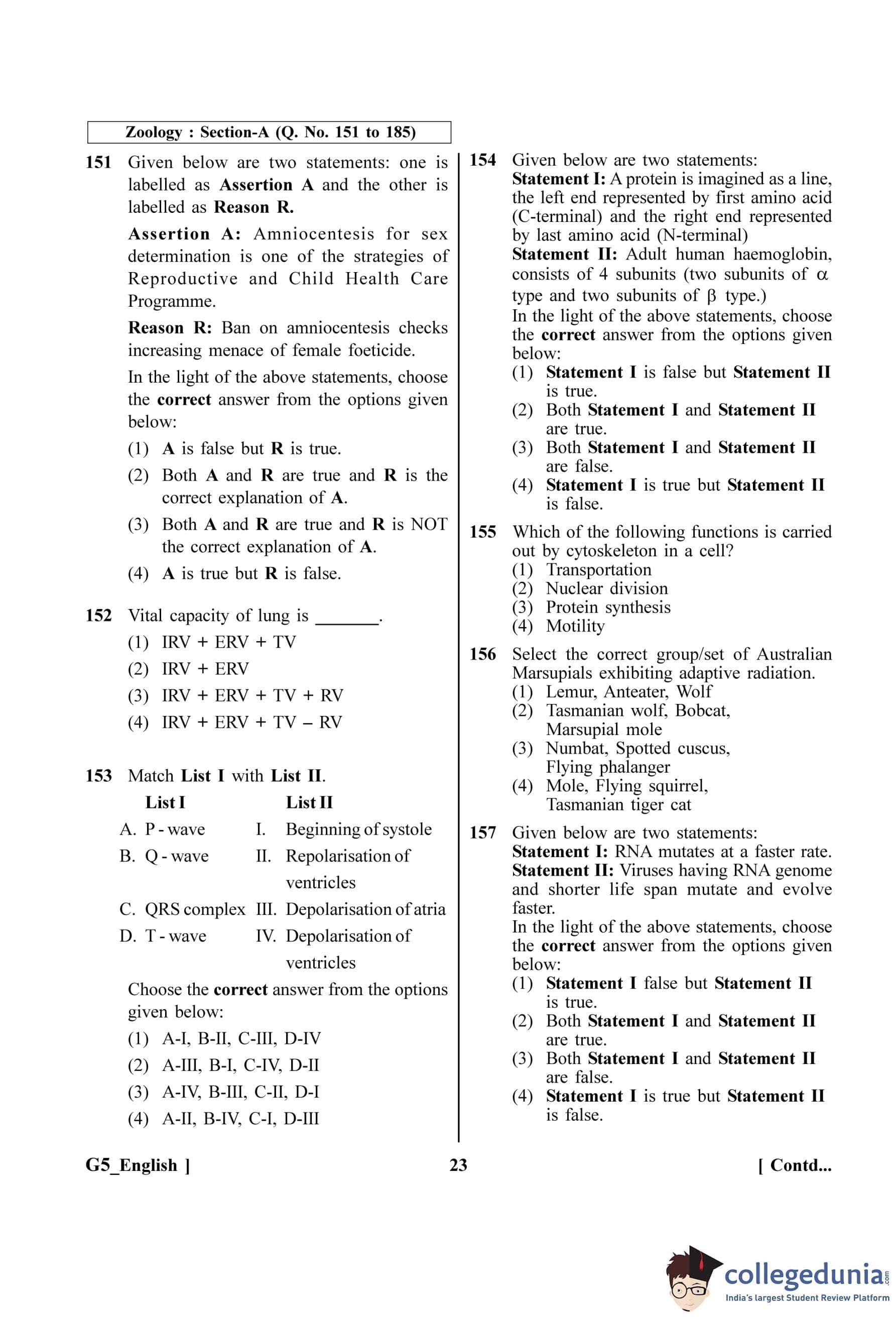
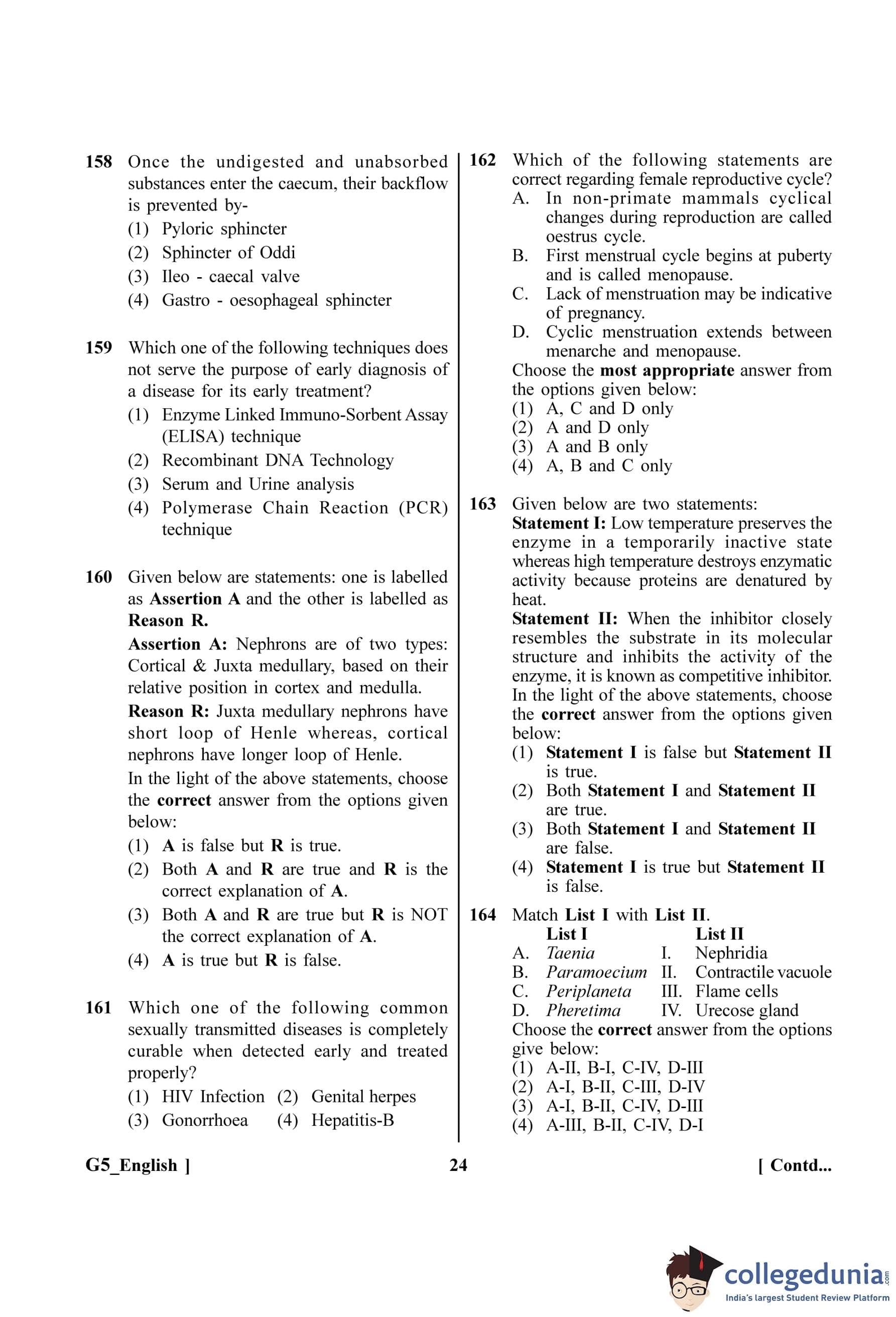
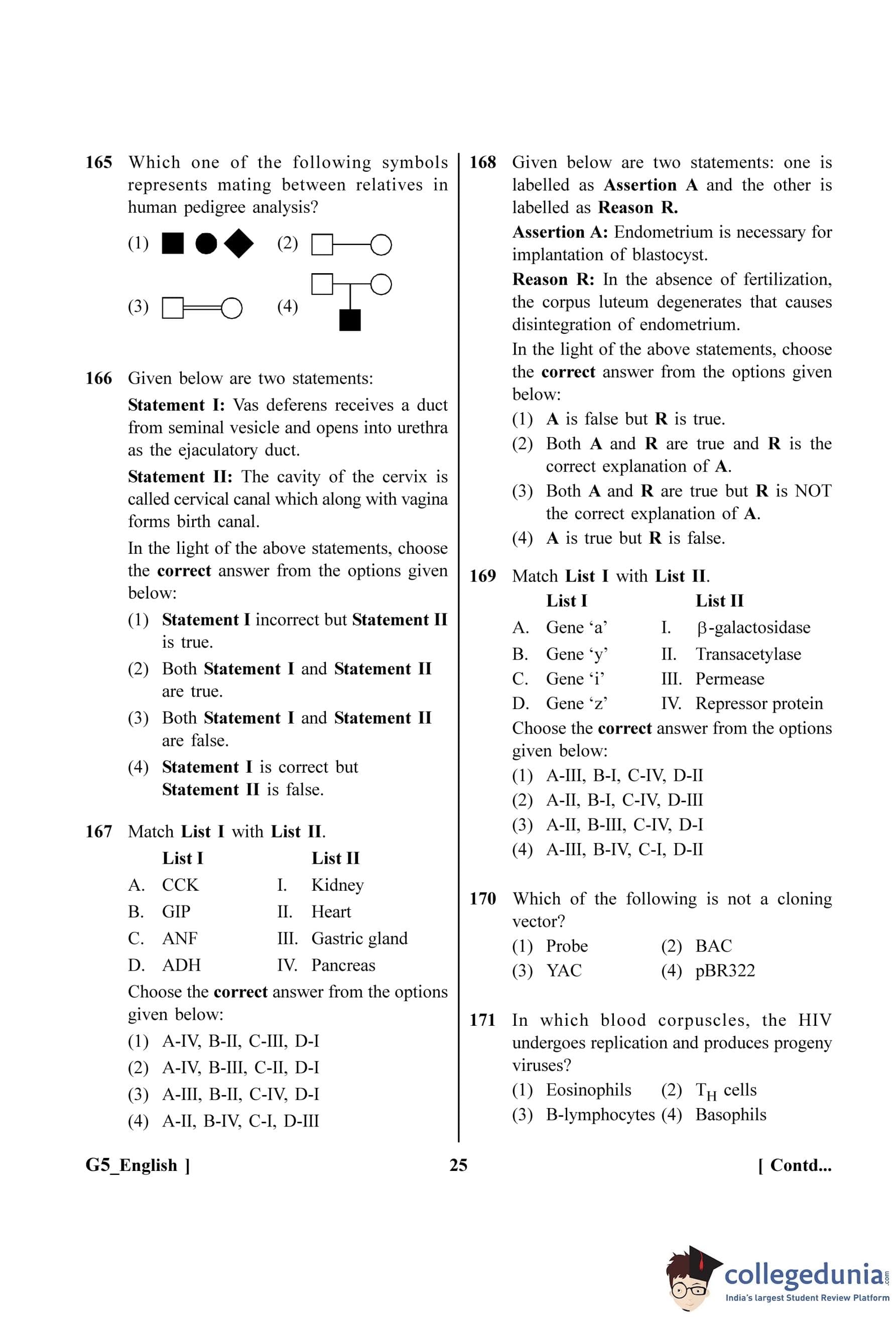
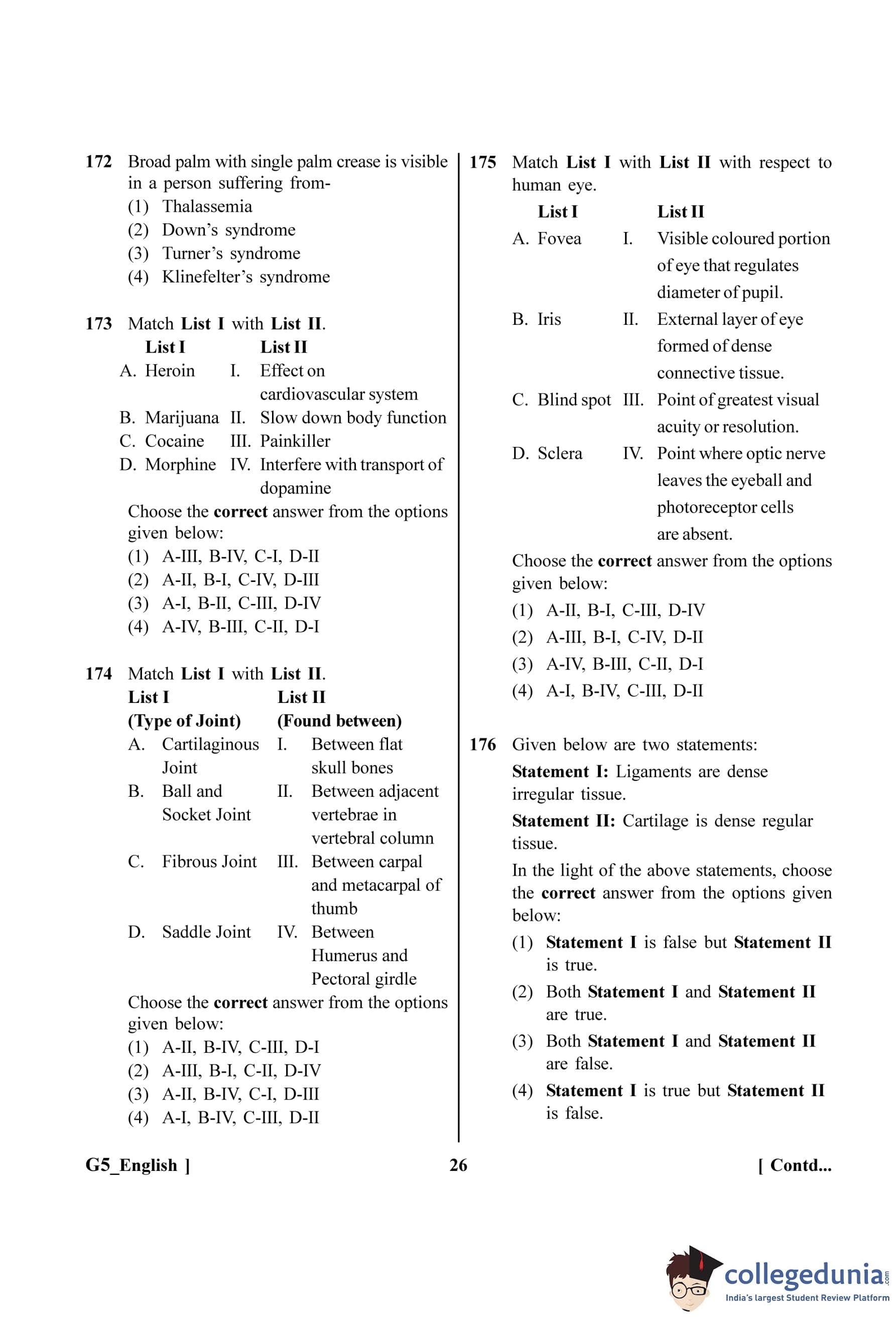
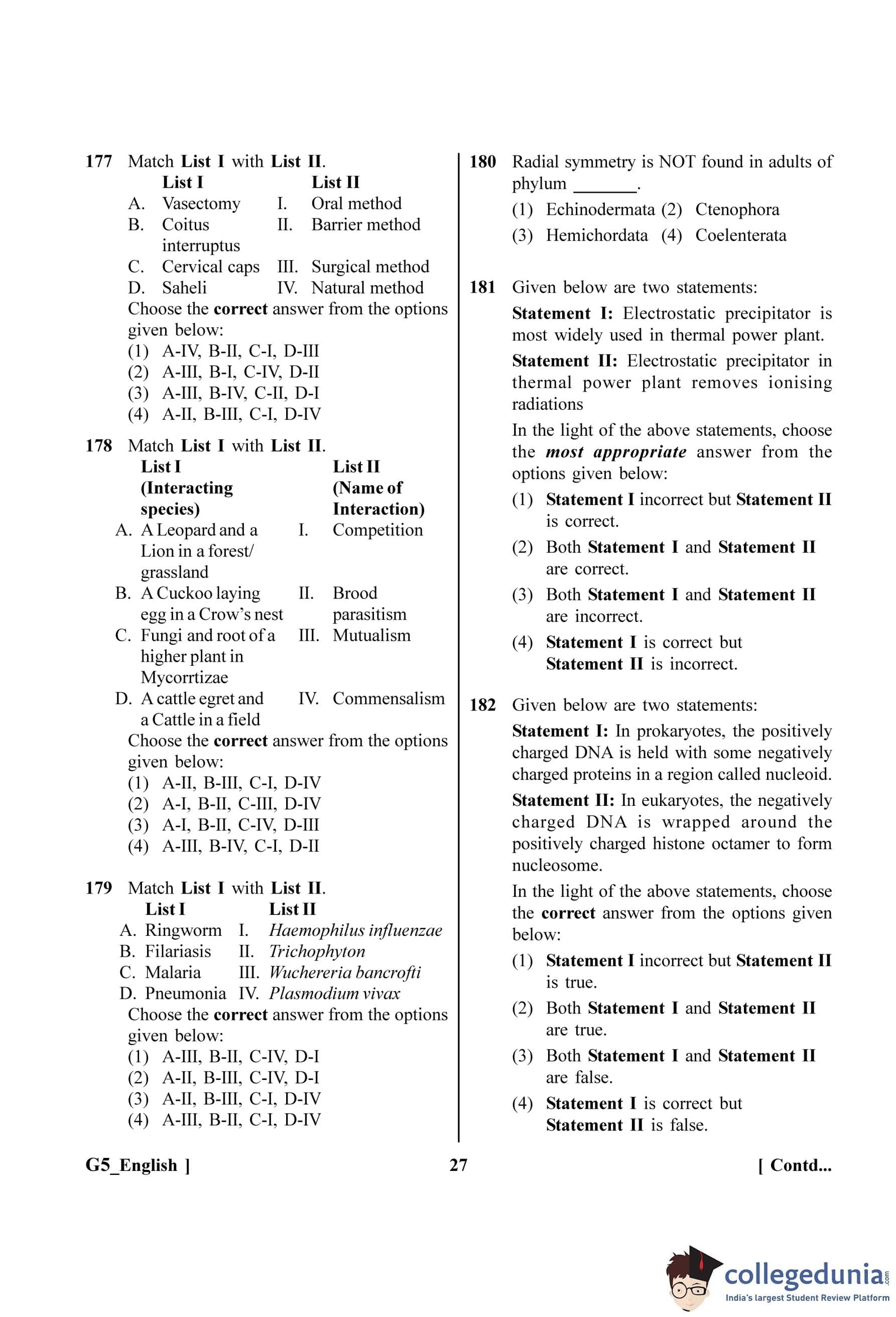
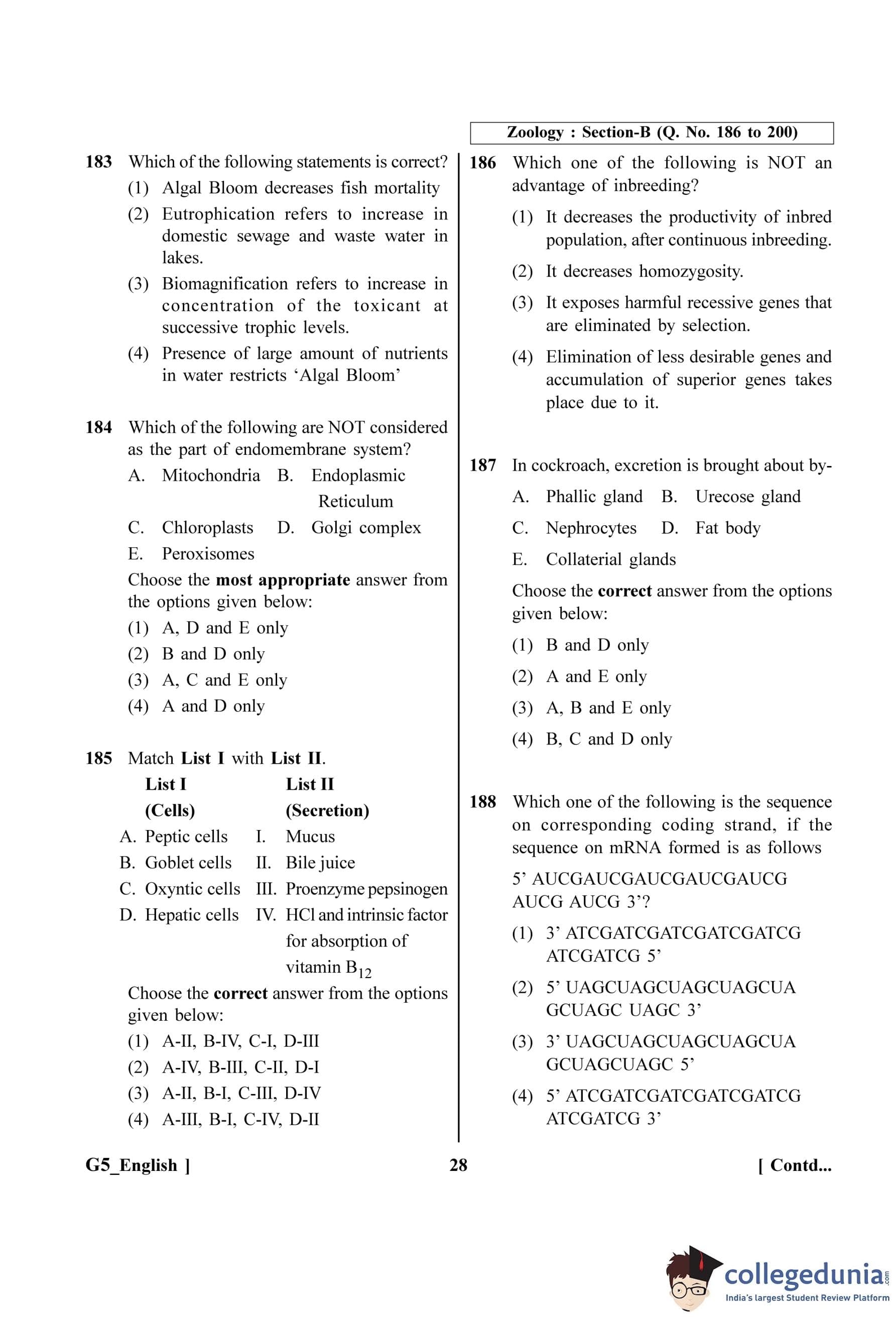
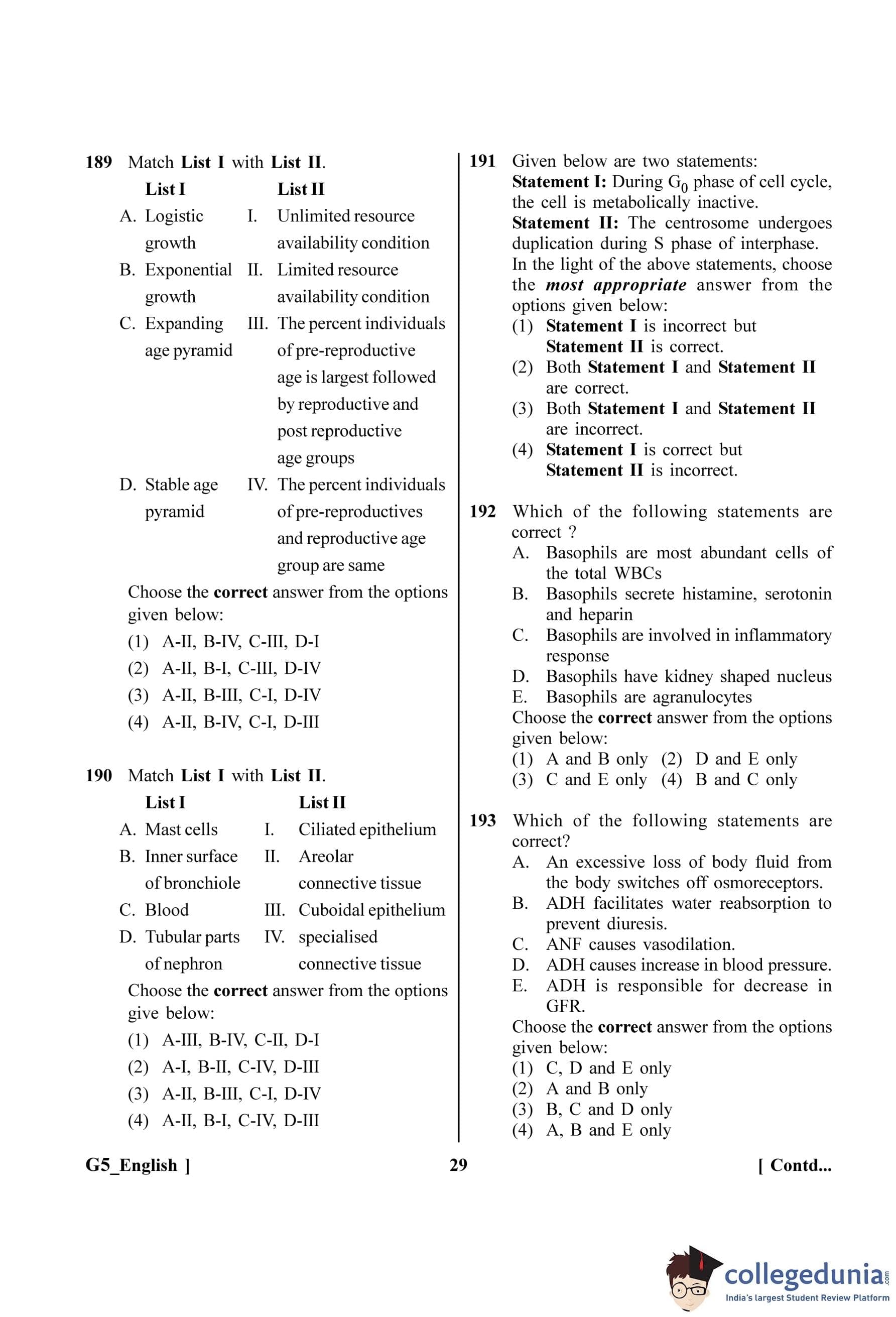
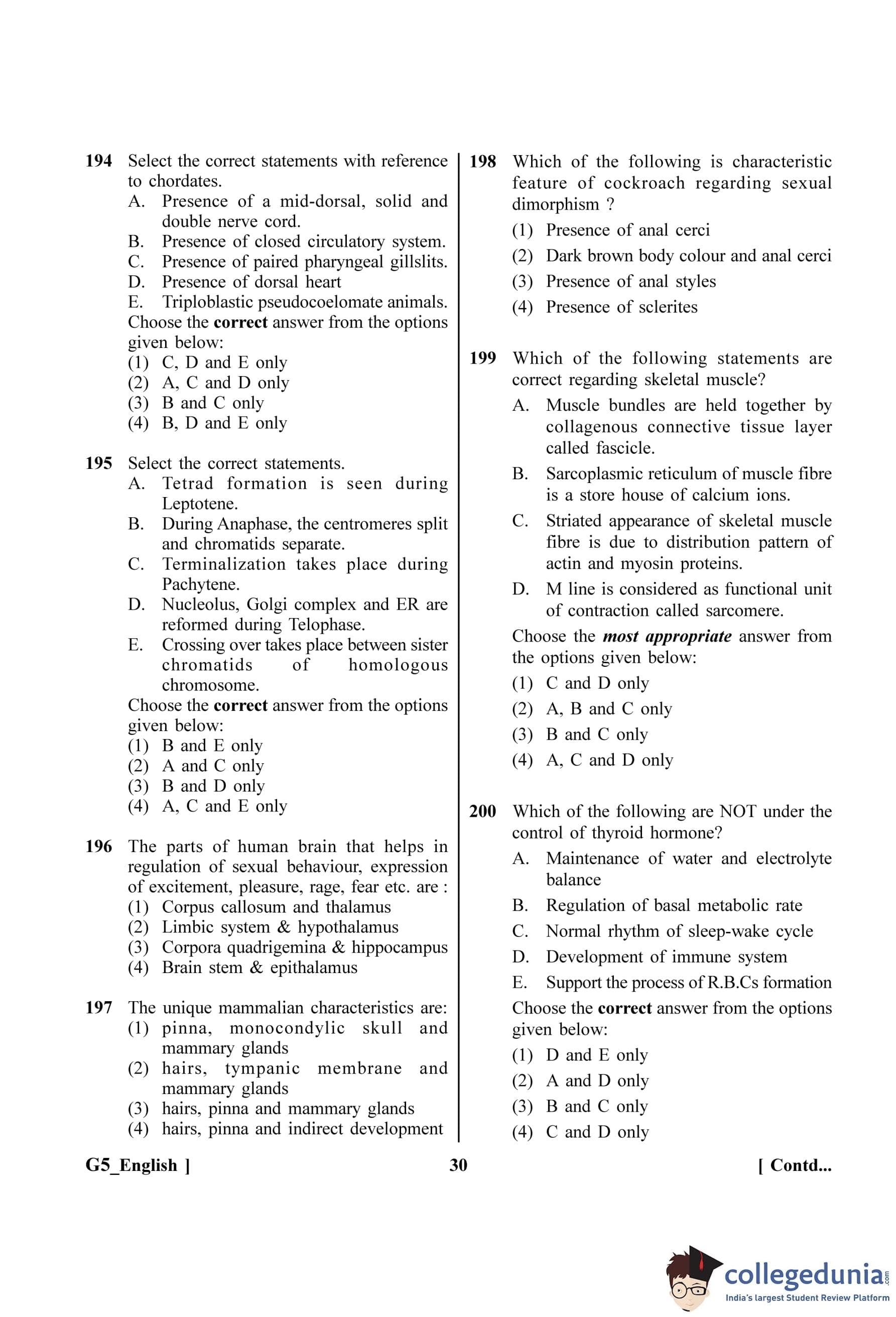
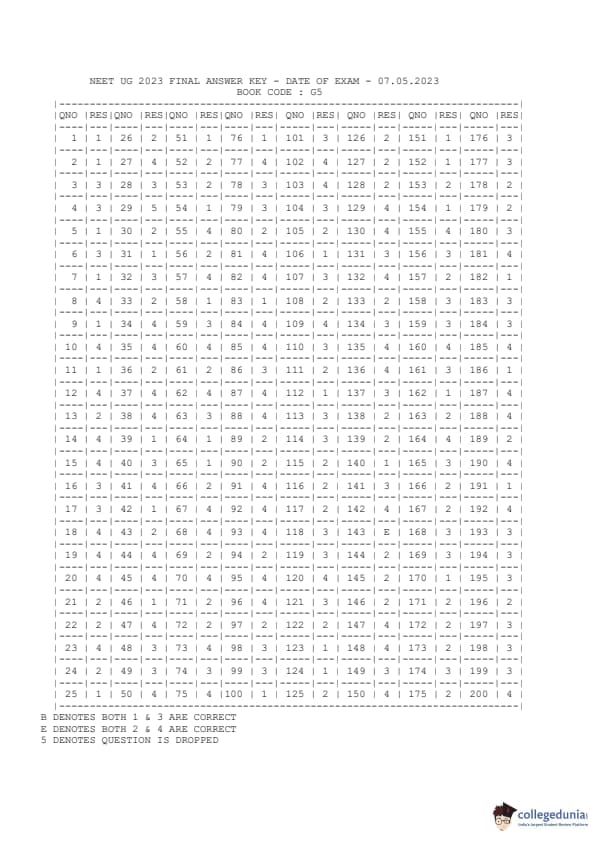
NEET Previous Year Question Papers with Answer Keys
| NEET 2022 Question Papers | NEET 2021 Question Papers | NEET 2020 Question Papers |
| NEET 2019 Question Papers | NEET 2018 Question Papers | NEET 2017 Question Papers |



Comments