




NEET 2024 Zoology Question Paper with Solutions PDF S4 is available for download. NEET 2024 S4 Zoology Question Paper comprises 50 MCQs out of which only 45 are to be attempted. NEET 2024 question S4 Zoology is divided into 2 sections- A (35 questions) and B (15 questions). You can download NEET 2024 zoology question paper with answer key and solutions PDF for S4 using the links given below.
NEET 2024 Zoology Question Paper with Solutions PDF S4
| NEET 2024 Zoology Question Paper S4 | Download PDF | Check Solution |
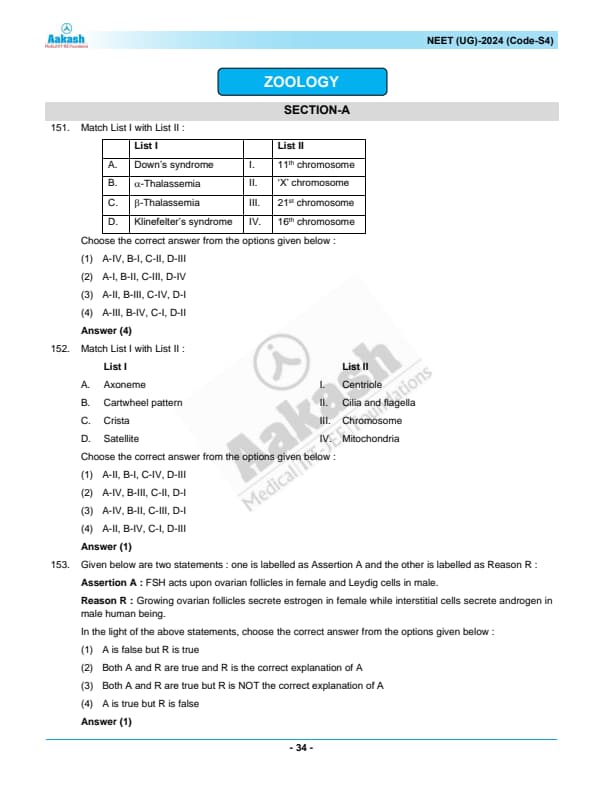
Question 151:
Match List I with List II:
List I
- A. Down's syndrome
- B. α-Thalassemia
- C. β-Thalassemia
- D. Klinefelter's syndrome
List II
- I. 11th chromosome
- II. 'X' chromosome
- III. 21st chromosome
- IV. 16th chromosome
Choose the correct answer from the options given below:
View Solution
Solution:
-Down's syndrome (A-III): Caused by trisomy of chromosome 21.
-α-Thalassemia (B-IV): The genes for α-globin are located on chromosome 16.
-β-Thalassemia (C-I): The gene for β-globin is located on chromosome 11.
-Klinefelter's syndrome (D-II): A genetic condition in males caused by an extra X chromosome (XXY).
Question 152:
Match List I with List II:
List I
- A. Axoneme
- B. Cartwheel pattern
- C. Crista
- D. Satellite
List II
- I. Centriole
- II. Cilia and flagella
- III. Chromosome
- IV. Mitochondria
Choose the correct answer from the options given below:
View Solution
Solution:
-Axoneme (A-II): The central core of cilia and flagella, composed of microtubules.
-Cartwheel pattern (B-I): The arrangement of microtubules in a centriole.
-Crista (C-IV): Folds in the inner membrane of mitochondria.
-Satellite (D-III): A small, rounded DNA structure at the end of some chromosomes.
Question 153:
Given below are two statements: one is labelled as Assertion and the other as Reason:
Assertion A: FSH acts upon ovarian follicles in female and Leydig cells in male.
Reason R: Growing ovarian follicles secrete estrogen in female while interstitial cells secrete androgen in male human being.
In the light of the above statements, Choose the correct answer from the options given below:
View Solution
Solution:
- Assertion A is false. FSH (follicle-stimulating hormone) acts on Sertoli cells in males, not Leydig cells. In females, FSH does act on ovarian follicles.
- Reason R is true. Growing ovarian follicles secrete estrogen. Interstitial cells (Leydig cells) in males secrete androgens (like testosterone).
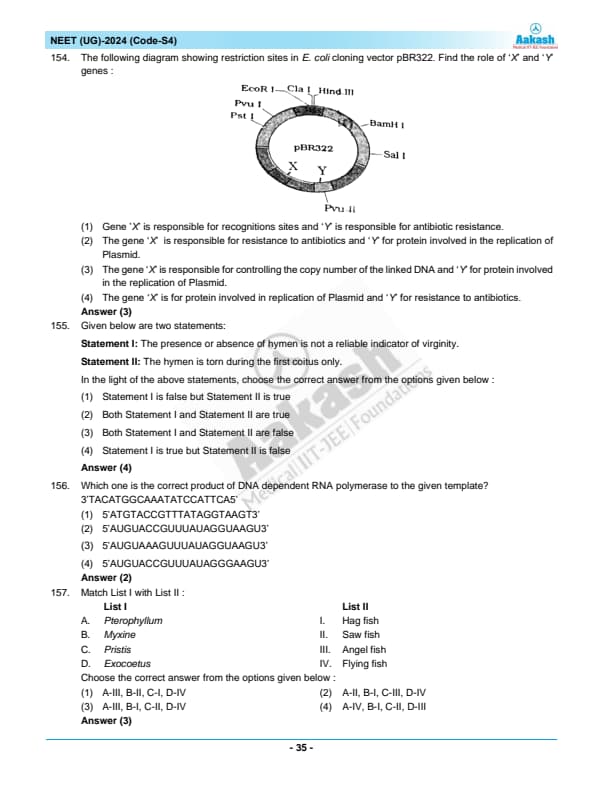
Question 154:
The following diagram showing restriction sites in E. coli cloning vector pBR322. Find the role of 'X' and 'Y' genes: (Diagram not provided)
View Solution
Solution: Without the diagram, I'm making some assumptions. If 'X' represents the rop gene, it codes for a protein that regulates plasmid replication, thus controlling the copy number. 'Y' likely represents a gene essential for plasmid replication (like the origin of replication or a replication-related protein). **The diagram is crucial for a definite answer.**
Question 155:
Given below are two statements: one is labelled as Assertion and the other as Reason:
Assertion A: The presence or absence of hymen is not a reliable indicator of virginity.
Reason R: The hymen is torn during the first coitus only.
In the light of the above statements, Choose the correct answer from the options given below:
View Solution
Solution:
- Assertion A is true. The hymen can be torn or stretched by activities other than sexual intercourse, such as physical activity, tampon use, or medical procedures.
- Reason R is false. The hymen may not tear during the first coitus, and it can remain intact even after multiple instances of intercourse.
Question 156:
Which one is the correct product of DNA dependent RNA polymerase to the given template?
Given template: 3’TACATGGAAAATTACCTTCA5’
Choose the correct answer from the options given below:
View Solution
Solution: RNA polymerase synthesizes RNA in the 5' to 3' direction, using the provided DNA template strand (which is read 3' to 5'). Thymine (T) in DNA is replaced by Uracil (U) in RNA. The correct RNA sequence is complementary to the given DNA template.
Question 157:
Match List I with List II:
List I
- A. Pterophyllum
- B. Myxine
- C. Pristis
- D. Exocoetus
List II
- I. Hag fish
- II. Saw fish
- III. Angel fish
- IV. Flying fish
Choose the correct answer from the options given below:
View Solution
Solution:
- Pterophyllum is commonly known as angelfish (A-III).
- Myxine is a hagfish (B-I).
- Pristis is a sawfish (C-II).
- Exocoetus is known as the flying fish (D-IV).
Question 158:
Which of the following is not a natural/traditional contraceptive method?
Choose the correct answer from the options given below:
View Solution
Solution: Vaults (cervical caps) are a barrier method of contraception. They are a modern contraceptive device, not a natural/traditional method like coitus interruptus (withdrawal), periodic abstinence (rhythm method), or lactational amenorrhea (suppression of menstruation during breastfeeding).
Question 159:
In both sexes of cockroach, a pair of jointed filamentous structures called anal cerci are present on which segment?
Choose the correct answer from the options given below:
View Solution
Solution: The anal cerci are paired appendages located on the 10th abdominal segment of a cockroach. They are sensory organs that detect air currents and vibrations.
Question 160:
Match List I with List II:
List I
- A. Pleurobrachia
- B. Radula
- C. Stomochord
- D. Air bladder
List II
- I. Mollusca
- II. Ctenophora
- III. Osteichthyes
- IV. Hemichordata
Choose the correct answer from the options given below:
View Solution
Solution:
-Pleurobrachia belongs to the phylum Ctenophora (A-II).
- Radula is a rasping organ found in mollusks (B-I).
- Stomochord is a structure found in hemichordates (C-IV).
- The air bladder (swim bladder) is found in bony fish (Osteichthyes) (D-III).
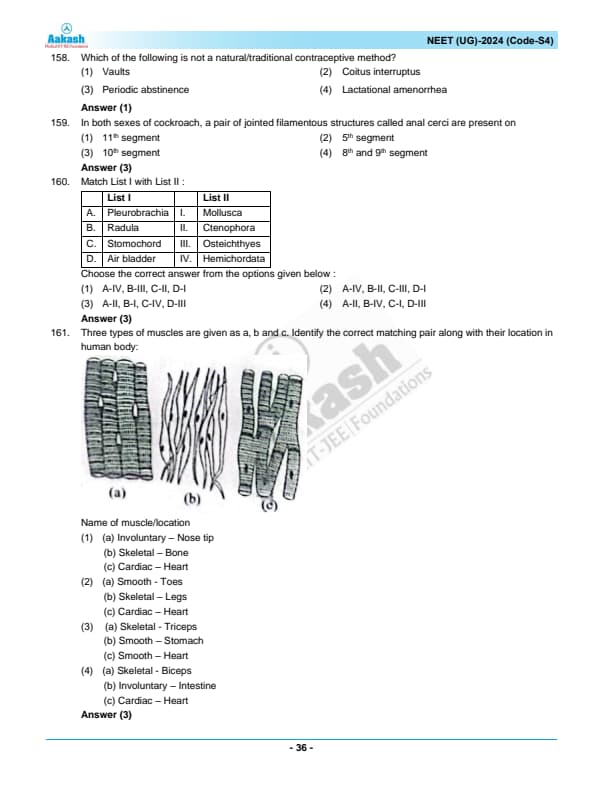
Question 161:
Three types of muscles are given as a, b, and c. Identify the correct matching pair along with their location in the human body:
View Solution
Solution:
Without the image, I'm assuming it shows three muscle types: skeletal, smooth, and cardiac.
- Skeletal muscle is voluntary and is found in muscles like the triceps.
- Smooth muscle is involuntary and found in the walls of internal organs like the stomach, intestines, and blood vessels (nose tip and toes may have some smooth muscle, but are primarily not made of it).
- Cardiac muscle is involuntary and found only in the heart.
The image is essential to provide a definitive answer.
Question 162:
Which of the following is not a component of the Fallopian tube?
Choose the correct answer from the options given below:
View Solution
Solution: The Fallopian tube (oviduct) has three main parts:
- Infundibulum (the funnel-shaped opening near the ovary)
- Ampulla (the wider, middle section)
- Isthmus (the narrower part connected to the uterus)
The uterine fundus is the top portion of the uterus, not part of the Fallopian tube.
Question 163:
Which of the following factors are favourable for the formation of oxyhaemoglobin in alveoli?
Choose the correct answer from the options given below:
View Solution
Solution: High partial pressure of oxygen (pO₂) promotes the binding of oxygen to hemoglobin (forming oxyhemoglobin). A lower H⁺ concentration (higher pH, less acidic) also favors oxyhemoglobin formation (Bohr effect).
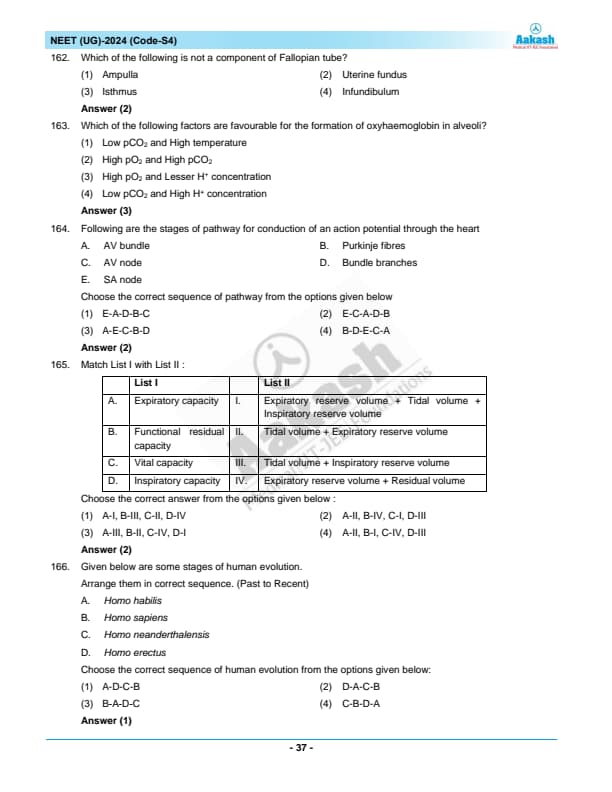
Question 164:
Following are the stages of the pathway for conduction of an action potential through the heart:
A. AV bundle
B. Purkinje fibers
C. AV node
D. Bundle branches
E. SA node
Choose the correct sequence of pathway from the options given below:
View Solution
Solution: The correct sequence of cardiac conduction is:
1. Sinoatrial (SA) node (E)
2. Atrioventricular (AV) node (C)
3. Bundle of His (AV bundle) (A)
4. Bundle branches (D)
5. Purkinje fibers (B)
Question 165:
Match List I with List II:
List I
- A. Expiratory capacity
- B. Functional residual capacity
- C. Vital capacity
- D. Inspiratory capacity
List II
- I. Expiratory reserve volume + Tidal volume + Inspiratory reserve volume
- II. Tidal volume + Expiratory reserve volume
- III. Tidal volume + Inspiratory reserve volume
- IV. Expiratory reserve volume + Residual volume
Choose the correct answer from the options given below:
View Solution
Solution:
-Expiratory capacity (A-II): The maximum volume of air that can be exhaled after a normal tidal volume exhalation. It's the sum of tidal volume and expiratory reserve volume.
-Functional residual capacity (B-IV): The volume of air remaining in the lungs after a normal tidal volume exhalation. It includes expiratory reserve volume and residual volume.
-Vital capacity (C-I): The maximum amount of air that can be exhaled after a maximum inhalation. It's the sum of tidal volume, inspiratory reserve volume, and expiratory reserve volume.
-Inspiratory capacity (D-III): The maximum volume of air that can be inhaled after a normal tidal volume exhalation. It's the sum of tidal volume and inspiratory reserve volume.
Question 166:
Given below are some stages of human evolution. Arrange them in correct sequence. (Past to Recent)
A. Homo habilis
B. Homo sapiens
C. Homo neanderthalensis
D. Homo erectus
Choose the correct sequence of human evolution from the options given below:
View Solution
Solution: The generally accepted order of appearance of these hominin species is:
1. Homo habilis (A)
2. Homo erectus (D)
3. Homo neanderthalensis (C)
4. Homo sapiens (B)
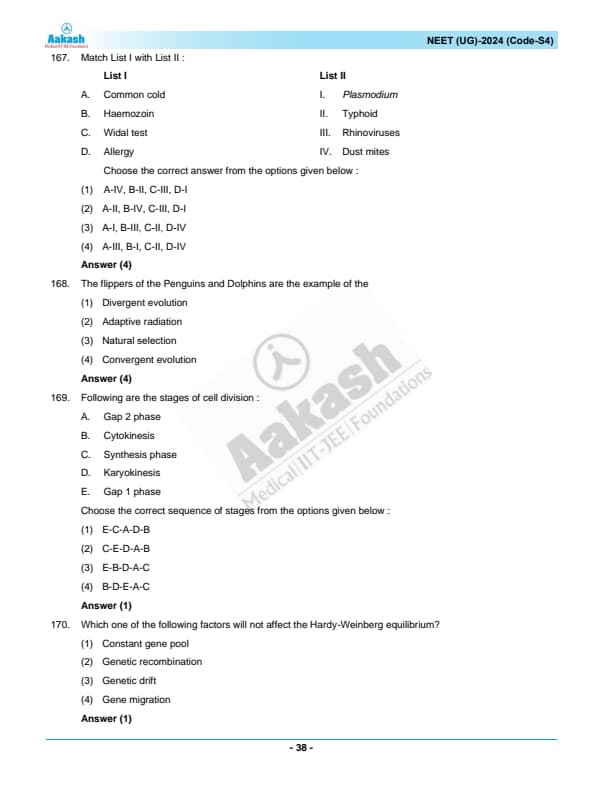
Question 167:
Match List I with List II:
List I
- A. Common cold
- B. Haemozoin
- C. Widal test
- D. Allergy
List II
- I. Plasmodium
- II. Typhoid
- III. Rhinoviruses
- IV. Dust mites
Choose the correct answer from the options given below:
View Solution
Solution:
- Common cold (A-III): Caused by rhinoviruses.
- Haemozoin (B-I): A byproduct of hemoglobin digestion by the malaria parasite, Plasmodium.
- Widal test (C-II): A serological test used to diagnose typhoid fever.
- Allergy (D-IV): Dust mites are a common allergen that can trigger allergic reactions.
Question 168:
The flippers of the Penguins and Dolphins are the example of:
Choose the correct answer from the options given below:
View Solution
Solution: Convergent evolution occurs when unrelated or distantly related organisms evolve similar traits due to similar environmental pressures. Penguins (birds) and dolphins (mammals) evolved flippers independently for locomotion in water.
Question 169:
Following are the stages of cell division:
A. Gap 2 phase
B. Cytokinesis
C. Synthesis phase
D. Karyokinesis
E. Gap 1 phase
Choose the correct sequence of stages from the options given below:
View Solution
Solution: The cell cycle proceeds as follows:
1. Gap 1 (G1) phase (E)
2. Synthesis (S) phase (C) - DNA replication
3. Gap 2 (G2) phase (A)
4. Karyokinesis (D) - Nuclear division (mitosis or meiosis)
5. Cytokinesis (B) - Cytoplasmic division
Question 170:
Which one of the following factors will not affect the Hardy-Weinberg equilibrium?
Choose the correct answer from the options given below:
View Solution
Solution: The Hardy-Weinberg principle describes a population that is not evolving. One of the conditions for Hardy-Weinberg equilibrium is a constant gene pool (no changes in allele frequencies). Genetic recombination, genetic drift, and gene migration (gene flow) are all factors that can cause changes in allele frequencies and thus disrupt Hardy-Weinberg equilibrium.
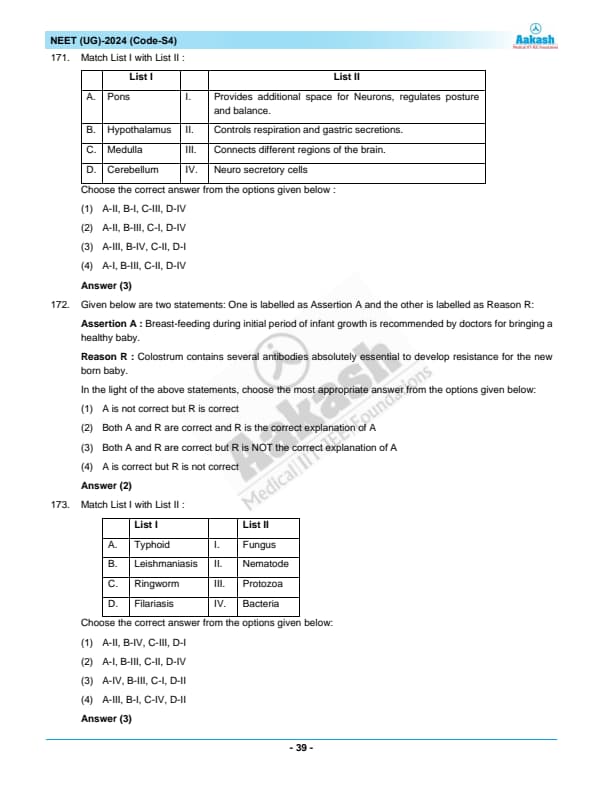
Question 171:
Match List I with List II:
List I
- A. Pons
- B. Hypothalamus
- C. Medulla
- D. Cerebellum
List II
- I. Provides additional space for Neurons, regulates posture and balance.
- II. Controls respiration and gastric secretions.
- III. Connects different regions of the brain.
- IV. Neuro secretory cells
Choose the correct answer from the options given below:
View Solution
Solution:
-Pons (A-III): Connects different parts of the brain and plays a role in relaying signals from the forebrain to the cerebellum. It also helps control breathing.
-Hypothalamus (B-IV): Contains neurosecretory cells that release hormones and regulate various bodily functions like temperature, hunger, and thirst.
-Medulla (C-II): Controls vital autonomic functions, including respiration, heart rate, and blood pressure.
-Cerebellum (D-I): Primarily involved in coordinating movement, balance, and posture. It has a large surface area (folded cortex) to accommodate the numerous neurons required for these complex functions.
Question 172:
Given below are two statements: One is labelled as Assertion and the other is labelled as Reason:
Assertion A: Breast-feeding during the initial period of infant growth is recommended by doctors for bringing up a healthy baby.
Reason R: Colostrum contains several antibodies absolutely essential to develop resistance for the new born baby.
In the light of the above statements, choose the most appropriate answer from the options given below:
View Solution
Solution: Both statements are correct, and R explains A. Breastfeeding is recommended because colostrum, the first milk produced, is rich in antibodies that provide passive immunity to the newborn, protecting them from infections.
Question 173:
Match List I with List II:
List I
- A. Typhoid
- B. Leishmaniasis
- C. Ringworm
- D. Filariasis
List II
- I. Fungus
- II. Nematode
- III. Protozoa
- IV. Bacteria
Choose the correct answer from the options given below:
View Solution
Solution:
-Typhoid (A-IV): Caused by the bacterium Salmonella typhi.
-Leishmaniasis (B-III): Caused by protozoan parasites of the genus Leishmania.
-Ringworm (C-I): A fungal infection.
-Filariasis (D-II): Caused by filarial worms, which are nematodes (roundworms).
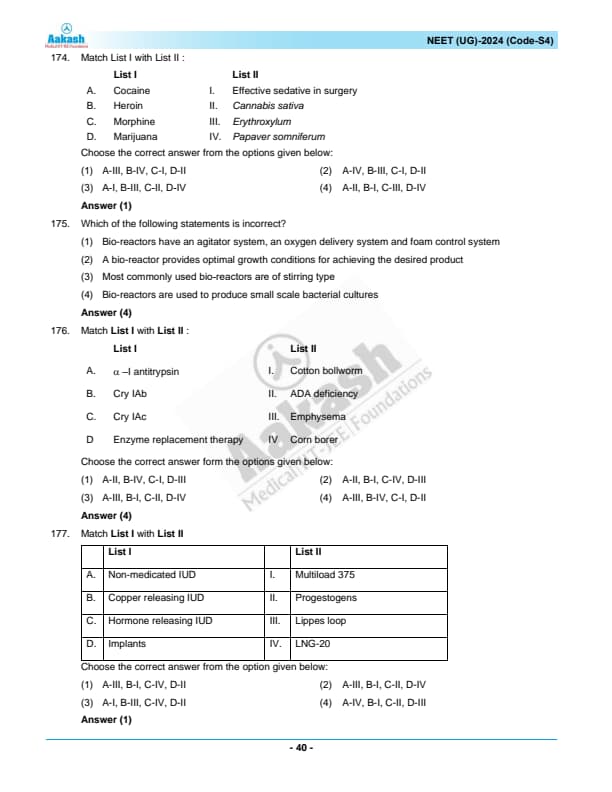
Question 174:
Match List I with List II:
List I
- A. Cocaine
- B. Heroin
- C. Morphine
- D. Marijuana
List II
- I. Effective sedative in surgery
- II. Cannabis sativa
- III. Erythroxylum
- IV. Papaver somniferum
Choose the correct answer from the options given below:
View Solution
Solution:
-Cocaine (A-III): Derived from the Erythroxylum plant.
-Heroin (B-IV): Derived from Papaver somniferum (opium poppy).
-Morphine (C-I): Also derived from Papaver somniferum and used as a sedative and analgesic.
-Marijuana (D-II): Obtained from Cannabis sativa.
Question 175:
Which of the following statements is incorrect?
Choose the correct answer from the options given below:
View Solution
Solution: Bioreactors are used for large-scale production of various biological products, including pharmaceuticals, enzymes, and antibodies. They are not typically used for small-scale bacterial cultures; those are usually grown in flasks or test tubes.
Question 176:
Match List I with List II:
List I
- A. α1-antitrypsin
- B. Cry IAb
- C. Cry IAc
- D. Enzyme replacement therapy
List II
- I. Cotton bollworm
- II. ADA deficiency
- III. Emphysema
- IV. Corn borer
Choose the correct answer from the options given below:
View Solution
Solution:
-α1-antitrypsin (A-III): Used to treat emphysema, a lung condition.
-Cry IAb (B-IV): A Bt toxin effective against corn borer.
-Cry IAc (C-I): Another Bt toxin effective against cotton bollworm.
-Enzyme replacement therapy (D-II): Used for conditions like ADA deficiency, where a specific enzyme is missing or deficient.
Question 177:
Match List I with List II:
List I
- A. Non-medicated IUD
- B. Copper releasing IUD
- C. Hormone releasing IUD
- D. Implants
List II
- I. Multiload 375
- II. Progestogens
- III. Lippes loop
- IV. LNG-20
Choose the correct answer from the options given below:
View Solution
Solution:
- Non-medicated IUD (A-III): Lippes loop is an example of a non-medicated IUD.
- Copper releasing IUD (B-I): Multiload 375 is a copper-releasing IUD.
- Hormone releasing IUD (C-IV): LNG-20 releases the hormone levonorgestrel.
- Implants (D-II): Contraceptive implants typically release progestogens.
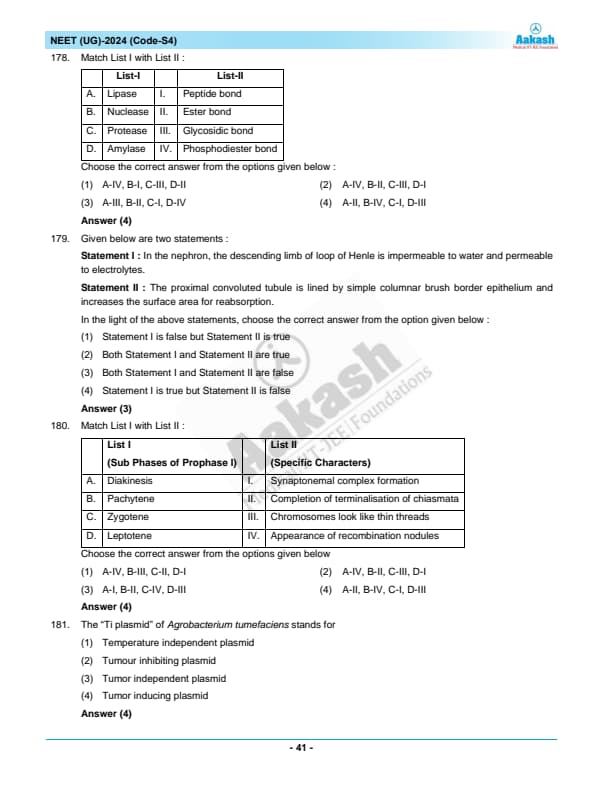
Question 178:
Match List I with List II:
List I
- A. Lipase
- B. Nuclease
- C. Protease
- D. Amylase
List II
- I. Peptide bond
- II. Ester bond
- III. Glycosidic bond
- IV. Phosphodiester bond
Choose the correct answer from the options given below:
View Solution
Solution:
-Lipase (A-II): Breaks down lipids (fats), which contain ester bonds.
-Nuclease (B-IV): Breaks down nucleic acids, which have phosphodiester bonds in their backbone.
-Protease (C-I): Breaks down proteins, which are made up of amino acids linked by peptide bonds.
-Amylase (D-III): Breaks down starch and glycogen, which are carbohydrates with glycosidic bonds.
Question 179:
Given below are two statements:
Statement I: In the nephron, the descending limb of the loop of Henle is impermeable to water and permeable to electrolytes.
Statement II: The proximal convoluted tubule is lined by simple columnar brush border epithelium and increases the surface area for reabsorption.
In the light of the above statements, Choose the correct answer from the options given below:
View Solution
Solution:
- Statement I is false. The descending limb of the loop of Henle is highly permeable to water and relatively impermeable to electrolytes. This allows water to be reabsorbed into the surrounding interstitial fluid, concentrating the urine.
- Statement II is false. The proximal convoluted tubule (PCT) is lined with simple cuboidal epithelium with a brush border (microvilli) to increase surface area for reabsorption.
Question 180:
Match List I with List II:
List I
- A. Diakinesis
- B. Pachytene
- C. Zygotene
- D. Leptotene
List II
- I. Synaptonemal complex formation
- II. Completion of terminalization of chiasmata
- III. Chromosomes look like thin threads
- IV. Appearance of recombination nodules
Choose the correct answer from the options given below:
View Solution
Solution: These are stages of Prophase I in meiosis:
-Diakinesis (A-II): Terminalization of chiasmata (the points where homologous chromosomes cross over) is completed during diakinesis.
-Pachytene (B-IV): Recombination nodules, where crossing over occurs, appear during pachytene.
-Zygotene (C-I): The synaptonemal complex, which facilitates crossing over, forms during zygotene.
-Leptotene (D-III): Chromosomes condense and become visible as thin threads during leptotene.
Question 181:
The "Ti plasmid" of Agrobacterium tumefaciens stands for:
Choose the correct answer from the options given below:
View Solution
Solution: The Ti plasmid is called the "tumor-inducing" plasmid because it causes crown gall tumors in plants. Agrobacterium tumefaciens uses this plasmid to transfer DNA into plant cells, which integrates into the plant's genome and can lead to tumor formation.
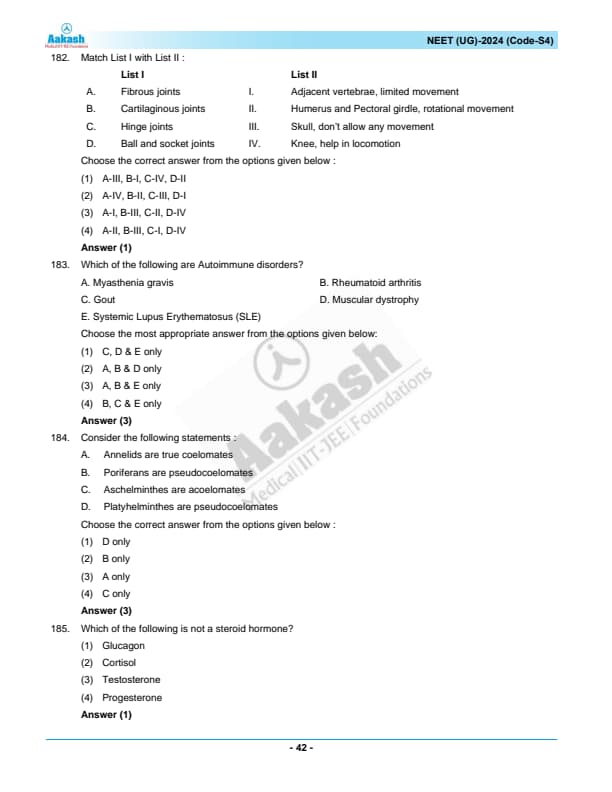
Question 182:
Match List I with List II:
List I
- A. Fibrous joints
- B. Cartilaginous joints
- C. Hinge joints
- D. Ball and socket joints
List II
- I. Adjacent vertebrae, limited movement
- II. Humerus and Pectoral girdle, rotational movement
- III. Skull, don't allow any movement
- IV. Knee, help in locomotion
Choose the correct answer from the options given below:
View Solution
Solution:
-Fibrous joints (A-III): Immovable joints, such as those in the skull.
-Cartilaginous joints (B-I): Allow limited movement, like those between vertebrae.
-Hinge joints (C-IV): Allow movement in one plane, like the knee.
-Ball and socket joints (D-II): Allow rotational movement, such as the hip joint (humerus and pectoral girdle).
Question 183:
Which of the following are Autoimmune disorders?
A. Myasthenia gravis
B. Rheumatoid arthritis
C. Gout
D. Muscular dystrophy
E. Systemic Lupus Erythematosus (SLE)
Choose the most appropriate answer from the options given below:
View Solution
Solution:
-Myasthenia gravis (A), Rheumatoid arthritis (B), and Systemic Lupus Erythematosus (SLE) (E) are autoimmune disorders, where the immune system mistakenly attacks the body's own tissues.
-Gout (C) is a type of arthritis caused by the buildup of uric acid crystals in the joints.
-Muscular dystrophy (D) is a group of genetic disorders that cause progressive muscle weakness and degeneration.
Question 184:
Consider the following statements:
A. Annelids are true coelomates
B. Poriferans are pseudocoelomates
C. Aschelminthes are acoelomates
D. Platyhelminthes are pseudocoelomates
Choose the correct answer from the options given below:
View Solution
Solution:
-Annelids (A) are true coelomates, meaning they have a body cavity (coelom) completely lined by mesoderm tissue.
-Poriferans (B) are acoelomates meaning they lack a body cavity altogether. They are not pseudocoelomates (which have a body cavity partially lined by mesoderm).
-Aschelminthes (C) are pseudocoelomates, not acoelomates.
-Platyhelminthes (D) are acoelomates, not pseudocoelomates.
Question 185:
Which of the following is not a steroid hormone?
Choose the correct answer from the options given below:
View Solution
Solution:
-Glucagon is a peptide hormone, not a steroid hormone. It is produced by the pancreas and raises blood glucose levels.
-Cortisol, testosterone, and progesterone are steroid hormones derived from cholesterol.
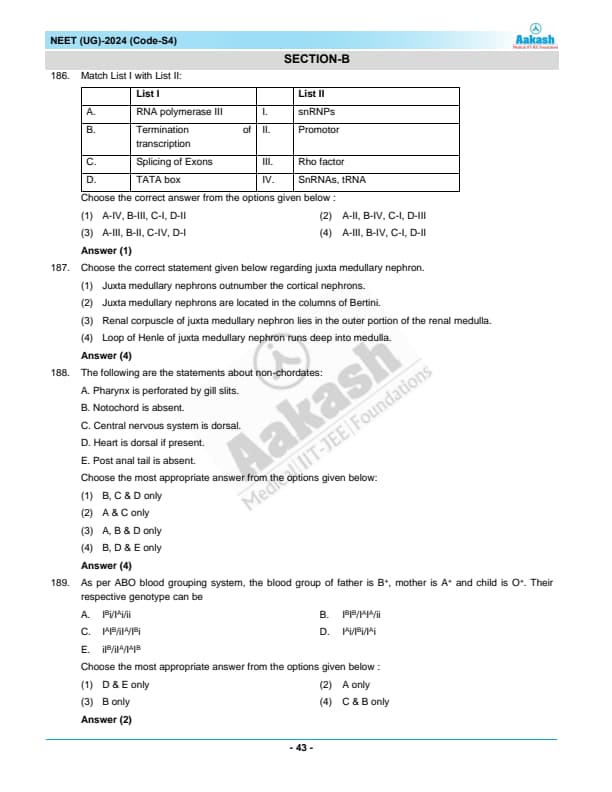
Question 186:
Match List I with List II:
List I
- A. RNA polymerase III
- B. Termination of transcription
- C. Splicing of Exons
- D. TATA box
List II
- I. snRNPs
- II. Promoter
- III. Rho factor
- IV. snRNAs, tRNA
Choose the correct answer from the options given below:
View Solution
Solution:
-RNA polymerase III (A-IV): Synthesizes tRNA and some other small RNA molecules (including snRNAs).
-Termination of transcription (B-III): The Rho factor is involved in the termination of transcription in prokaryotes.
-Splicing of Exons (C-I): snRNPs (small nuclear ribonucleoproteins) are essential components of the spliceosome, the complex that removes introns and joins exons.
-TATA box (D-II): A DNA sequence found in the promoter region of many genes; it helps in the initiation of transcription.
Question 187:
Choose the correct statement given below regarding juxtamedullary nephrons.
Choose the correct answer from the options given below:
View Solution
Solution: Juxtamedullary nephrons have long loops of Henle that extend deep into the renal medulla. This is crucial for creating the concentration gradient that allows for the production of concentrated urine. The other statements are incorrect:
- Cortical nephrons are more numerous than juxtamedullary nephrons.
- Juxtamedullary nephrons are located at the junction of the cortex and medulla, not in the columns of Bertini (which are extensions of the renal cortex).
- The renal corpuscle of a juxtamedullary nephron is located in the cortex, close to the medulla, but not within the outer portion of the medulla itself.
Question 188:
The following are the statements about non-chordates:
A. Pharynx is perforated by gill slits.
B. Notochord is absent.
C. Central nervous system is dorsal.
D. Heart is dorsal if present.
E. Post anal tail is absent.
Choose the most appropriate answer from the options given below:
View Solution
Solution:
-B is correct: Non-chordates lack a notochord (a cartilaginous rod that supports the body in chordates).
-D is correct: When a heart is present in non-chordates, it's located dorsally.
-E is correct: Non-chordates lack a post-anal tail.
-A is incorrect: Pharyngeal gill slits are a characteristic of chordates, not non-chordates.
-C is incorrect: Non-chordates have a ventral nerve cord, whereas chordates have a dorsal nerve cord.
Question 189:
As per ABO blood grouping system, the blood group of father is B+, mother is A+, and child is O-. Their respective genotype can be:
Choose the most appropriate answer from the options given below:
View Solution
Solution:
If the child is O-, their genotype must be ii (for the ABO blood group) and homozygous recessive for the Rh factor (-/-). This means both parents must carry the i allele and the Rh- allele.
Assuming option A provides the following genotypes:
- Father: IBi (+/-)
- Mother: IAi (+/-)
This combination could produce a child with O- blood type. The specific genotypes listed in the options are necessary to confirm.
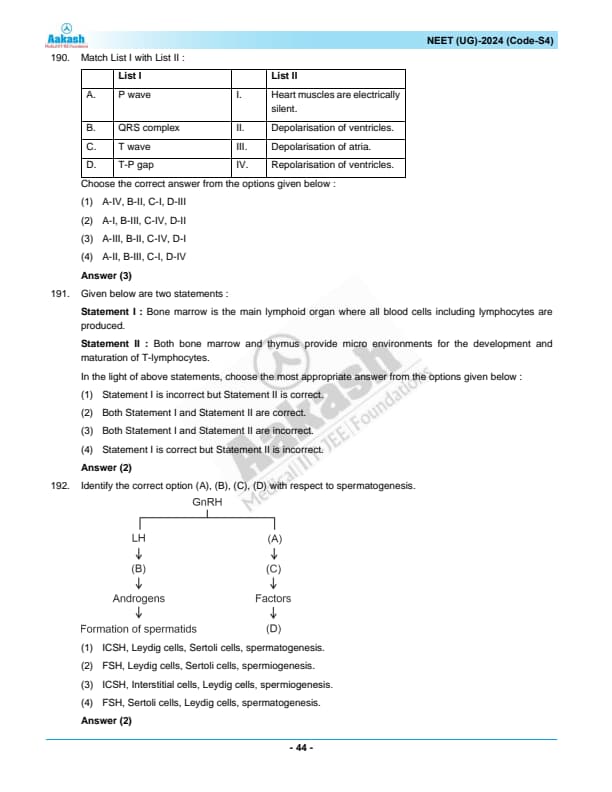
Question 190:
Match List I with List II:
List I
- A. P wave
- B. QRS complex
- C. T wave
- D. TP gap
List II
- I. Heart muscles are electrically silent.
- II. Depolarization of ventricles.
- III. Depolarization of atria.
- IV. Repolarization of ventricles.
Choose the correct answer from the options given below:
View Solution
Solution: This question relates to the waves of an electrocardiogram (ECG):
-P wave (A-III): Represents atrial depolarization.
-QRS complex (B-II): Represents ventricular depolarization.
-T wave (C-IV): Represents ventricular repolarization.
-TP gap (D-I): The isoelectric interval between the T wave and the next P wave, where the heart muscle is electrically silent.
Question 191:
Given below are two statements:
Statement I: Bone marrow is the main lymphoid organ where all blood cells including lymphocytes are produced.
Statement II: Both bone marrow and thymus provide micro-environments for the development and maturation of T-lymphocytes.
In the light of the above statements, choose the most appropriate answer from the options given below:
View Solution
Solution:
- Statement I is correct. Bone marrow is the primary site of blood cell production, including all types of lymphocytes (B cells, T cells, and NK cells).
- Statement II is incorrect. While both B and T lymphocytes originate in the bone marrow, T cells mature in the thymus, not the bone marrow. B cells mature in the bone marrow.
Question 192:
Identify the correct option (A), (B), (C), (D) with respect to spermatogenesis.
GnRH → LH ↓
(A) → (B) → Androgens → (C) → Formation of spermatids → (D)
Choose the most appropriate answer from the options given below:
View Solution
Solution:
Here's the corrected sequence and explanation:
- GnRH stimulates the release of LH (luteinizing hormone) and FSH (follicle-stimulating hormone) from the anterior pituitary.
- A: FSH acts on Sertoli cells in the testes.
- B: Leydig cells, stimulated by LH, produce androgens (primarily testosterone).
- C: Androgens, along with FSH, stimulate spermatogenesis (the process of sperm production) in the seminiferous tubules, which are supported by Sertoli cells.
- D: Spermatogenesis results in the formation of spermatids (immature sperm cells). Spermiogenesis is the final maturation of spermatids into spermatozoa (mature sperm cells).
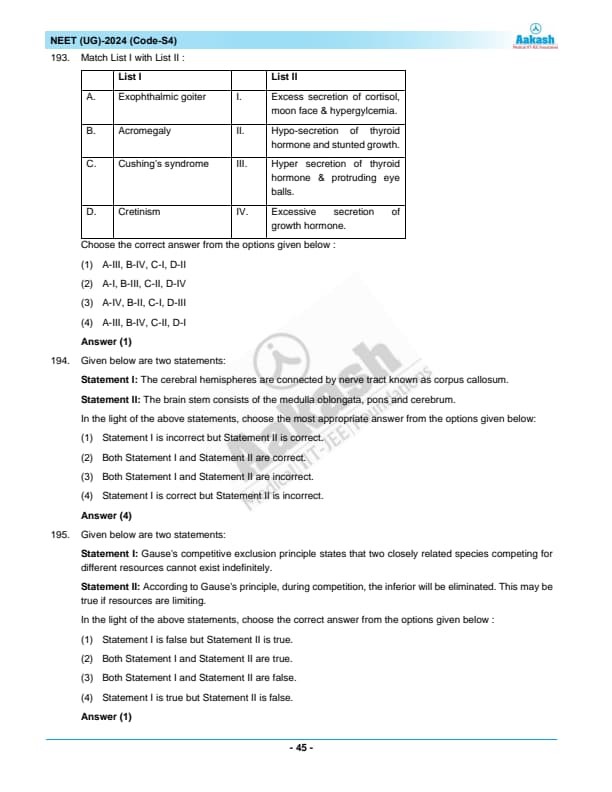
Question 193:
Match List I with List II:
List I
- A. Exophthalmic goiter
- B. Acromegaly
- C. Cushing's syndrome
- D. Cretinism
List II
- I. Excess secretion of cortisol, moon face & hyperglycemia.
- II. Hypo-secretion of thyroid hormone and stunted growth.
- III. Hypersecretion of thyroid hormone & protruding eye balls.
- IV. Excessive secretion of growth hormone.
Choose the correct answer from the options given below:
View Solution
Solution:
- Exophthalmic goiter (A-III): Caused by hypersecretion of thyroid hormones, leading to protruding eyeballs.
- Acromegaly (B-IV): Caused by excessive secretion of growth hormone in adults.
- Cushing's syndrome (C-I): Results from prolonged exposure to high levels of cortisol.
- Cretinism (D-II): Caused by hypothyroidism (underactive thyroid) during childhood, leading to stunted physical and mental growth.
Question 194:
Given below are two statements:
Statement I: The cerebral hemispheres are connected by a nerve tract known as corpus callosum.
Statement II: The brain stem consists of the medulla oblongata, pons, and cerebrum.
In the light of the above statements, choose the most appropriate answer from the options given below:
View Solution
Solution:
- Statement I is correct. The corpus callosum is a thick band of nerve fibers that connects the left and right cerebral hemispheres, enabling communication between them.
- Statement II is incorrect. The brainstem consists of the midbrain, pons, and medulla oblongata. The cerebrum is a part of the forebrain, not the brainstem.
Question 195:
Given below are two statements:
Statement I: Gause's competitive exclusion principle states that two closely related species competing for different resources cannot exist indefinitely.
Statement II: According to Gause's principle, during competition, the inferior will be eliminated. This may be true if resources are limiting.
In the light of the above statements, choose the most appropriate answer from the options given below:
View Solution
Solution:
- Statement I is false. Gause's competitive exclusion principle states that two species competing for the *same* limiting resources cannot coexist indefinitely in the same niche. If they're competing for different resources, they may be able to coexist.
- Statement II is true. When two species compete, the one that is less adapted to utilize the limiting resource (the "inferior" competitor) will be outcompeted and may be eliminated from that niche.
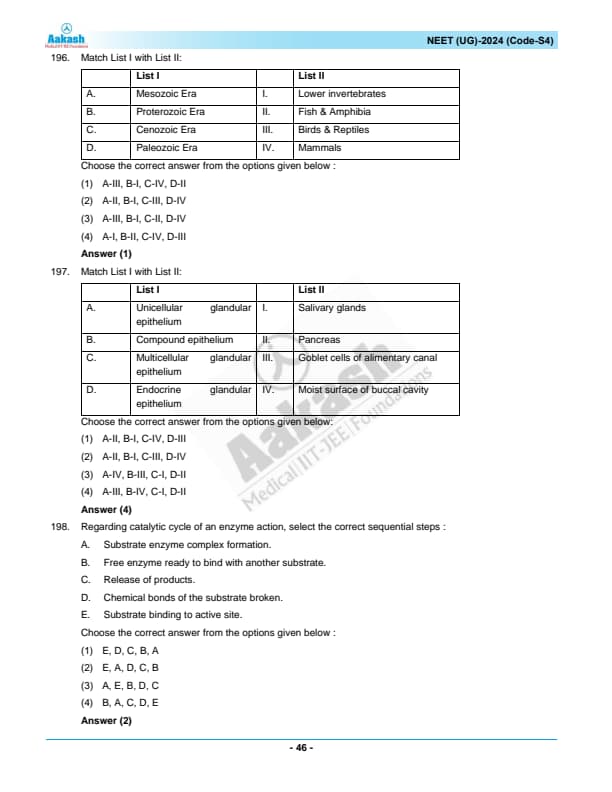
Question 196:
Match List I with List II:
List I
- A. Mesozoic Era
- B. Proterozoic Era
- C. Cenozoic Era
- D. Paleozoic Era
List II
- I. Lower invertebrates
- II. Fish & Amphibia
- III. Birds & Reptiles
- IV. Mammals
Choose the correct answer from the options given below:
View Solution
Solution:
-Mesozoic Era (A-III): Known as the "Age of Reptiles," including dinosaurs and the first birds.
-Proterozoic Era (B-I): The earliest era with evidence of life, primarily lower invertebrates and the first eukaryotic cells.
-Cenozoic Era (C-IV): The "Age of Mammals," following the extinction of the dinosaurs.
-Paleozoic Era (D-II): The era of ancient life, including the development of fish and amphibians.
Question 197:
Match List I with List II:
List I
- A. Unicellular glandular epithelium
- B. Compound epithelium
- C. Multicellular glandular epithelium
- D. Endocrine glandular epithelium
List II
- I. Salivary glands
- II. Pancreas
- III. Goblet cells of alimentary canal
- IV. Moist surface of buccal cavity
Choose the correct answer from the options given below:
View Solution
Solution:
-Unicellular glandular epithelium (A-III): Goblet cells, found in the lining of the digestive and respiratory tracts, are unicellular glands that secrete mucus.
-Compound epithelium (B-IV): Forms a protective layer on surfaces subject to wear and tear, such as the skin and the lining of the mouth (buccal cavity). Doesn't directly relate to glands.
-Multicellular glandular epithelium (C-I): Salivary glands are examples of multicellular exocrine glands, which release their secretions through ducts.
-Endocrine glandular epithelium (D-II): Endocrine glands, like the pancreas (specifically the islets of Langerhans), secrete hormones directly into the bloodstream.
Question 198:
Regarding the catalytic cycle of an enzyme action, select the correct sequential steps:
A. Substrate enzyme complex formation.
B. Free enzyme ready to bind with another substrate.
C. Release of products.
D. Chemical bonds of the substrate broken.
E. Substrate binding to active site.
Choose the correct answer from the options given below:
View Solution
Solution: The correct sequence of events in enzyme catalysis is:
1. Substrate binding to the active site (E): The substrate binds to the enzyme's active site, forming an enzyme-substrate complex.
2. Enzyme-substrate complex formation (A): The enzyme-substrate complex is formed.
3. Chemical bonds of the substrate are broken (D): The enzyme catalyzes the breaking of bonds in the substrate.
4. Release of products (C): The products are released from the active site.
5. Free enzyme ready to bind with another substrate (B): The enzyme returns to its original conformation and is ready to bind another substrate molecule.
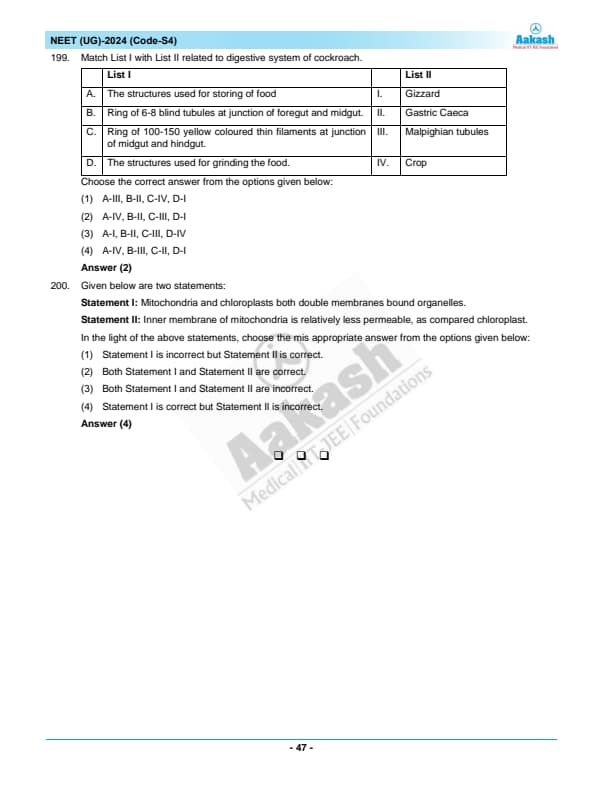
Question 199:
Match List I with List II related to the digestive system of cockroach:
List I
- A. The structures used for storing of food
- B. Ring of 6-8 blind tubules at the junction of foregut and midgut.
- C. Ring of 100-150 yellow coloured thin filaments at the junction of midgut and hindgut.
- D. The structures used for grinding the food.
List II
- I. Gizzard
- II. Gastric Caeca
- III. Malpighian tubules
- IV. Crop
Choose the correct answer from the options given below:
View Solution
Solution:
-Crop (A-IV): Stores food temporarily.
-Gastric caeca (B-II): Secrete digestive enzymes.
-Malpighian tubules (C-III): Excretory organs.
-Gizzard (D-I): Grinds the food.
Question 200:
Given below are two statements:
Statement I: Mitochondria and chloroplasts both have double membranes bound organelles.
Statement II: The inner membrane of mitochondria is relatively less permeable, as compared to chloroplast.
In the light of the above statements, choose the most appropriate answer from the options given below:
View Solution
Solution:
- Statement I is correct. Both mitochondria and chloroplasts are double-membraned organelles.
- Statement II is incorrect. The inner mitochondrial membrane is highly impermeable, which is essential for maintaining the proton gradient needed for ATP synthesis. The inner chloroplast membrane (thylakoid membrane) is also selectively permeable but must allow for the passage of various ions and molecules involved in photosynthesis. So, the inner mitochondrial membrane is less permeable.
NEET Previous Year Question Papers with Answer Keys
| NEET 2023 Question Papers | NEET 2022 Question Papers | NEET 2021 Question Papers |
| NEET 2020 Question Papers | NEET 2019 Question Papers | NEET 2018 Question Papers |



Comments