




NEET 2024 Zoology Question Paper with Solutions PDF T6 is available for download. NEET 2024 T6 Zoology Question Paper comprises 50 MCQs out of which only 45 are to be attempted. NEET 2024 question T6 Zoology is divided into 2 sections- A (35 questions) and B (15 questions). You can download NEET 2024 zoology question paper with answer key and solutions PDF for T6 using the links given below.
NEET 2024 Zoology Question Paper with Solutions PDF T6
| NEET 2024 T6 Question Paper with Answer Key | Download PDF | Check Solution |

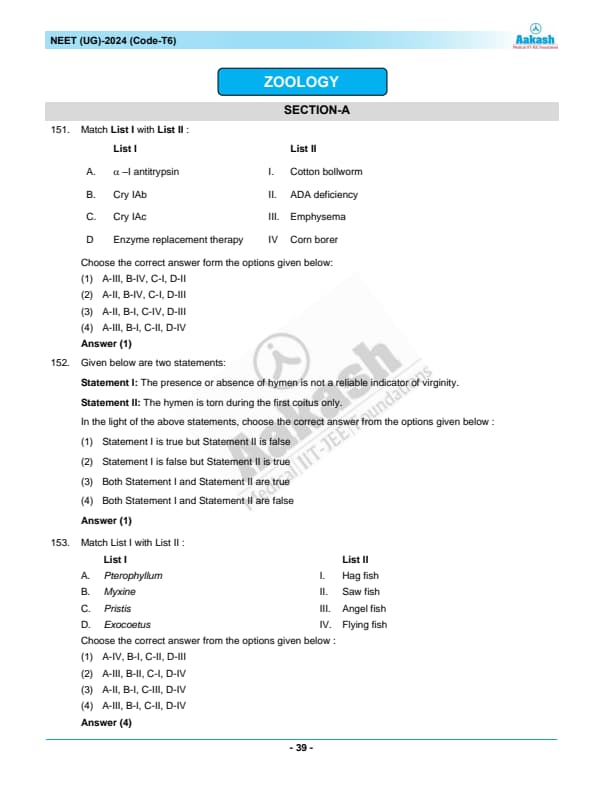
Given below are two statements:
Statement I: The presence or absence of hymen is not a reliable indicator of virginity.
Statement II: The hymen is torn during the first coitus only.
In the light of the above statements, choose the correct answer from the options given below:
View Solution
Step 1: Analyzing Statement I.
Statement I is true because the hymen can be absent or stretched for reasons unrelated to sexual activity, such as sports or physical activity. Therefore, it is not a reliable indicator of virginity.
Step 2: Analyzing Statement II.
Statement II is false because the hymen may tear or stretch during various activities, not just during the first coitus. For example, tampon use or vigorous exercise can cause the hymen to tear or stretch. Quick Tip: It’s important to understand that biological markers like the hymen do not necessarily correlate with virginity, and various factors can affect its appearance.
Match List I with List II:

choose the correct answer from the options given below:
View Solution
Matching the species with their common names.
Pterophyllum (A) is commonly known as the Angel fish, hence A-III.
Myxine (B) is also known as Hag fish, hence B-I.
Pristis (C) is commonly called the Saw fish, hence C-II.
Exocoetus (D) is known as the Flying fish, hence D-IV.
Quick Tip: Familiarizing yourself with common names and scientific names helps in identifying species correctly in taxonomy.
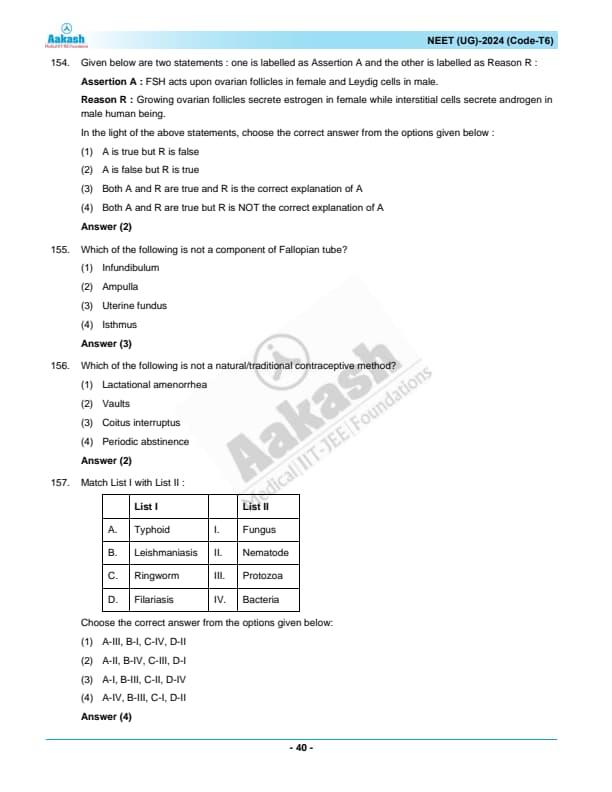
Given below are two statements: one is labelled as Assertion A and the other is labelled as Reason R:
Assertion A: FSH acts upon ovarian follicles in female and Leydig cells in male.
Reason R: Growing ovarian follicles secrete estrogen in females while interstitial cells secrete androgen in male human being.
In the light of the above statements, choose the correct answer from the options given below:
View Solution
Step 1: Analyzing Assertion A.
The assertion is incorrect because FSH (Follicle Stimulating Hormone) acts on ovarian follicles in females but stimulates Sertoli cells in males, not Leydig cells. Leydig cells are primarily stimulated by LH (Luteinizing Hormone) to produce testosterone.
Step 2: Analyzing Reason R.
The reason is correct as it accurately describes the function of ovarian follicles in females (secreting estrogen) and interstitial cells (Leydig cells) in males (secreting androgen, primarily testosterone). Quick Tip: FSH is involved in stimulating gametogenesis and hormone production, but its targets differ between males and females.
Which of the following is not a component of Fallopian tube?
View Solution
Identifying the parts of the female reproductive system.
The Fallopian tube consists of four main parts: the infundibulum, ampulla, isthmus, and fimbriae. The uterine fundus, however, refers to the upper part of the uterus, not part of the Fallopian tube. Quick Tip: The Fallopian tube is a key part of the female reproductive system, responsible for transporting eggs from the ovaries to the uterus.
Which of the following is not a natural/traditional contraceptive method?
View Solution
Identifying non-natural contraceptive methods.
Vaults refer to barrier methods such as cervical caps, which are not natural methods but rather physical barriers used to prevent pregnancy. Quick Tip: Differentiating between natural and artificial contraceptive methods is essential for understanding reproductive health options.
Match List I with List II:

hoose the correct answer from the options given below:
View Solution
Step 1: Matching diseases with their causative agents.
Typhoid (A) is caused by a bacterium, hence A-IV.
Leishmaniasis (B) is caused by a protozoan, hence B-III.
Ringworm (C) is a fungal infection, hence C-I.
Filariasis (D) is caused by a nematode, hence D-II.
Quick Tip: Knowing the causative agents of diseases helps in understanding their treatment and prevention.
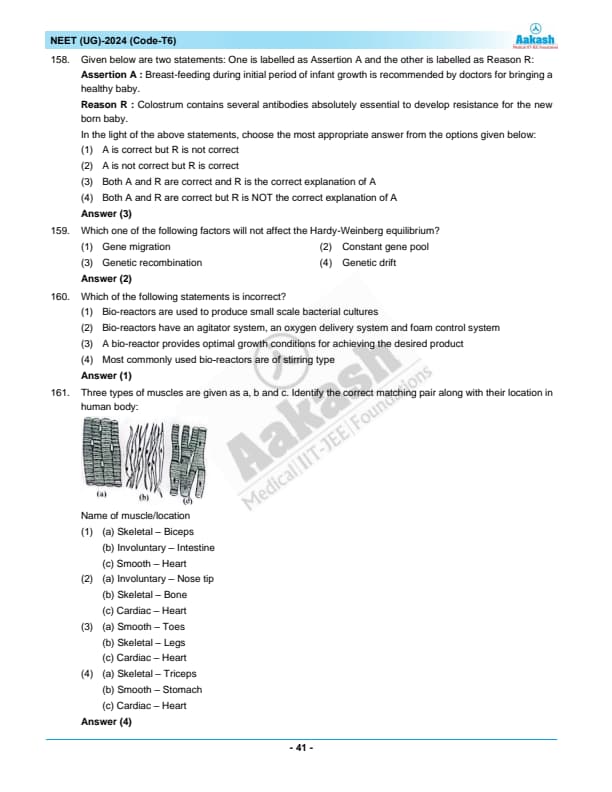
Given below are two statements: One is labelled as Assertion A and the other is labelled as Reason R:
Assertion A: Breast-feeding during initial period of infant growth is recommended by doctors for bringing a healthy baby.
Reason R: Colostrum contains several antibodies absolutely essential to develop resistance for the new born baby.
In the light of the above statements, choose the most appropriate answer from the options given below:
View Solution
Step 1: Analyzing the Assertion.
Breast-feeding is indeed recommended for the health of newborns because it provides essential nutrients and antibodies during the critical early stages of growth.
Step 2: Analyzing the Reason.
Colostrum, the first milk produced by the mother after delivery, contains high levels of antibodies that help protect the newborn from infections. This makes the Reason R correct and an explanation for Assertion A. Quick Tip: Colostrum is a vital first milk that helps in building immunity in the newborn, which is why early breastfeeding is so important.
Which one of the following factors will not affect the Hardy-Weinberg equilibrium?
View Solution
Understanding the Hardy-Weinberg equilibrium.
The Hardy-Weinberg equilibrium assumes no evolution is occurring, meaning factors like gene migration, genetic recombination, and genetic drift can all affect allele frequencies and cause evolution. A constant gene pool, however, implies no changes in allele frequencies, which is the condition for Hardy-Weinberg equilibrium to hold true. Quick Tip: The Hardy-Weinberg equilibrium principle is used to study allele frequencies in a population, assuming no evolutionary forces act on it.
Which of the following statements is incorrect?
View Solution
Understanding the role of bio-reactors.
Bio-reactors are typically used for large-scale cultivation of microorganisms, including bacteria, fungi, or cells for the production of various products. They are designed to optimize growth conditions, not typically for small-scale cultures, which would be produced in flasks or smaller vessels. Quick Tip: Bio-reactors are critical for industrial-scale fermentation processes, providing controlled environments for optimal microbial growth.
Three types of muscles are given as a, b, and c. Identify the correct matching pair along with their location in the human body:

Name of Muscle/Location.
View Solution
Analysis of Muscle Types and Locations:
(a) Skeletal Muscle: Characterized by striations and voluntary control. Common examples include muscles such as the biceps and triceps which are used for movement of bones.
Correct identification: Triceps, a large muscle on the back of the upper limb of many vertebrates. It is responsible for extension of the elbow joint.
(b) Smooth Muscle: Lacks striations and is under involuntary control. It is found in walls of hollow organs like intestines and stomach.
Correct identification: Stomach, which extensively uses smooth muscle for the process of digestion through peristalsis.
(c) Cardiac Muscle: Striated like skeletal muscle but operates under involuntary control, found only in the heart.
Correct identification: Heart, the primary location of cardiac muscle which is specialized for continuous contractions to pump blood throughout the body.\
Conclusion:
Each muscle type is correctly identified in option (4) with its location, matching the unique structural and functional characteristics necessary for their respective roles in the human body. Quick Tip: Distinguishing muscle types is key in anatomy and helps in understanding the physiological roles of different muscle tissues in the body.
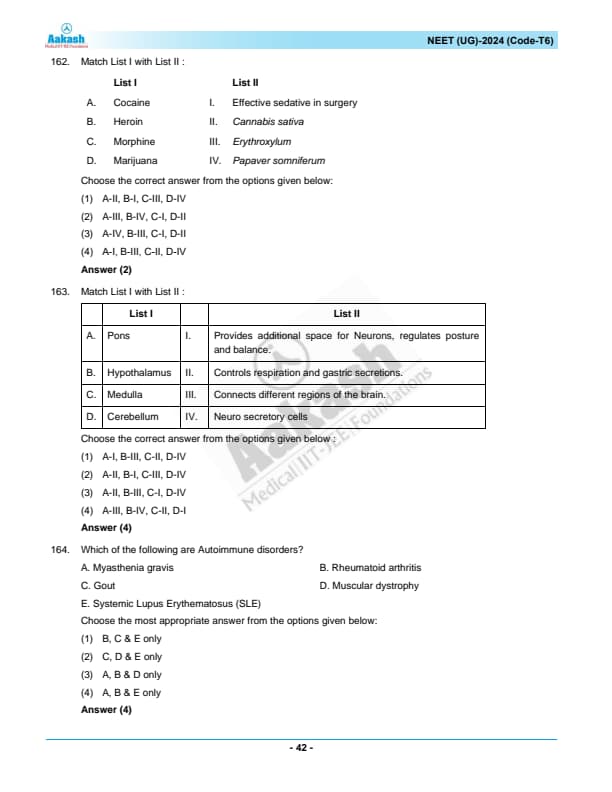
Match List I with List II:

Choose the correct answer from the options given below:
View Solution
Identifying the correct plant or drug source.
Cocaine comes from the plant Erythroxylum, hence A-III.
Heroin is derived from the opium poppy, Papaver somniferum, so B-IV.
Morphine is also derived from Papaver somniferum, hence C-I.
Marijuana comes from Cannabis sativa, making D-II.
Quick Tip: Being familiar with the sources of narcotics and their medicinal uses can help differentiate them in pharmacology-related questions.
Match List I with List II:

Choose the correct answer from the options given below:
View Solution
Step 1: Analyzing each brain structure's function.
Pons (A) connects different regions of the brain, facilitating communication, hence A-III.
Hypothalamus (B) contains neurosecretory cells and is involved in regulating endocrine functions, hence B-IV.
Medulla (C) controls basic life functions, such as respiration and gastric secretions, hence C-II.
Cerebellum (D) is responsible for maintaining posture and balance, hence D-I. Quick Tip: Understanding the function of different brain regions helps in recognizing their role in physiological processes.
Which of the following are Autoimmune disorders?
A. Myasthenia gravis
B. Rheumatoid arthritis
C. Gout
D. Muscular dystrophy
E. Systemic Lupus Erythematosus (SLE)
Choose the most appropriate answer from the options given below:
View Solution
Analyzing the disorders.
Myasthenia gravis (A) is an autoimmune disorder in which the body's immune system attacks the neuromuscular junction, leading to muscle weakness.
Rheumatoid arthritis (B) is an autoimmune disorder where the immune system attacks the joints, leading to inflammation and damage.
Gout (C) is not an autoimmune disorder; it is a metabolic condition caused by the accumulation of uric acid crystals in joints.
Muscular dystrophy (D) is a group of genetic disorders affecting muscle strength but is not autoimmune.
Systemic Lupus Erythematosus (SLE) (E) is a classic autoimmune disorder where the immune system attacks various tissues in the body. Quick Tip: Autoimmune diseases are conditions where the immune system mistakenly attacks the body's own tissues, and recognizing them is important for diagnostic purposes.
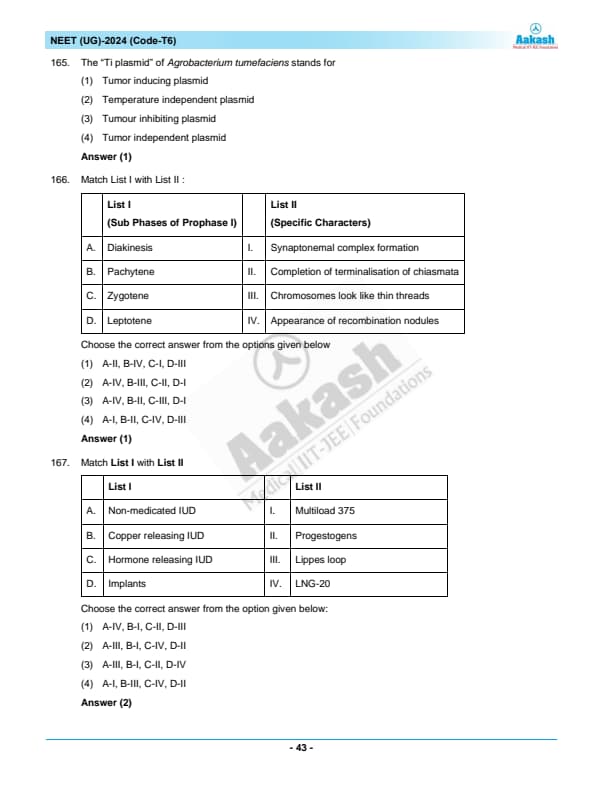
The “Ti plasmid” of Agrobacterium tumefaciens stands for:
View Solution
Understanding the role of the Ti plasmid.
The Ti plasmid (tumor-inducing plasmid) of Agrobacterium tumefaciens is responsible for causing crown gall disease in plants by transferring a part of the plasmid into the plant's genome, which induces tumor formation. Quick Tip: The Ti plasmid is a critical tool in genetic engineering as it is used to transfer genes into plant cells.
Match List I with List II:

Choose the correct answer from the options given below:
View Solution
Analyzing the characteristics of each sub-phase.
Diakinesis is the final sub-phase of prophase I, where the chiasmata (points of crossing over) are fully terminalized. Hence, A-II.
Pachytene is characterized by the appearance of recombination nodules, which are important for the process of genetic recombination. Hence, B-IV.
Zygotene is the phase where the synaptonemal complex, which helps in pairing homologous chromosomes, begins to form. Hence, C-I.
Leptotene is the earliest sub-phase, where chromosomes first become visible as thin threads. Hence, D-III.
Quick Tip: Familiarizing yourself with the stages of meiosis and the events specific to each phase will help in answering questions related to genetic processes.
Match List I with List II:

Choose the correct answer from the options given below:
View Solution
Understanding each contraceptive method.
Non-medicated IUD, such as the Lippes Loop, does not release hormones or metals.
Copper releasing IUD, like Multiload 375, uses copper as a spermicidal agent.
Hormone releasing IUD, exemplified by LNG-20, releases levonorgestrel, a hormone used to prevent pregnancy.
Implants, such as those releasing Progestogens, are placed under the skin to release hormones over a long period.
Quick Tip: Familiarize yourself with the types of contraceptives and their mechanisms to better understand their applications in medical practice.
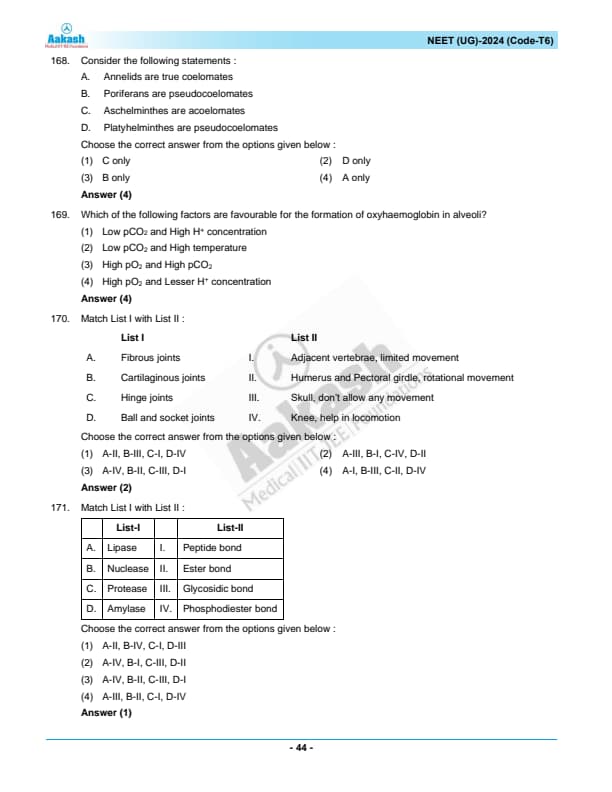
Consider the following statements:
A. Annelids are true coelomates
B. Poriferans are pseudocoelomates
C. Aschelminthes are acoelomates
D. Platyhelminthes are pseudocoelomates
Choose the correct answer from the options given below:
View Solution
Analyzing the coelom status of the organisms.
Annelids (A) are true coelomates because they have a well-developed coelom (body cavity) that is completely lined with mesoderm.
Poriferans (B) are not pseudocoelomates; they lack a true coelom or pseudocoelom and are classified as acoelomates.
Aschelminthes (C) are pseudocoelomates, not acoelomates, as they have a fluid-filled body cavity not entirely lined by mesoderm.
Platyhelminthes (D) are also acoelomates and do not have a pseudocoelom. Quick Tip: Always remember that true coelomates have a mesoderm-lined cavity, while pseudocoelomates have a body cavity not fully surrounded by mesoderm.
Which of the following factors are favourable for the formation of oxyhaemoglobin in alveoli?
View Solution
Understanding the Factors Influencing Oxyhaemoglobin Formation:
The formation of oxyhaemoglobin, the complex of oxygen and hemoglobin, is influenced by several physiological factors. This process is essential for transporting oxygen from the lungs to the tissues.
Analysis of Each Factor:
Partial Pressure of Oxygen pO\(_2\): Higher pO\(_2\) increases the affinity of hemoglobin for oxygen, facilitating the formation of oxyhaemoglobin. In the alveoli, where oxygen concentration is high due to fresh air intake, the pO\(_2\) is naturally higher, promoting this binding.
Partial Pressure of Carbon Dioxide pCO\(_2\): Lower pCO\(_2\) reduces the competition between carbon dioxide and oxygen for binding sites on hemoglobin, further enhancing oxygen binding.
Hydrogen Ion Concentration H\(^+\): Lower H\(^+\) concentration, or a higher pH, shifts the oxygen-hemoglobin dissociation curve to the left (known as the Bohr effect). This shift increases hemoglobin's affinity for oxygen, facilitating the formation of oxyhaemoglobin.
Detailed Analysis of Options:
Option (1) Low pCO\(_2\) and High H\(^+\) concentration is not favorable because high H\(^+\) concentration (or low pH) would decrease hemoglobin's oxygen affinity.
Option (2) Low pCO\(_2\) and High temperature: While lower pCO\(_2\) is favorable, higher temperatures actually decrease the affinity of hemoglobin for oxygen, promoting oxygen release rather than uptake in tissues.
Option (3) High pO\(_2\) and High pCO\(_2\): While high pO\(_2\) is favorable, high pCO\(_2\) would lower hemoglobin's oxygen affinity due to competitive inhibition and a shift in pH.
Option (4) High pO\(_2\) and Lesser H\(^+\) concentration: This is the most favorable condition in the alveoli for oxyhaemoglobin formation. High pO\(_2\) enhances oxygen loading, and lesser H\(^+\) concentration increases hemoglobin's affinity for oxygen, facilitating efficient oxygen transport. Quick Tip: The Bohr effect describes how pH levels and CO\(_2\) concentrations influence hemoglobin's oxygen-binding capacity, crucial for understanding respiratory physiology.
Match List I with List II:

Choose the correct answer from the options given below:
View Solution
Understanding joint classifications.
Fibrous joints (A) are found in the skull where there is no movement, hence A-III.
Cartilaginous joints (B) are found in adjacent vertebrae, allowing limited movement, hence B-I.
Hinge joints (C) are found in the knee and allow bending, hence C-IV.
Ball and socket joints (D) are found in the shoulder (humerus and pectoral girdle) and allow rotational movement, hence D-II. Quick Tip: Joints are classified based on their structure and the movement they allow, so knowing the anatomical features will help in their identification.
Match List I with List II:

Choose the correct answer from the options given below:
View Solution
Understanding the bond types.
Lipase (A) breaks down ester bonds, which are found in lipids, hence A-II.
Nuclease (B) breaks down phosphodiester bonds in nucleic acids, hence B-IV.
Protease (C) breaks peptide bonds between amino acids, hence C-I.
Amylase (D) breaks down glycosidic bonds in carbohydrates, hence D-III.
Quick Tip: Knowing the types of bonds broken by different enzymes can help identify their function in digestion and metabolism.
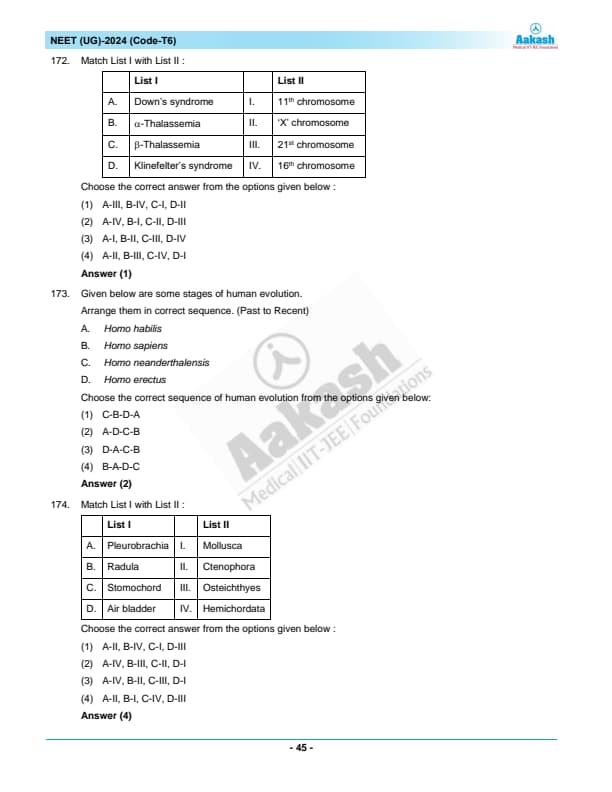
Match List I with List II:

Choose the correct answer from the options given below:
View Solution
Identifying the correct chromosomal abnormality for each condition.
Down’s syndrome (A) is caused by trisomy of the 21st chromosome, so A-III.
\(\alpha\)-Thalassemia (B) is related to a mutation in the 16th chromosome, so B-IV.
\(\beta\)-Thalassemia (C) involves mutations on chromosome 11, so C-I.
Klinefelter’s syndrome (D) is caused by an extra X chromosome, so D-II.
Quick Tip: Chromosomal abnormalities are often linked to specific syndromes and conditions, so understanding the genetics behind these can help in diagnosis.
Given below are some stages of human evolution.
Arrange them in correct sequence. (Past to Recent)
A. Homo habilis
B. Homo sapiens
C. Homo neanderthalensis
D. Homo erectus
Choose the correct sequence of human evolution from the options given below:
View Solution
Understanding the evolutionary sequence.
Homo habilis (A) is one of the earliest members of the genus Homo, appearing around 2.4 million years ago.
Homo erectus (D) evolved next and is considered the first species to have similar body proportions to modern humans.
Homo neanderthalensis (C) appeared after Homo erectus and is known to have coexisted with early Homo sapiens.
Homo sapiens (B) represents modern humans and appeared most recently. Quick Tip: Understanding the timeline of human evolution helps in identifying the major stages of human ancestry and development.
Match List I with List II:

choose the correct answer from the options given below:
View Solution
Analyzing each organism and characteristic.
Pleurobrachia is a type of comb jelly, which belongs to the phylum Ctenophora. Hence, \( A \) matches with \( II \) (Ctenophora).
Radula is a characteristic feature of mollusks and is used for feeding. Therefore, \( B \) matches with \( I \) (Mollusca).
Stomochord is a structure found in Hemichordata, which is a phylum closely related to chordates. Thus, \( C \) matches with \( IV \) (Hemichordata).
Air bladder is found in Osteichthyes (bony fish) and helps in buoyancy. Hence, \( D \) matches with \( III \) (Osteichthyes).
Thus, the correct match is:
- A-II: Pleurobrachia belongs to Ctenophora.
- B-I: Radula is found in Mollusca.
- C-IV: Stomochord is found in Hemichordata.
- D-III: Air bladder is found in Osteichthyes.
Therefore, the correct answer is option (4). Quick Tip: Familiarizing yourself with common names and scientific names helps in identifying species correctly in taxonomy.
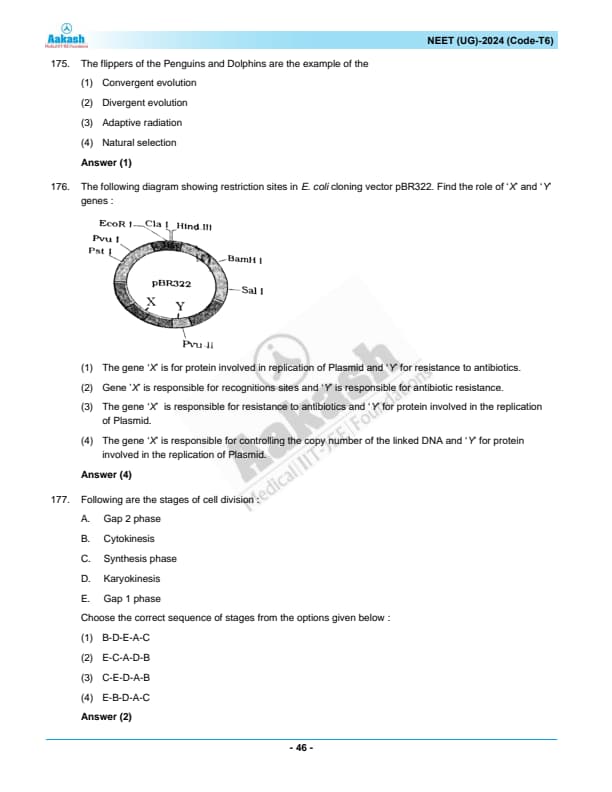
The flippers of the Penguins and Dolphins are the example of the:
View Solution
Understanding the concept of convergent evolution.
Convergent evolution occurs when unrelated species evolve similar traits independently, usually due to similar environmental pressures. Penguins (birds) and dolphins (mammals) both developed flippers for swimming, despite their different evolutionary lineages, which is an example of convergent evolution. Quick Tip: Convergent evolution highlights how different species adapt in similar ways to similar environmental challenges.
The following diagram showing restriction sites in E. coli cloning vector pBR322. Find the role of ‘X’ and ‘Y’ genes:

View Solution
Understanding the function of plasmid genes.
The X gene is typically responsible for regulating the copy number of the plasmid in the bacterial cell. It ensures that there is an appropriate number of plasmid copies during cell division.
The Y gene encodes for a protein that is involved in the replication of the plasmid, which is essential for the plasmid's propagation in the host cell.
Quick Tip: In plasmids like pBR322, the replication control and antibiotic resistance genes are crucial for maintaining plasmid stability and selecting bacteria that contain the plasmid.
Following are the stages of cell division:
A. Gap 2 phase
B. Cytokinesis
C. Synthesis phase
D. Karyokinesis
E. Gap 1 phase
Choose the correct sequence of stages from the options given below:
View Solution
Understanding the sequence of the cell cycle.
The cell cycle begins with Gap 1 phase (E), where the cell grows and prepares for DNA synthesis.
During the Synthesis phase (C), DNA is replicated.
Gap 2 phase (A) follows, where the cell prepares for mitosis.
Karyokinesis (D) is the process of nuclear division.
Finally, Cytokinesis (B) is the division of the cytoplasm, completing cell division.
Quick Tip: Remember the sequence of the cell cycle: G1 → S → G2 → Mitosis (karyokinesis) → Cytokinesis.
Match List I with List II:

Choose the correct answer from the options given below:
View Solution
Matching each term with the correct disease or cause.
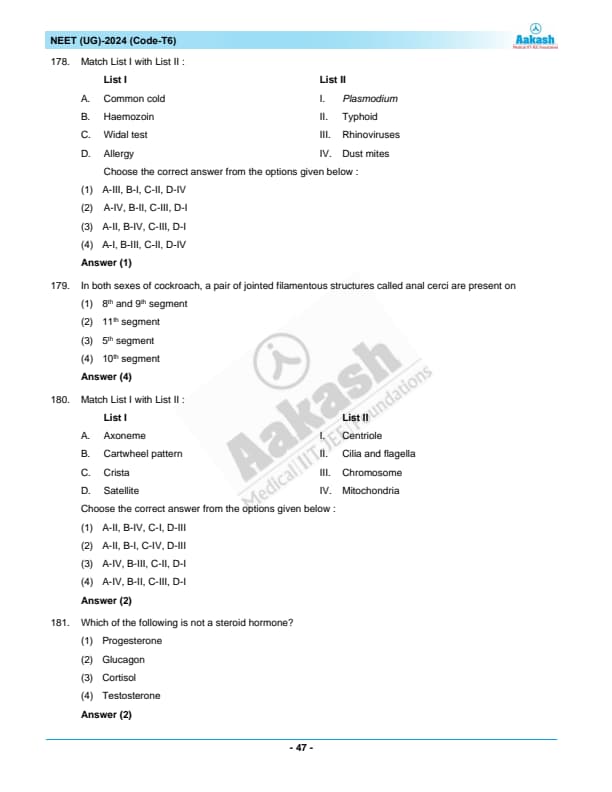
Common cold is caused by rhinoviruses, so A-III.
Haemozoin is a waste product of the malaria parasite, Plasmodium, hence B-I.
Widal test is used for the diagnosis of typhoid, so C-II.
Allergy can be caused by dust mites, which are common allergens, making D-IV.
Quick Tip: Understanding the causes of common diseases and their diagnostic tests can greatly help in answering medical science questions.
In both sexes of cockroach, a pair of jointed filamentous structures called anal cerci are present on:
View Solution
Analyzing the anatomy of cockroaches.
In cockroaches, anal cerci are located at the posterior end of the body, typically on the 10th segment. These cerci are sensory structures that help the cockroach detect environmental changes, particularly air currents. Quick Tip: Understanding insect anatomy, especially sensory organs like cerci, is useful in identifying their roles in behavior and physiology.
Match List I with List II:

Choose the correct answer from the options given below:
View Solution
Understanding the structure and functions.
Axoneme (A) is a structure found in cilia and flagella that supports their movement, hence A-II.
Cartwheel pattern (B) is a characteristic arrangement of microtubules found in centrioles, hence B-I.
Crista (C) refers to the folds inside the mitochondria, where ATP is synthesized, hence C-IV.
Satellite (D) is associated with the chromosomes, particularly the small bodies found around them, hence D-III.
Quick Tip: Understanding the cellular structures and their functions will help in identifying their respective components during biological analysis.
Which of the following is not a steroid hormone?
View Solution
Step 1: Identifying steroid hormones.
Steroid hormones are derived from cholesterol and include hormones like progesterone, cortisol, and testosterone.
Step 2: Identifying the exception.
Glucagon is a peptide hormone, not a steroid hormone, as it is derived from a protein and not cholesterol.
Quick Tip: Steroid hormones are lipid-soluble and derived from cholesterol, while peptide hormones like glucagon are water-soluble.
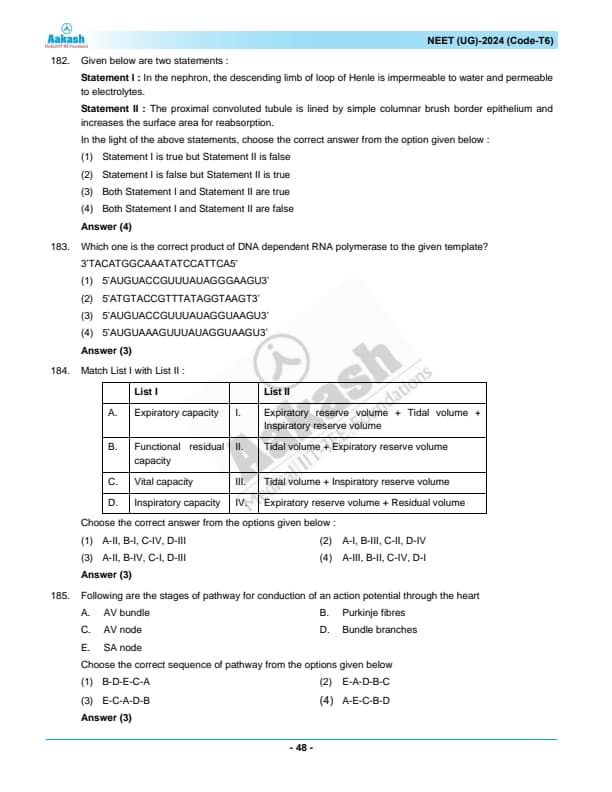
Given below are two statements:
Statement I: In the nephron, the descending limb of the loop of Henle is impermeable to water and permeable to electrolytes.
Statement II: The proximal convoluted tubule is lined by simple columnar brush border epithelium and increases the surface area for reabsorption.
In the light of the above statements, choose the correct answer from the options given below:
View Solution
Step 1: Analyzing Statement I.
Statement I says that the descending limb of the loop of Henle is impermeable to water and permeable to electrolytes. This is false because the descending limb is permeable to water but impermeable to electrolytes. The primary function of the descending limb is to allow water to be reabsorbed into the bloodstream.
Step 2: Analyzing Statement II.
Statement II mentions that the proximal convoluted tubule (PCT) is lined by simple columnar brush border epithelium and increases the surface area for reabsorption. This statement is also false. The proximal convoluted tubule is lined by simple cuboidal epithelium with a brush border of microvilli that increase the surface area for reabsorption. However, it is not columnar epithelium.
Thus, both statements are false.
Therefore, the correct answer is option (4). Quick Tip: - The descending limb of the loop of Henle is permeable to water and impermeable to electrolytes, while the ascending limb is impermeable to water but permeable to electrolytes. - The proximal convoluted tubule is lined by simple cuboidal epithelium with a brush border to increase surface area for reabsorption.
Which one is the correct product of DNA dependent RNA polymerase to the given template?
3’TACATGGCAAATATCCATTCA5’
View Solution
Step 1: Understanding the transcription process.
DNA-dependent RNA polymerase synthesizes RNA using a DNA template. The RNA sequence is complementary to the DNA strand, except that uracil (U) replaces thymine (T).
Step 2: Determining the complementary RNA sequence.
The given DNA template is:
3’TACATGGCAAATATCCATTCA5’
The complementary RNA sequence will be:
5’AUGUACCGUUUAUAGGUAAGU3’
This matches option (3). Quick Tip: In transcription, remember that thymine (T) in DNA pairs with adenine (A) in RNA, and cytosine (C) pairs with guanine (G), while uracil (U) replaces thymine in RNA.
Match List I with List II:

Choose the correct answer from the options given below:
View Solution
Step 1: Understanding the respiratory volumes and capacities.
Expiratory capacity (A) is the total volume of air that can be exhaled after a normal inhalation. This includes tidal volume and expiratory reserve volume, so A-II.
Functional residual capacity (B) is the volume of air remaining in the lungs after normal exhalation. It is the sum of expiratory reserve volume and residual volume, hence B-IV.
Vital capacity (C) is the total volume of air that can be exhaled after a maximum inhalation, which is the sum of tidal volume, inspiratory reserve volume, and expiratory reserve volume, so C-I.
Inspiratory capacity (D) is the maximum amount of air that can be inhaled after a normal exhalation, which is the sum of tidal volume and inspiratory reserve volume, hence D-III.
Quick Tip: Familiarize yourself with the different lung volumes and capacities, as they are crucial for understanding respiratory mechanics.
Following are the stages of pathway for conduction of an action potential through the heart:
A. AV bundle
B. Purkinje fibres
C. AV node
D. Bundle branches
E. SA node
Choose the correct sequence of pathway from the options given below:
View Solution
Understanding the conduction pathway in the heart.
The action potential starts at the SA node (E), which initiates the electrical impulse.
The impulse then travels to the AV node (C), where it is briefly delayed.
From there, it passes to the AV bundle (A) and moves down to the bundle branches (D).
Finally, it reaches the Purkinje fibres (B), which spread the impulse to the ventricles. Quick Tip: Remember the flow of the heart’s electrical impulse: SA node → AV node → AV bundle → bundle branches → Purkinje fibres.
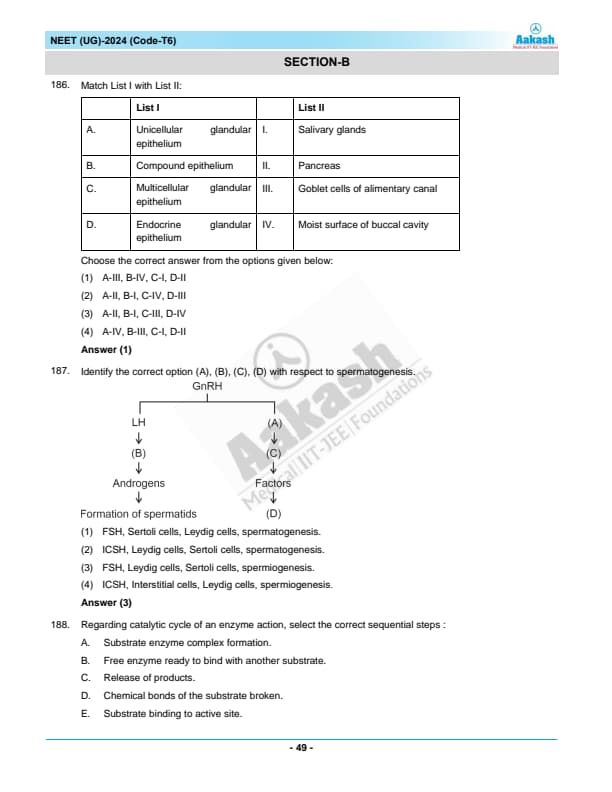
Match List I with List II:

Choose the correct answer from the options given below:
View Solution
Matching the epithelium types with their examples.
Unicellular glandular epithelium (A) refers to individual secretory cells such as goblet cells, hence A-III.
Compound epithelium (B) is found on surfaces that need protection from wear and tear, such as the buccal cavity, hence B-IV.
Multicellular glandular epithelium (C) can be found in structures like salivary glands, hence C-I.
Endocrine glandular epithelium (D) is found in glands like the pancreas that have internal secretions, hence D-II. Quick Tip: Each type of epithelium has specific characteristics and functions; knowing these can help identify where they are found in the body.
Identify the correct option (A), (B), (C), (D) with respect to spermatogenesis.

View Solution
Analyzing hormone functions and cell types involved in spermatogenesis.
FSH (Follicle Stimulating Hormone) directly stimulates the Sertoli cells, which are crucial for nurturing the sperm cells during spermatogenesis.
LH (Luteinizing Hormone) acts primarily on Leydig cells, which are responsible for producing androgens (testosterone) necessary for the final stages of spermatogenesis.
Step 2: Understanding the terms spermatogenesis and spermiogenesis.
Spermatogenesis refers to the entire process of sperm production from spermatogonial stem cells.
Spermiogenesis refers specifically to the final stage of spermatogenesis, where spermatids are transformed into mature spermatozoa.
Step 3: Mapping the correct flow of hormone action and cell response.
Given the description and the process diagram, the sequence should correctly associate FSH with Leydig cells, and LH's influence through androgens on Sertoli cells, leading to spermiogenesis, making option (3) the correct sequence.
Quick Tip: Understanding the hormonal control and stages of spermatogenesis is crucial for comprehending male reproductive physiology.
Regarding catalytic cycle of an enzyme action, select the correct sequential steps:
A. Substrate enzyme complex formation.
B. Free enzyme ready to bind with another substrate.
C. Release of products.
D. Chemical bonds of the substrate broken.
E. Substrate binding to active site.
Choose the correct answer from the options given below:
View Solution
Ordering the enzymatic reaction steps.
The enzyme first binds the substrate at the active site (E).
This binding leads to the formation of a substrate-enzyme complex (A).
Chemical bonds in the substrate are then altered or broken (D).
This leads to the release of products from the enzyme (C).
Finally, the enzyme is freed up to bind to another substrate (B).
Quick Tip: Understanding the enzyme catalytic cycle is crucial for studying biochemical reactions and how enzymes facilitate these processes.
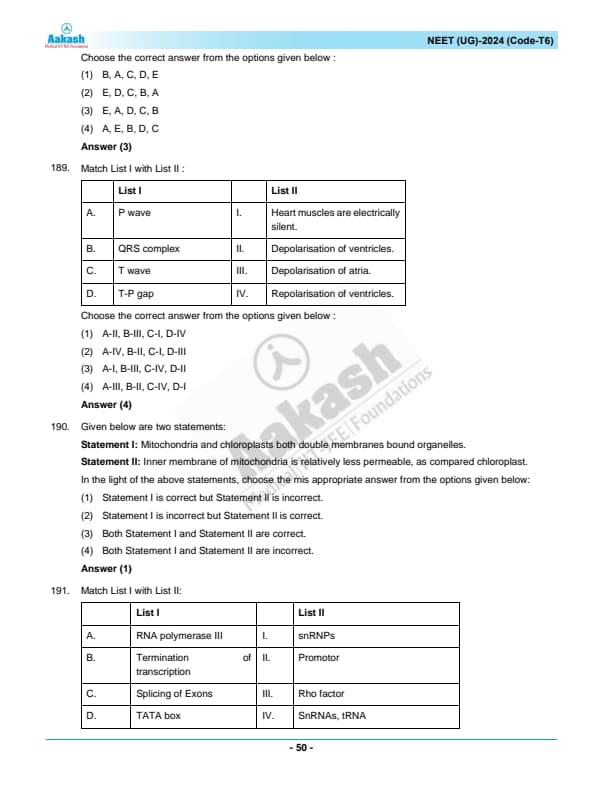
Match List I with List II:

Choose the correct answer from the options given below:
View Solution
Understanding the electrocardiogram (ECG) components.
The P wave (A) represents atrial depolarization, leading to atrial contraction, hence A-III.
The QRS complex (B) represents the rapid depolarization of the ventricles, crucial for ventricular contraction, hence B-II.
The T wave (C) represents the repolarization of the ventricles, resetting the ventricular cells to their resting state, hence C-IV.
The T-P gap (D) represents the phase where the heart muscles are electrically silent between heartbeats, hence D-I.
Quick Tip: Each wave and segment of an ECG represents a specific electrical activity in the heart, crucial for understanding heart function and diagnosing conditions.
Given below are two statements:
Statement I: Mitochondria and chloroplasts both double membranes bound organelles.
Statement II: Inner membrane of mitochondria is relatively less permeable, as compared chloroplast.
In the light of the above statements, choose the most appropriate answer from the options given below:
View Solution
Step 1: Verifying Statement I.
Statement I is correct as both mitochondria and chloroplasts are bound by double membranes.
Step 2: Verifying Statement II.
Statement II is incorrect; it is the inner membrane of chloroplasts that is less specialized in ion transport compared to the highly impermeable inner membrane of mitochondria, which is involved in the electron transport chain and ATP synthesis. Quick Tip: Understanding the structure and function of cell organelles helps in comprehending cellular energy production mechanisms.
Match List I with List II:

Choose the correct answer from the options given below:
View Solution
Matching the molecular biology terms with their functions.
RNA polymerase III (A) is responsible for transcribing snRNAs and tRNA, hence A-IV.
Termination of transcription (B) often involves the Rho factor, which helps in stopping the transcription process at specific sites, hence B-III.
Splicing of Exons (C) involves snRNPs, which are part of the spliceosome complex that removes introns from pre-mRNA, hence C-I.
TATA box (D) is a crucial component of the promoter region of genes, helping in the initiation of transcription, hence D-II.
Quick Tip: Understanding the roles of various components in transcription and post-transcriptional modifications is essential for grasping gene expression regulation.
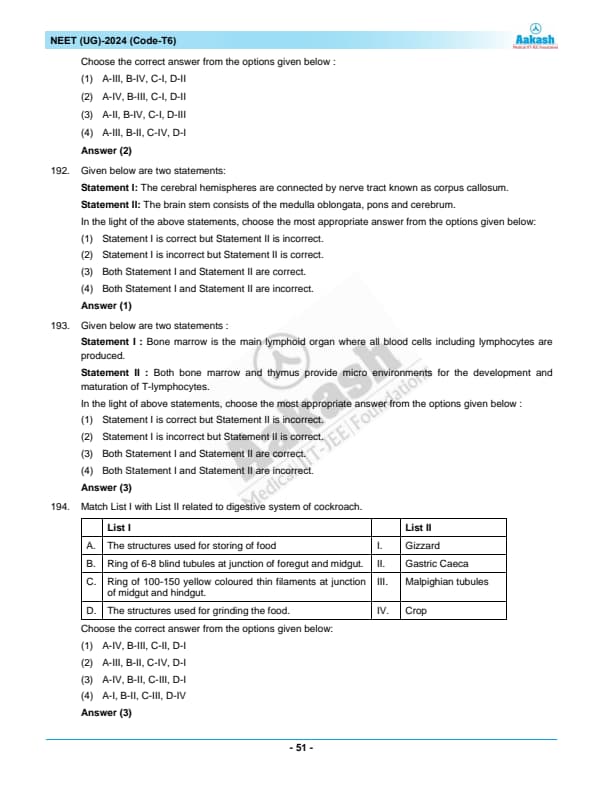
Given below are two statements:
Statement I: The cerebral hemispheres are connected by nerve tract known as corpus callosum.
Statement II: The brain stem consists of the medulla oblongata, pons and cerebrum.
In the light of the above statements, choose the most appropriate answer from the options given below:
View Solution
Step 1: Analyzing Statement I.
Statement I is correct; the corpus callosum is indeed the nerve tract that connects the two cerebral hemispheres, facilitating interhemispheric communication.
Step 2: Analyzing Statement II.
Statement II is incorrect because the brain stem consists of the medulla oblongata, pons, and midbrain, not the cerebrum. Quick Tip: Understanding the structural organization of the brain helps in accurately identifying its components and their functions.
Given below are two statements:
Statement I: Bone marrow is the main lymphoid organ where all blood cells including lymphocytes are produced.
Statement II: Both bone marrow and thymus provide microenvironments for the development and maturation of T-lymphocytes.
In the light of the above statements, choose the most appropriate answer from the options given below:
View Solution
Step 1: Analyzing Statement I.
Statement I is correct as bone marrow is indeed a primary lymphoid organ responsible for the production of all types of blood cells, including lymphocytes.
Step 2: Analyzing Statement II.
Statement II is correct. The bone marrow is the site where all T-lymphocytes are originally produced, and the thymus is where T-lymphocytes mature and differentiate, thus both providing critical environments for T-cell development. Quick Tip: The bone marrow and thymus are key to the lymphatic and immune systems, playing crucial roles in the production and maturation of lymphocytes.
Match List I with List II related to the digestive system of a cockroach.

Choose the correct answer from the options given below:
View Solution
Assign the correct function to each organ based on its anatomical and physiological role.
A. The Crop in cockroaches is used for the storage of food, so A matches with IV.
B. Gastric Caeca are the ring of 6-8 blind tubules at the junction of the foregut and midgut, serving to increase the surface area for enzyme secretion and absorption, so B matches with II.
C. Malpighian tubules, a ring of 100-150 yellow coloured thin filaments, are involved in excretion and osmoregulation at the junction of the midgut and hindgut, so C matches with III.
D. The Gizzard is equipped with chitinous teeth and helps in grinding the food, so D matches with I.
Quick Tip: Understanding the anatomical structure of the digestive system in insects like cockroaches can provide insights into their efficient nutrient absorption and waste management strategies, which are crucial for their survival in diverse environments.
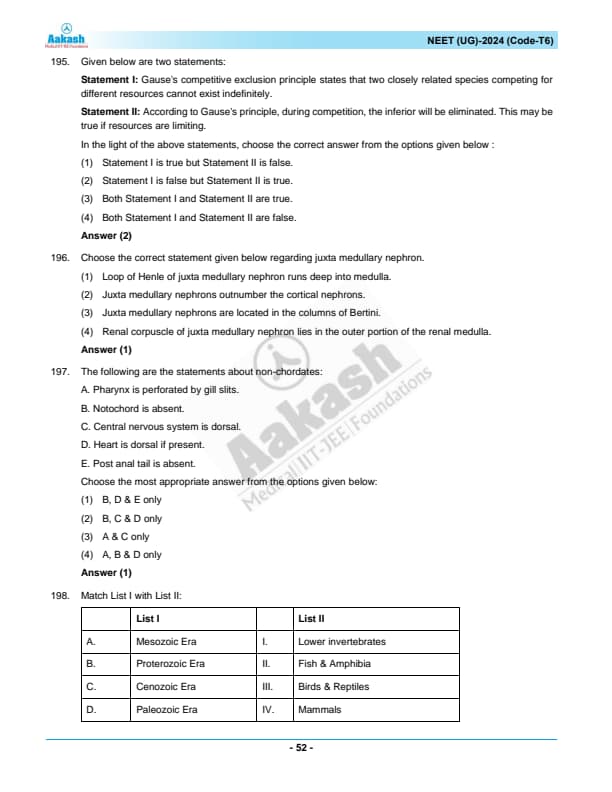
Given below are two statements:
Statement I: Gause's competitive exclusion principle states that two closely related species competing for different resources cannot exist indefinitely.
Statement II: According to Gause's principle, during competition, the inferior will be eliminated. This may be true if resources are limiting.
In the light of the above statements, choose the correct answer from the options given below :
View Solution
Understanding Gause's competitive exclusion principle.
Statement I is incorrect because Gause's principle states that two species competing for the same limited resources cannot coexist at constant population values, not different resources.
Statement II correctly summarizes the competitive exclusion principle where one species will outcompete the other when resources are limited. Quick Tip: Gause's principle is a foundational concept in ecology that explains how competition influences species diversity and population dynamics.
Choose the correct statement given below regarding juxta medullary nephron.
View Solution
Understanding nephron structure.
The juxta medullary nephrons have their Loop of Henle extending deep into the renal medulla, which is crucial for concentrating urine. Quick Tip: Juxta medullary nephrons are essential for producing concentrated urine, a key adaptation in mammals for water conservation.
The following are the statements about non-chordates:
A. Pharynx is perforated by gill slits.
B. Notochord is absent.
C. Central nervous system is dorsal.
D. Heart is dorsal if present.
E. Post anal tail is absent.
Choose the most appropriate answer from the options given below:
View Solution
Analyzing non-chordate characteristics.
Notochord is absent (B) is a defining trait of non-chordates.
Heart is dorsal if present (D) and Post anal tail is absent (E) are also characteristics typical of many non-chordates, unlike chordates that typically have a ventral heart and a post-anal tail. Quick Tip: Remember, non-chordates lack a notochord at any stage of their life, which is a fundamental difference from chordates.
Match List I with List II:

Choose the correct answer from the options given below:
View Solution
Understanding geological eras and their dominant life forms.
Mesozoic Era (A) is known as the age of reptiles, including dinosaurs, hence A-III.
Proterozoic Era (B) predates most complex life and is characterized by lower forms of life, such as single-celled organisms, hence B-I.
Cenozoic Era (C) is known as the age of mammals, hence C-IV.
Paleozoic Era (D) saw the rise of fish and early amphibians, hence D-II.
Quick Tip: Linking geological eras with their characteristic life forms can aid in understanding evolutionary history.
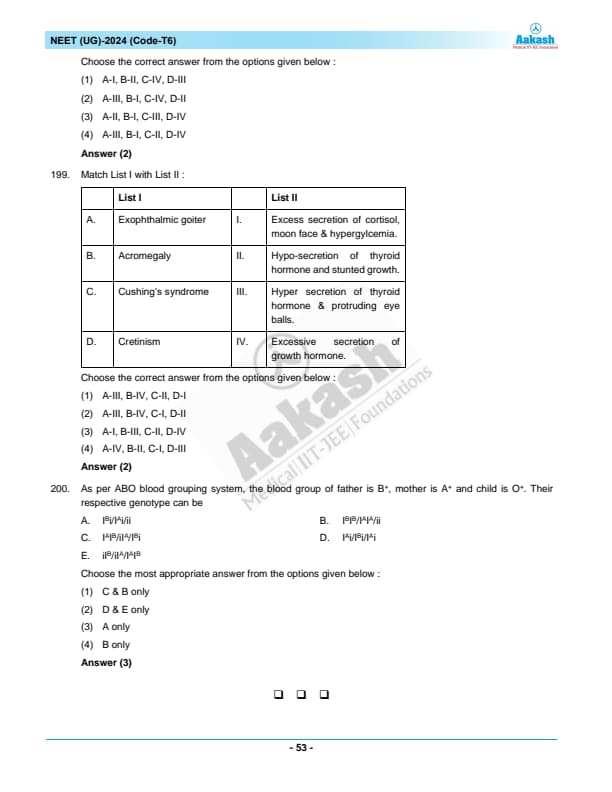
Match List I with List II:

Choose the correct answer from the options given below:
View Solution
Matching diseases with their symptoms.
Exophthalmic goiter (A) is related to hyperthyroidism and features like protruding eyeballs, hence A-III.
Acromegaly (B) is due to excessive growth hormone, leading to enlarged features, hence B-IV.
Cushing’s syndrome (C) results from excess cortisol, associated with symptoms like moon face and hyperglycemia, hence C-I.
Cretinism (D) involves hypo-secretion of thyroid hormones, causing stunted growth and developmental delays, hence D-II. Quick Tip: Identifying endocrine disorders requires an understanding of hormone function and the physical manifestations of hormone imbalances.
As per the ABO blood grouping system, the blood group of the father is B+, the mother is A+, and the child is O+. Their respective genotype can be:
A. \(I^B i/I^A i/ii\)
B. \(I^B I^B/I^A I^A/ii\)
C. \(I^A I^B/i I^A/I^B i\)
D. \(I^A i/I^B i/I^A i\)
E. \(i I^B/i I^A/I^A I^B\)
View Solution
Step 1: Understand the inheritance of the ABO blood group.
The ABO blood group system is based on the presence of antigens and antibodies. The alleles \(I^A\) and \(I^B\) are dominant over \(i\), which does not produce any antigen. Therefore, the presence of \(i i\) genotype results in type O blood, which lacks A and B antigens.
Step 2: Determine the potential genotypes of the parents.
For a child to be of type O blood group (\(ii\)), each parent must contribute an \(i\) allele. This means:
The father with blood group B+ can either be \(I^B I^B\) or \(I^B i\). However, the child having \(ii\) mandates the father's genotype must include \(i\), thus \(I^B i\).
The mother with blood group A+ can either be \(I^A I^A\) or \(I^A i\). Similar to the father, for the child to be \(ii\), the mother must also be heterozygous, thus \(I^A i\).
Step 3: Review the child’s genotype and match the options.
The child's genotype is \(ii\), clearly indicating both parents have contributed an \(i\) allele.
Step 4: Assess each option against the genotypes required.
Option A (\(I^B i/I^A i/ii\)) fits perfectly as it allows both parents to carry and pass the \(i\) allele to the child, resulting in blood group O+.
Options B, C, D, and E do not consistently allow the transmission of an \(i\) allele from each parent to result in \(ii\).
Quick Tip: When solving genetics problems involving blood types, always start by determining the possible genotypes that could result from the alleles provided by the parents.
NEET Previous Year Question Papers with Answer Keys
| NEET 2023 Question Papers | NEET 2022 Question Papers | NEET 2021 Question Papers |
| NEET 2020 Question Papers | NEET 2019 Question Papers | NEET 2018 Question Papers |



Comments