




NEET 2026 Chemistry Syllabus Easy Chapters include GOC, Chemical Bonding, Hydrocarbons, Coordination Compounds, Biomolecules, and Chemical Kinetics. 14-18 questions usually appear from the easy chapters of chemistry. 30-35% weightage is shared by these chapters, contributing 56-72 marks.
- Mole concept, States of matter, Solutions, Chemical Kinetics, Surface Chemistry, Redox Reactions, and Electrochemistry are easy in Physical Chemistry and share 1-3% weightage individually.
- 1-4% weight lies with easy chapters in Inorganic Chemistry, such as the Periodic table, Periodicity, p-Block, d-Block, f-Block, Coordination Compounds, and Environmental Chemistry.
- GOC, Isomerism, Hydrocarbons, Biomolecules, Amines, Carboxylic Acid, Polymers, Alcohols, Phenols, and Ethers carry 2-7% weightage and are easy chapters in Organic Chemistry.
Related Articles
Key Summary
- 14-18 questions appear every year from easy chapters in Chemistry.
- Organic chemistry easy chapters account for 9-11 questions.
- 9-11 questions can be expected from the Physical Chemistry easy chapters.
- Inorganic chemistry easy chapters give 8-9 questions.
- 56-72 marks can be easily scored by getting perfect scores with the easy chapters alone.
- Around 40% direct and NCERT-centric questions are asked from the easy chapters.
- Getting a complete understanding of these chapters will help you attempt even trickier questions.
NEET 2026 Chemistry Syllabus Easy Chapters
Looking for NEET 2026 Chemistry Syllabus Easy Chapters? That is a smart way to approach your preparation for NEET 2026. Because the easy chapters also have good score potential. Here is the list of easy concepts
- Chemical Bonding contributes 2–3 questions (8–12 marks) every year; shapes, hybridisation, and MOT are never skipped.
- GOC + Isomerism forms the backbone of Organic Chemistry, with 2–3 questions consistently asked in every NEET.
- Coordination Compounds appear in all past 6 years with 1–2 questions contributing 4–8 marks, mostly on oxidation states, naming, and CFT.
- Hydrocarbons and Haloalkanes/Haloarenes together give 2–4 questions, mostly covering the reagent pathway and conversion type.
- Alcohols, Phenols & Ethers + Carbonyl Compounds add 2–4 questions every paper; acidity order and name reactions are frequent.
- Biomolecules, Polymers, and Chemistry in Everyday Life guarantees 1–2 factual questions directly lifted from NCERT.
- Periodic Table & Periodicity is a sure-shot 1-question chapter every year, focusing on trends (IE, EA, atomic radius).
- p-Block and d/f-Block elements together add 2–3 questions, covering trends, colors, and oxidation states.
- Mole Concept, Solutions, Kinetics, and Redox/Electrochemistry together give 4–5 formula-based questions, highly scoring with NCERT formulas.
| Physical Chemistry | Organic Chemistry | Inorganic Chemistry |
|---|---|---|
|
|
|
Read More:
NEET 2026NEET 2026 Chemistry Syllabus Easy Chapters Weightage
- 14-18 questions every year appear from the easy chapters of chemistry.
- 56-72 marks can be expected with these chapters and easy sections.
- The chemistry section in NEET is generally the easiest compared to Physics and Biology
- In the past 5-6 years, questions from these chapters have been repeated frequently.
| Chapter | Approx. Questions | Marks (Approx.) | Notes |
|---|---|---|---|
| Chemical Bonding | 2–3 | 8–12 | Shapes, hybridisation, MOT order, H-bonding trends |
| GOC (incl. Isomerism) | 2–3 | 8–12 | Stability, effects, acidity/basicity, stereochemistry |
| Coordination Compounds | 1–2 | 4–8 | Oxidation state, geometry, CFT basics, nomenclature |
| Hydrocarbons | 1–2 | 4–8 | Additions, substitution, ozonolysis style Qs |
| Haloalkanes/Haloarenes | 1–2 | 4–8 | Mechanism pathway ID, reagent outcomes |
| Alcohols/Phenols/Ethers | 1–2 | 4–8 | Acidity order, conversions, name reactions |
| Chemical Kinetics | 1 | 4 | Order, t½, Arrhenius—direct formula |
| Solutions | 1 | 4 | Colligative property or Raoult law |
| Redox/Electrochem (basic) | 1 | 4 | Balancing/Nernst/Faradaic calculation |
| Biomolecules/Polymers/Everyday Life | 1–2 | 4–8 | Term/definition/match-type, very scoring |
| Periodic Table & Periodicity | 1 | 4 | Trend comparisons, basic logic |
| p/d/f-Block (easy parts) | 1–2 | 4–8 | Characteristic properties, common tests |
| Surface Chemistry / Solid State | 0–1 each | 0–4 | One light formula/definition Q is common |
Also check
NEET Chemistry Question Paper with Solutions PDFs (2023-2007)NEET 2026 Chemistry Syllabus Easy Chapters-Number of Questions from Past Papers
| Year | Physical Chemistry | Inorganic Chemistry | Organic Chemistry | Total Questions from Easy Chapters |
|---|---|---|---|---|
| 2020 | 6 | 8 | 9 | 23 |
| 2021 | 7 | 9 | 10 | 26 |
| 2022 | 6 | 8 | 9 | 23 |
| 2023 | 7 | 9 | 11 | 27 |
| 2024 | 6 | 8 | 10 | 24 |
| 2025 | 7 | 9 | 11 | 27 |
Also check
NEET Inorganic Chemistry TopicsWhat is NEET Chemistry Syllabus 2026?
- The NEET Chemistry Syllabus 2026 is yet to be published officially.
- However, the 2025 Syllabus will likely remain unchanged for 2026.
- Students have already started preparing for NEET with the 2025 syllabus and NCERTs.
- The Official Syllabus is likely to be published before January 2026.
- If you have yet to begin preparing for, you can start with Class 11 and Class 12 NCERT and refer to the 2025 Syllabus
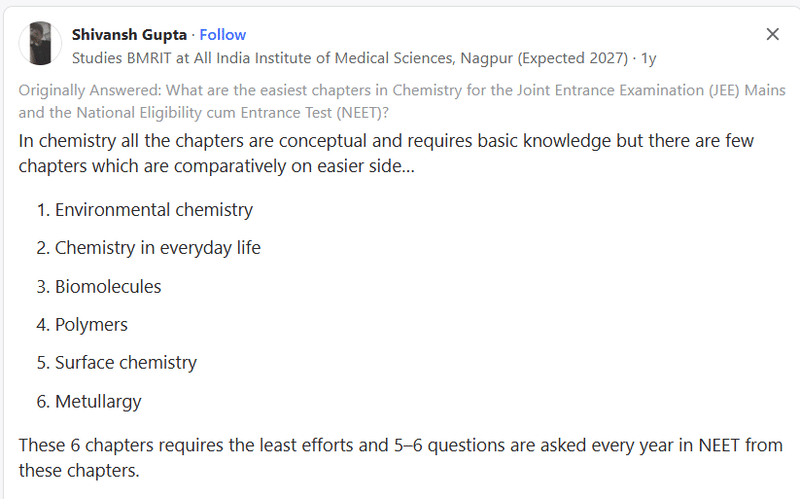
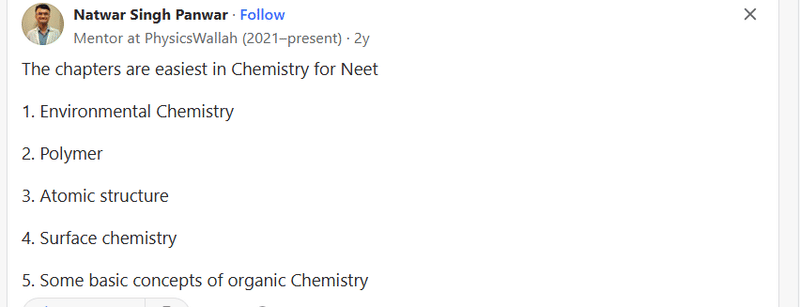
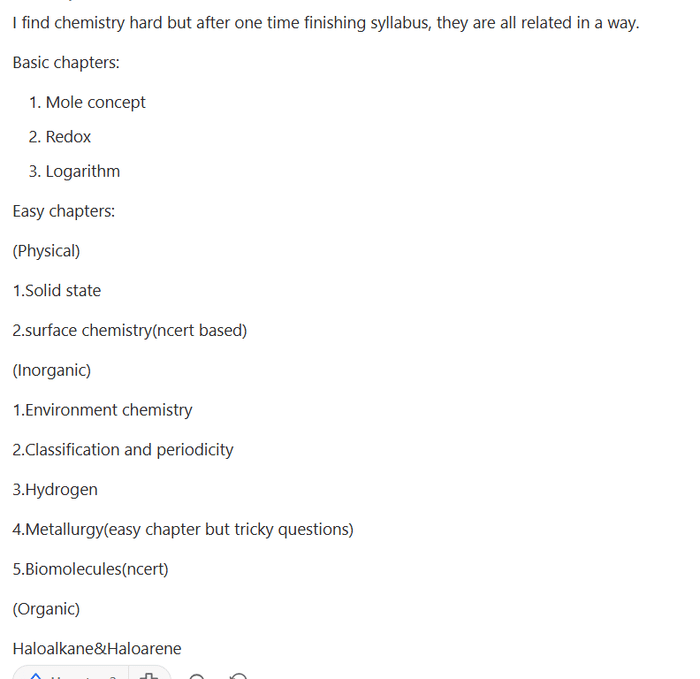
NEET 2026 Chemistry Syllabus Easy Chapters: Quora Discussion
Have a look at the response we found on Quora for the question NEET 2026 Chemistry Syllabus Easy Chapters. Environmental Chemistry, Biomolecules, Polymers, Surface Chemistry, Metallurgy, p-Block, d-Block, f-Block elements have been upvoted several times as easier chapters and scoring turf.

NEET Class 11 and Class 12 Weightage
NEET Chemistry Syllabus: Organic, Inorganic and Physical
- The NEET Chemistry syllabus includes chapters from Organic, Inorganic and Physical Chemistry sourced from Class 11 and Class 12 NCERT.
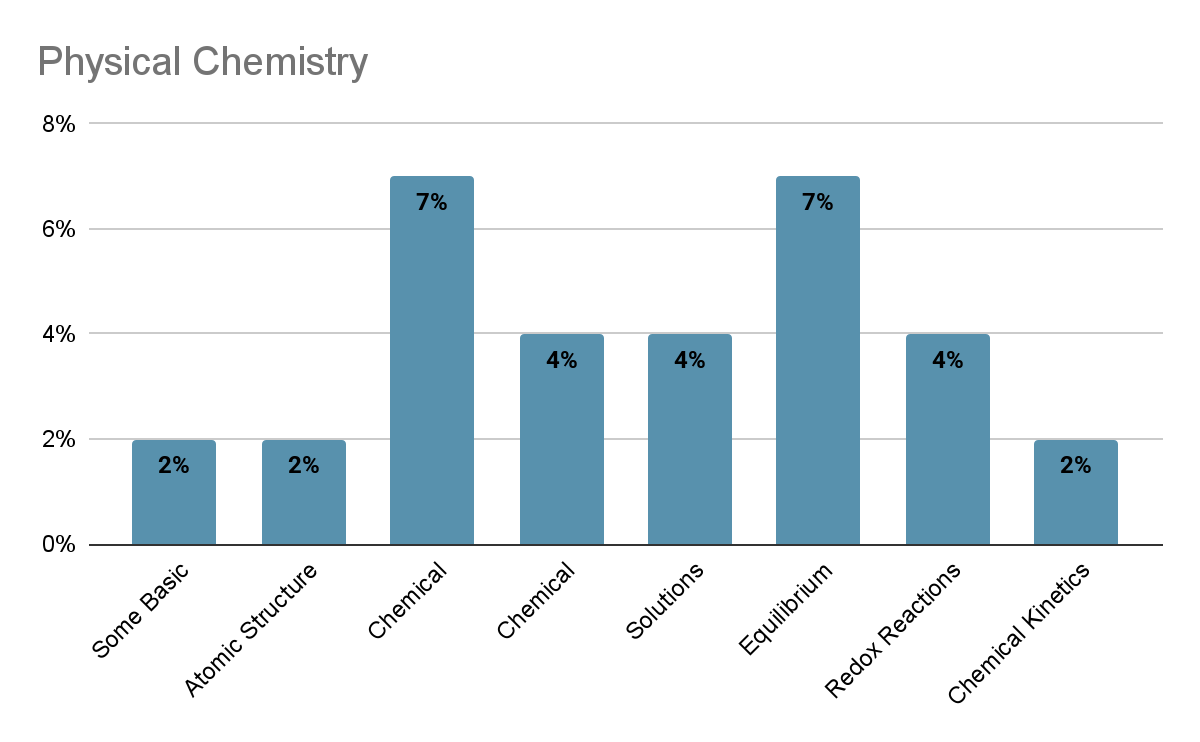
- Physical Chemistry: 8 Chapters
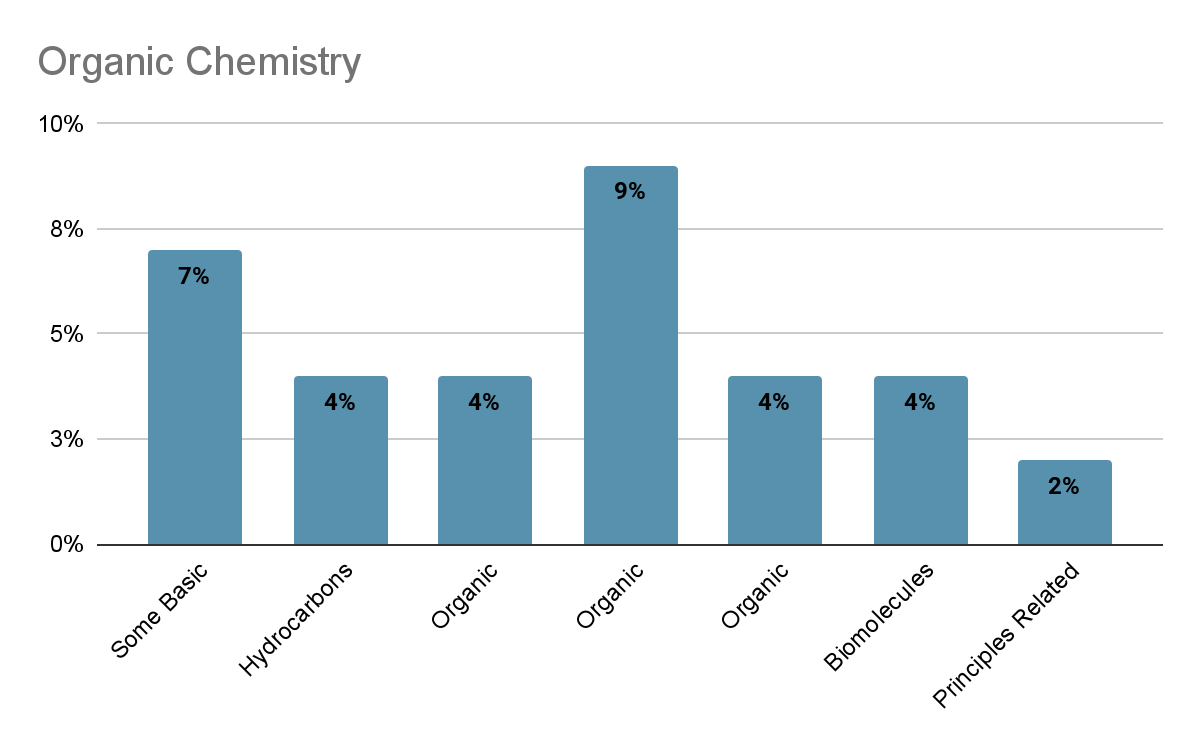
- Organic Chemistry: 8 Chapters
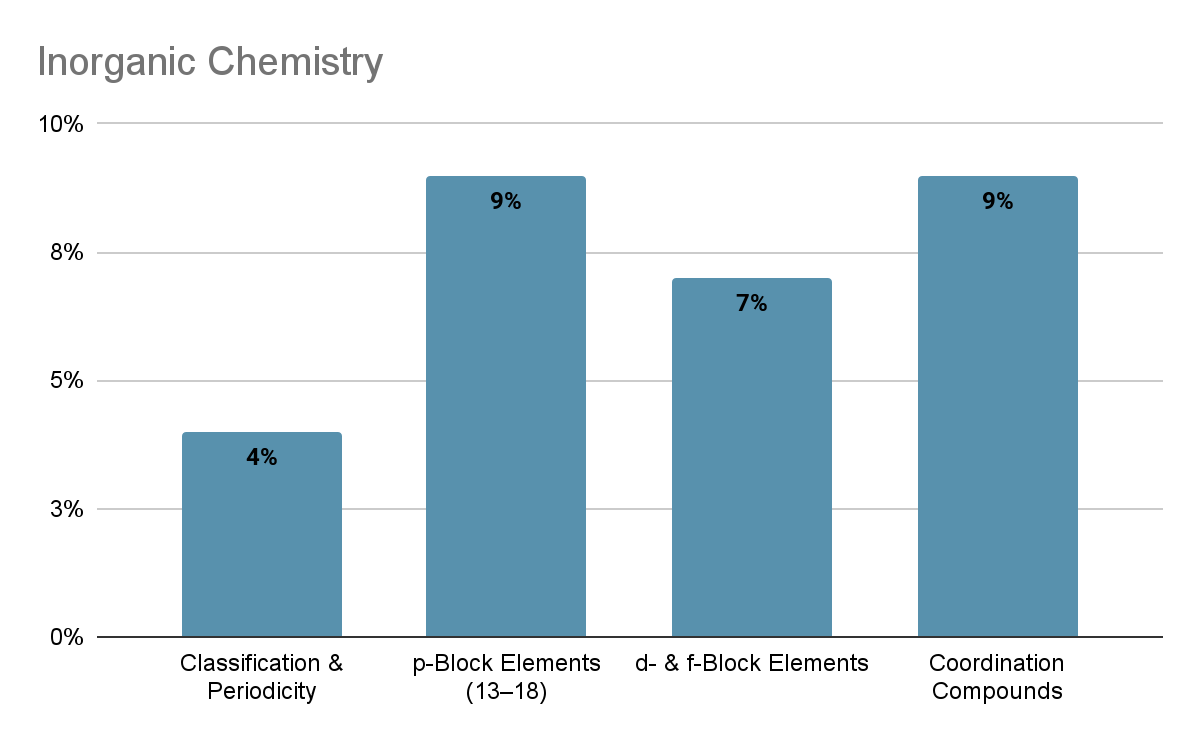
- Inorganic Chemistry: 4 Chapters
- Chemistry accounts for 25% of the test paper with 45 questions.
- 60% of the chapters are from Class 12 NCERT Chemistry.
NEET Chemistry Chapter-wise weightage
| No. | Chapter | Approx. Weightage (2026) |
|---|---|---|
| Physical Chemistry | ||
| 1 | Some Basic Concepts in Chemistry | 2% |
| 2 | Atomic Structure | 2% |
| 3 | Chemical Bonding & Molecular Structure | 7% |
| 4 | Chemical Thermodynamics | 4% |
| 5 | Solutions | 4% |
| 6 | Equilibrium | 7% |
| 7 | Redox Reactions & Electrochemistry | 4% |
| 8 | Chemical Kinetics | 2% |
| Inorganic Chemistry | ||
| 9 | Classification & Periodicity | 4% |
| 10 | p-Block Elements (13–18) | 9% |
| 11 | d- & f-Block Elements | 7% |
| 12 | Coordination Compounds | 9% |
| Organic Chemistry | ||
| 13 | Purification & Characterisation | 2% |
| 14 | Some Basic Principles of Organic Chemistry (GOC) | 7% |
| 15 | Hydrocarbons | 4% |
| 16 | Organic Compounds with Halogens | 4% |
| 17 | Organic Compounds with Oxygen | 9% |
| 18 | Organic Compounds with Nitrogen | 4% |
| 19 | Biomolecules | 4% |
| 20 | Principles Related to Practical Chemistry | 2% |
Also check
NEET 2026 Physical Chemistry ChaptersNEET 2026 Chemistry Syllabus Easy Chapters-FAQs
Ques: What are the important chapters of Chemistry for NEET 2026?
- Physical Chemistry: Mole concept, Thermodynamics, Equilibrium, Electrochemistry.
- Organic Chemistry: GOC, Hydrocarbons, Biomolecules, Organic Compounds.
- Inorganic Chemistry: Chemical Bonding, Coordination Compounds, Periodicity, p-Block, d-Block, f-Block elements.
Ques: Which chapter of Chemistry is easy for NEET?
- Biomolecules, Polymers, Chemistry in everyday life are easier.
- Surface Chemistry, Environmental Chemistry, and Metallurgy have shorter syllabi.
- Mole concepts, Chemical Kinetics, and Redox Reaction are easy and score well.
Ques: Is NEET 2026 tough or easy?
- NEET is usually challenging.
- As there are few seats and high competition, NEET is always moderately difficult.
- NEET 2026 is also expected to be competitive and challenging.



Comments