




The CBSE Class 10 Introduction to Financial Markets (Subject Code 405) exam is a 2-hour paper focusing on money, banking, financial planning, and investment basics. It generally consists of 21-30 questions divided into objective (MCQs) and subjective (short/long answer) sections. Focus on key concepts like inflation, risk vs. reward, and mutual funds.
The official question paper of CBSE Class 10 Introduction to Financial Markets Board Exam 2026 is provided below. Students can download the official paper in PDF format for reference.
CBSE Class 10 Introduction to Financial Markets 2026 Question Paper with Solution PDF – Memory Based
| CBSE Class 10 Introduction to Financial Markets 2026 Question Paper with Solution PDF | Download PDF | Check Solution |
______ is the expression or exchange of information or messages without using any spoken or written word.
Proper time management is one of the most effective ______.
______ is the ability to identify and manage one's own emotions.
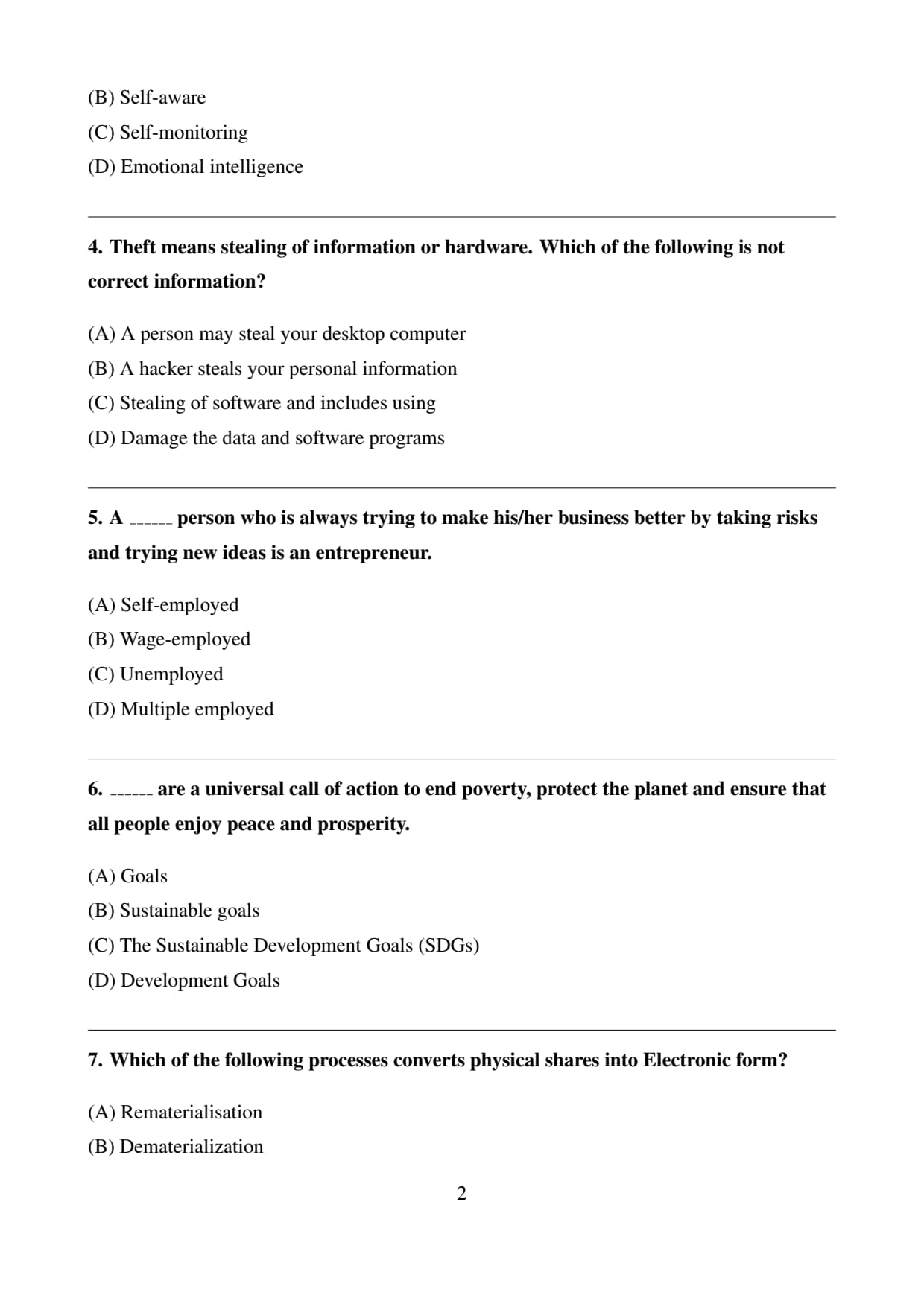
Theft means stealing of information or hardware. Which of the following is not correct information?
A ______ person who is always trying to make his/her business better by taking risks and trying new ideas is an entrepreneur.
______ are a universal call of action to end poverty, protect the planet and ensure that all people enjoy peace and prosperity.
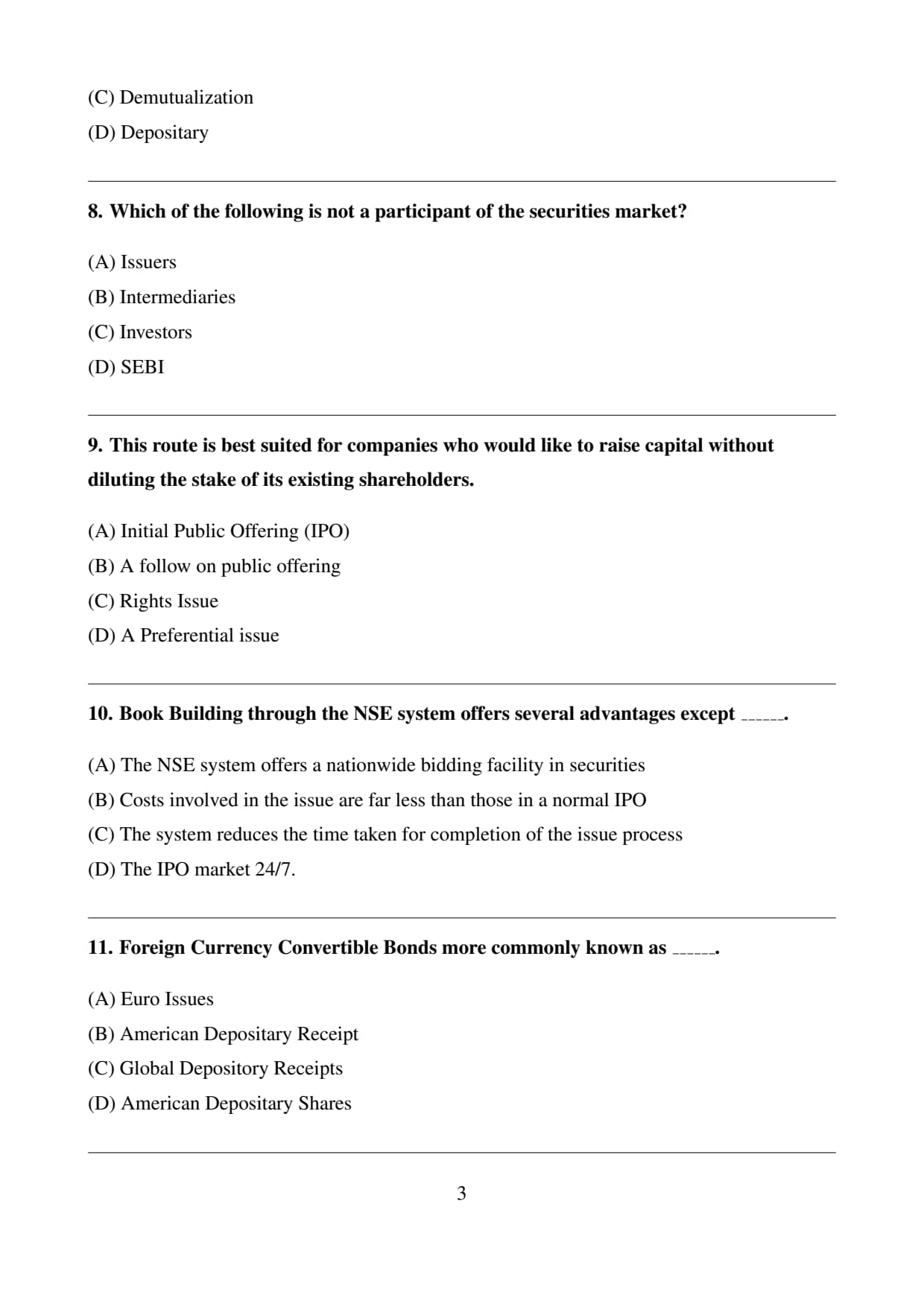
Which of the following processes converts physical shares into Electronic form?
Which of the following is not a participant of the securities market?
This route is best suited for companies who would like to raise capital without diluting the stake of its existing shareholders.
Book Building through the NSE system offers several advantages except ______.
Foreign Currency Convertible Bonds more commonly known as ______.
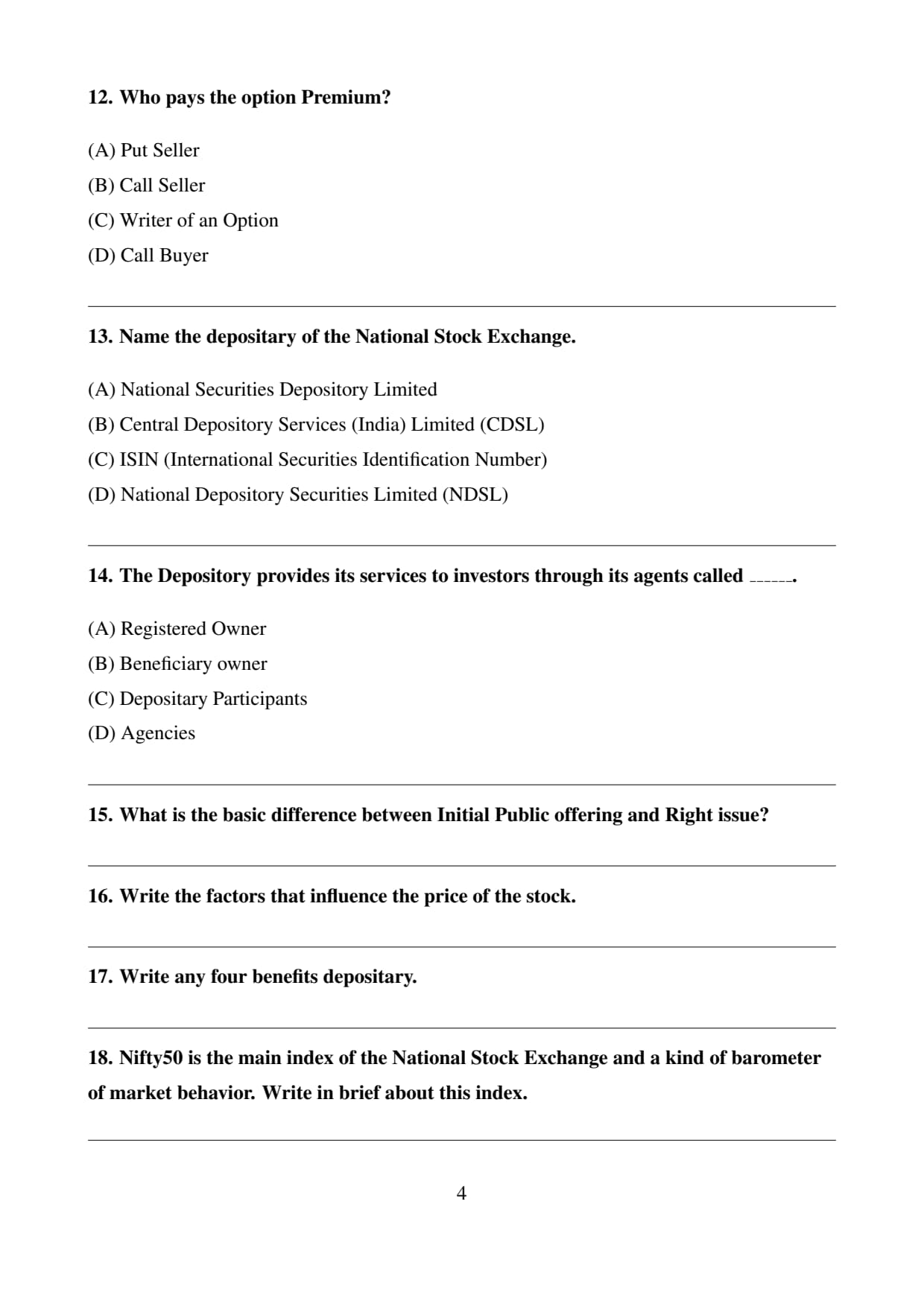
Who pays the option Premium?
Name the depositary of the National Stock Exchange.
The Depository provides its services to investors through its agents called ______.
What is the basic difference between Initial Public offering and Right issue?
Write the factors that influence the price of the stock.
Write any four benefits depositary.
Nifty50 is the main index of the National Stock Exchange and a kind of barometer of market behavior. Write in brief about this index.
What is meant by the Time Value of Money?
What is the liquidity Ratio? Define current Ratio.
A debt instrument represents a contract whereby one party lends money to another on pre-determined terms with regards to rate and periodicity of interest, repayment of principal amount by the borrower to the lender. Describe it and write its features.
There are several benefits from investing in a Mutual Fund. How do you address them?
A stock split is a corporate action which splits the existing shares of a particular face value into smaller denominations so that the number of shares increases. Why do companies announce Stock Split?





Comments