



Education Journalist | Study Abroad Strategy Lead | Updated On - Dec 29, 2025
What's New?
- Maintenance Increase: The monthly requirement has risen to £1,529 for London and £1,171 for outside London (an increase from the early 2025 rates of £1,483/£1,136).
- Immigration Health Surcharge (IHS): The student rate is fixed at £776 per year.
- Accommodation Offset: You can now offset up to £1,529 from your total required funds if you have already paid for your UK accommodation.
The UK Student Visa is mandatory for international students planning to study in the UK. Applicants must meet rigorous academic and financial criteria, beginning with the receipt of a Confirmation of Acceptance for Studies (CAS) from a licensed UK institution. A critical component of the application is demonstrating 'maintenance funds'—liquid proof that you can cover both your first year of tuition and your living expenses.
Following a major policy shift on November 11, 2025, the financial thresholds have been increased to reflect current inflation and rising living costs. Students must now show significantly higher monthly funds than in previous years to satisfy the Home Office that they can sustain themselves without recourse to public funds.
Also Check: Cost of Living in London
Key Financial Requirements for UK Student Visa
If you are applying now for the 2026 intake, you must use these updated figures for your 28-day fund calculation:
| Requirement Category | Inside London (per month) | Outside London (per month) |
| Monthly Living Costs | £1,529 | £1,171 |
| Total for 9 Months | £13,761 | £10,539 |
| Accommodation Offset | Up to £1,529 / £1,171 | Up to £1,529 / £1,171 |
What Else is New?
- Immigration Health Surcharge (IHS): The fee is currently £776 per year for students.
- The 28-Day Rule: The total amount (Outstanding Tuition + Maintenance) must be held in your account for 28 consecutive days.
- Digital eVisas: All new students are now issued an eVisa rather than a physical card.
Immigration Health Surcharge (IHS)
The Immigration Health Surcharge (IHS) is a mandatory fee for international students, including those from India, applying for a UK Student Visa. Paying this surcharge grants you access to the UK’s National Health Service (NHS), providing you with the same healthcare benefits as a UK resident for the duration of your stay.
The IHS is an upfront cost calculated based on the total length of the visa granted, not just the course dates. As of late 2025, the standard student rate is £776 per year.
Key Cost Breakdown:
- Annual Rate: £776
- Part-Year Rate (6 months or less): £388
- Standard 3-Year Undergraduate Degree: Since visas usually include an extra 4 months at the end, the total IHS fee is typically £2,716 (approx. ₹3,01,000).
- 1-Year Master’s Degree: Often requires a payment of £1,164 (covering the 12-month course plus the 4–6 month post-study wrap-up period).
It is essential to budget for this cost separately from your visa application fee (which is currently £524) and your maintenance funds, as the IHS must be paid in full during your online application.
Also Check: Immigration Health Surcharge UK Student Visa
The 28-Day Rule
A vital aspect of proving financial capacity is adhering to the 28-day rule. This means that the required funds (outstanding tuition + maintenance) must be held in your account for a continuous period of at least 28 consecutive days.
- The "No-Dip" Policy: The balance must not drop below the required amount for even a single second during this period. If it dips due to a bank fee or a small transaction, the 28-day clock resets to zero.
- The 31-Day Validity: Your bank statement or letter must be issued no more than 31 days before the date you pay for your visa application online.
- Electronic Verification: Starting in 2025, the Home Office has increased its use of digital verification. Ensure your bank keeps electronic records and is regulated by the official body in your country (e.g., RBI in India), as UKVI will not accept funds from "non-electronic" or unregulated institutions.
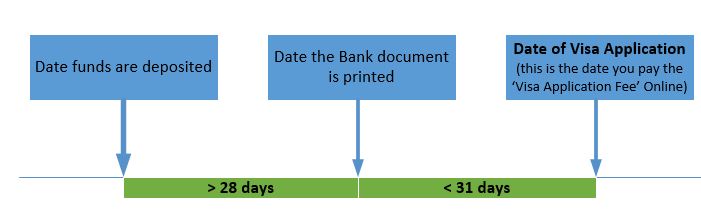
Failure to comply with the 28-day rule is the #1 cause of UK visa rejection. It is crucial to keep the total sum available and untouched until your visa is granted. Additionally, if a large deposit is made just before the 28-day period begins, be prepared to provide a "Source of Funds" explanation (e.g., property sale or savings) to satisfy the Genuine Student requirement.
Acceptable Proof of Funds
The UK government accepts various types of financial proof:
- Personal Bank Accounts: Funds can be held in personal bank or building society accounts, provided they allow for immediate access.
- Parent’s Accounts: If using your parents’ account, you must submit a letter of consent and proof of relationship (e.g., a birth certificate).
- Educational Loans: Loans from recognized institutions are acceptable as long as they cover the required tuition and living expenses.
- Scholarships and Sponsorships: If awarded, scholarships or official sponsorships can serve as financial proof.
- Fixed Deposits: These can be used as long as they are easily accessible for payment.
Note that money held by other relatives, such as siblings or uncles, is not accepted, and affidavits cannot replace official documents proving legal guardianship.
Also check: UK Scholarships for Indian Students
Tips for a Successful Application
- Adhere to the 28-Day Rule: Make sure the funds remain in the account for the required duration and don’t fall below the minimum threshold.
- Submit Verifiable Documents: Ensure all bank statements, loan letters, and sponsorships are legitimate and can be authenticated by the relevant authorities.
- Plan for Currency Fluctuations: Deposit more than the required amount as a safeguard against currency value drops.
- Pay Tuition Fees in Advance: Paying a portion or all of your tuition fees before applying can reduce the total amount you need to hold in your account.
Also Check: Student Accommodation in London City
Indian students should take proactive steps to ensure they meet the UK visa’s updated financial requirements. Start by securing the necessary funds early, adhere strictly to the 28-day rule, and maintain verifiable documentation. Pay as much of your tuition upfront as possible to reduce the financial burden. Consulting with immigration advisers can clarify specific details, and regularly reviewing the Gov.uk website for any updates will keep you informed throughout the application process.
FAQs
Ques. Can I use joint bank accounts for proof of funds?
Ans. Yes, but only if the account is held jointly with a parent. Other relatives cannot be used for financial evidence.
Ques. What happens if exchange rate fluctuations cause my funds to fall below the required amount?
Ans. You should deposit more than the required funds to account for any exchange rate variations.
Ques. Can I use a combination of funds from multiple bank accounts?
Ans. Yes, but each account must meet the 28-day rule, and you must submit evidence for all accounts.
Ques. How far in advance should I start preparing my financial documents?
Ans. At least two to three months before your visa application, to ensure you meet the 28-day rule and have ample time for corrections.
Ques. Are there any exceptions for students from low-income backgrounds?
Ans. Students who cannot meet the financial requirements may explore scholarships, educational loans, or government grants, but these must meet the UKVI’s financial proof guidelines.













Comments