


University of Washington: Fees, Courses and Scholarships 2026


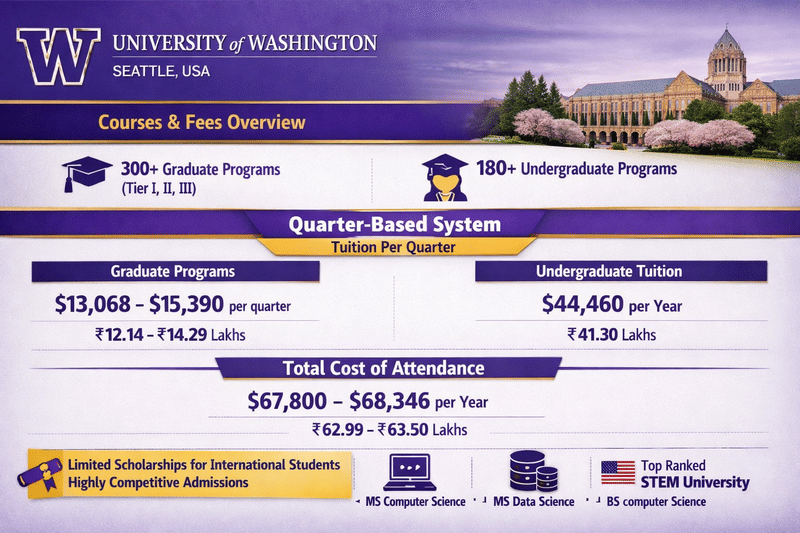
The University of Washington (UW), Seattle, is a public university in the US. It offers over 300+ graduate and 180+ undergraduate programs across diverse fields. The university follows a quarter-based system (usually 3 to 4 quarters per academic year), with tuition calculated per quarter or per credit, depending on the program.
Graduate programs are categorised into Tier I, II, and III. The fee for popular courses ranges from $13,068 to $15,390 (₹12.14–₹14.29 lakhs) per quarter at the University of Washington. The cost of attendance for Graduate students at UW Seattle is $62,133 (₹57.73 Lakhs).
At the undergraduate level, international students pay a flat annual tuition of $11,057 (₹10.27 lakhs) per quarter. The average UG total cost of attendance for 9 months* (3 quarters) is $67,800–$68,346 (₹62.99–₹63.50 lakhs), including living expenses.
Programs such as MS Computer Science, MS Data Science, and BS Computer Science are popular among international students, especially in STEM fields. While scholarships for international students are limited and highly competitive, UW continues to be a highly ranked university in the US, as per the QS Rankings 2026.
Note: Usually, 3 quarters (3 months in each quarter) equate to one academic year. Thus, the cost of living mentioned for 9 months is equal to 1 academic year.
Learn about the study guide for Indian students to study in the US
- University of Washington Popular Courses and Fees 2026
1.1 University of Washington Fees for Graduate Programs
1.2 University of Washington Fees for Undergraduate Programs
- How to pay the fees at the University of Washington, Seattle?
- University of Washington Cost of Attendance 2026
- University of Washington Seattle Scholarships 2026
- University of Washington Return on Investment 2026
- FAQs
University of Washington Popular Courses and Fees 2026
The university calculates the tuition fee on credits taken quarterly basis. It follows a quarter system instead of semesters. Each academic year contains mostly 3 or sometimes 4 quarters.
University of Washington Fees for Graduate Programs
Courses are divided into tiers. There are three types of tiers, which suggest the different caregories based on how expensive the courses are:
- Tier I
- Tier II
- Tier III
Tier III courses are relatively more expensive than tier II or tier I courses as they require more resources to run and are more professionally oriented. Some schools of the university ask for a separate school fee along with the tuition fee, i.e., the Foster School of Business asks for $351 as a school fee with each quarter fee. The tier III courses achieve ranking for the University of Washington across various Global Ranking portals.
For most courses apart from the Continuum College and Foster School of Business, the tuition fee is based on the tier of the course. It gives a flat tuition rate per quarter according to that. Continuum College and Foster School charge tuition fees according to the number of credits and the cost per credit. The fee for graduate courses per quarter ranges from $13,068-$15,390 (₹12.14- ₹14.29 Lakhs).
| Course | Tier | Credits and duration | Tuition fee in USD | Tuition fee in INR |
|---|---|---|---|---|
| MS Computer Science and Engineering | Tier III |
5 credits per quarter, 40 credits in total |
$5,600 per quarter | 5.21 Lakhs per quarter |
| MS Data Science |
Tier III Continuum College |
10 credits/quarter, 45 credits in total |
$11,850 per quarter | ₹11.01 lakhs per quarter |
| MS Mechanical Engineering | Tier III | 15 credits per quarter | $13,068 per quarter | ₹12.14 Lakhs per quarter |
| MS Business Analytics |
Tier III Foster School of Business |
11 credits per quarter 44 credits in total |
$15,039 + $351 per quarter | ₹14.29 Lakhs per quarter |
| MS Real Estate |
Tier III College of Built Environments |
15 credits per quarter | $13,227 per quarter | ₹12.29 Lakhs per quarter |
Read more about the popular graduate courses in the US
University of Washington Fees for Undergraduate Programs
Undergraduate students pay a flat full-time tuition fee if they take 10–18 credits per quarter. This tuition fee per quarter is $11,057 (₹10.27 lakhs). For 3 quarters, the annual fee is $44,460 (₹41.30 Lakhs). Some courses might also ask for an additional fee for lab or studio requirements. The duration for UG courses is 4 years or nearly 12 quarters.
Thus, the final cost can vary, being the lowest for theory-based courses and the highest for lab/design-heavy ones. Refer to the table below for the University of Washington's popular bachelor’s programs and their respective fees:
| Course | Duration(for 3 quarters per year) | Annual Tuition Fee | Annual Tuition Fees (INR) |
|---|---|---|---|
| BA Applied Computing | 4 years | $44,460 | ₹41.30 Lakhs |
| BS Computer Science | 4 years | $44,460 | ₹41.30 Lakhs |
| BS Nursing | 4 years | $44,460 | ₹41.30 Lakhs |
| BA Healthcare Leadership | 4 years | $44,460 | ₹41.30 Lakhs |
| BA Interactive Media Design | 4 years | $44,460 | ₹41.30 Lakhs |
Note: All the currency conversions follow the rate of $1=₹92.91.
Learn about the admission process to study at the University of Washington, Seattle
How to pay the fees at the University of Washington, Seattle?
There is an Enrollment Confirmation Deposit (ECD) for most admitted students at UW Seattle. It is a non-refundable fee and gets applied toward the first quarter's tuition. International students are advised to submit the fee via the Flywire portal before the deadline.
The undergraduate students are required to submit the mandatory deposit of $400 (₹37,164) Enrollment Confirmation Deposit (ECD) and a one-time New Student Enrollment & Orientation Fee. Graduate students also need to submit a deposit of around $200-$500 (₹18,582 – ₹46,455) to confirm a place at the University of Washington.
After enrolment is confirmed, students will need to submit the quarter fee. The deadline to submit each quarter's fee is the 3rd Friday of each quarter.
Note: The students can contact the Student Fiscal Services (SFS) for details about fee payment at UW.
Learn about the popular and inexpensive universities to study in the US
University of Washington Cost of Attendance 2026
The cost of attendance at the University of Washington comprises the total tuition fee as well as the living expenses. The average cost of living for three quarters of the duration:
- Graduate courses (tier I): $62,133 (₹57.73 Lakhs)
- UG courses: $67,800- $68,346 (₹62.99-₹63.50 Lakhs)
As per the university, the nine-month expenses for 2026-27 for undergraduate students:
| Budget Item | Cost in USD | Cost in INR |
|---|---|---|
| Books & course supplies | $900 | ₹83,619 |
| Housing & food | $18,858 | ₹17.51 Lakhs |
| Personal/miscellaneous | $2,508 | ₹2.32 Lakhs |
| Transportation | $1,074 | ₹99,804 |
| Non-resident tuition | $44,460 | ₹41.30 Lakhs |
| Total cost of living | $67,800 | ₹62.99 Lakhs |
For graduate courses, the fees are different for each tier. The university has explicitly mentioned the cost of attendance for tier I programs. The table below gives the living expenses for an academic year (9 months) for a graduate international (non-resident) student at the University of Washington:
| Expense Category | Cost (USD) | Cost (INR) |
|---|---|---|
| Books & Supplies | $825 | ₹76,650 |
| Rent, Utilities & Food (Off-campus) | $23,199 | ₹21.55 Lakhs |
| Personal / Miscellaneous | $2,508 | ₹2.32 Lakhs |
| Transportation | $1,581 | ₹1.46 Lakhs |
| Non-resident Tuition & Fees | $33,171 | ₹30.82 Lakhs |
| Total Cost of Attendance | $61,284 | ₹56.9 lakhs |
Note: The cost of living for graduate courses can increase with tier II and tier III courses, as those tend to be more expensive than tier I courses.
University of Washington Seattle Scholarships 2026
At the University of Washington, scholarships for international students are very limited. The students do have to fill out any extra scholarship forms in most cases. Awards are decided during admission application review. If the student is selected, they will be notified in through the admission offer letter with details on the award amount.
UW Seattle and UW Tacoma (campus) do not offer institutional merit-based or need-based scholarships to incoming or continuing international undergraduate students. Scholarships are highly competitive. Strong GPA, relevant experience (especially for grad programs like Data Science or CSE), and a compelling application statement improve your chances.
The specific scholarship offered to a small number of graduate international students in Data Science (MSDS) is:
| Category | Details |
|---|---|
| Scholarship Type | Merit & Opportunity Scholarships (internal) |
| Coverage | Partial tuition reduction |
| Eligibility | Top admitted students based on overall profile (GPA, SOP, LORs, experience) |
| Competitiveness | Highly competitive |
Refer here to know more about the external scholarships available in the US for Indian Students
University of Washington Return on Investment 2026
International students pay the non-resident fee at the university, which is quite higher than the in-state tuition fee. ROI is generally strong for STEM fields (CS, Data Science, Mechanical Engineering, Nursing) due to high demand in Seattle. However, Break-even* often happens in 2–5 years post-graduation.
As per third-party portals like The Princeton Review’s 2025 Best Value Colleges list, UW ranks in the top 10 U.S. public universities for return on investment (ROI), based on academics, affordability, and career prospects.
As per the career portal of the university, UW Seattle graduates land roles at over 1,000 employers annually. The university itself is often the #1 employer of recent grads (via research, admin, or clinical roles), followed by major tech/aerospace firms.
Note: Break-even is the period of time taken for the total Revenue to be equal to the cost of investment made.
Check out if studying in the US is still worth it in 2026
Overall, the University of Washington presents a high-cost, high-return study option for international students in 2026. Graduate tuition ranges from $13,068–$15,390 per quarter (₹12.14–₹14.29 lakhs), with total annual costs around $62,133 (₹57.7 lakhs).
Scholarship availability is limited, with no institutional aid for international UG students and only partial, highly competitive merit-based awards at the graduate level (including MS Data Science).
In terms of outcomes, UW benefits from strong industry integration, with graduates placed across 1,000+ employers annually, and ROI is relatively favourable for STEM fields, with break-even typically within 2–5 years.
FAQs
Ques: What are the University of Washington Seattle scholarships for international students?
Ans: At the University of Washington, scholarships for international students are very limited and mostly department-specific at the PG level. UG students generally do not receive aid.
Ques: What is the hardest program to get into at UW?
Ans: BS Computer Science (at Paul G. Allen School) is considered the most competitive program at UW, Seattle.
Popular Programs and Important Dates
| Program | Important Dates | Fees | Application Fees | Eligibility | Financial Aid |
|---|---|---|---|---|---|
| INR 40.1 L/Yr USD 43,209 /Yr | 90 | - | - | ||
MS Information Systems 1 year | INR 48.2 L/Yr USD 51,854 /Yr | 90 | IELTS- 7, TOEFL- 92, Duolingo-120 | ||
MS Data Science 1.5 year | INR 33 L/Yr USD 35,550 /Yr | 90 | GPA- 3.0, TOEFL- 106, IELTS- 7.5, Duolingo-125 | ||
M.S Mechanical Engineering 2 years | Application Deadline For Autumn 2026 Intake (1st Jul 2026) Application Deadline For Autumn 2026 Intake (15th Dec 2026) | INR 25.9 L/Yr USD 27,930 /Yr | 90 | TOEFL- 4.5 | IELTS- 7 | Duolingo- 125 | |
MS Business Analytics 1 year Course Offered by: | INR 57.2 L/Yr USD 61,563 /Yr | 90 | GPA- 3.0, IELTS- 7, TOEFL- 92, Duolingo-120 | - | |
M.S Real Estate 2 years | INR 36.9 L/Yr USD 39,681 /Yr | 90 | TOEFL- 4.5 | IELTS- 7 | Duolingo- 125 | ||
M.B.A 2 years Course Offered by: | Round 2 Enrollment Deadline For Autumn 2026 Intake (30th Apr 2026) | INR 55.3 L/Yr USD 59,574 /Yr | 90 | TOEFL- 5 | IELTS- 7 | Duolingo- 130 | |
M.S Pharmaceutics 2 years | Final Application Deadline For 2026 Intake (1st May 2026) | INR 30.8 L/Yr USD 33,171 /Yr | 90 | TOEFL- 4.5 | IELTS- 7 | Duolingo- 125 | |
M.S Pharmacy 2 years | Final Application Deadline For Autumn 2026 Intake (1st May 2026) | INR 31 L/Yr USD 33,396 /Yr | 90 | Duolingo-110 | |
M.S Chemical Engineering 2 years | Official Closure Admissions Application Deadline For 2026 Intake (1st Jul 2026) | INR 30.8 L/Yr USD 33,171 /Yr | 90 | TOEFL- 92 | IELTS- 7 | Duolingo- 125 |
Do you think the Dates are wrong ? Report Here
Online Courses
STEM Course
Master of Science [MS] Information Systems
Master of Science [MS] Data Science
Master of Science [MS] Business Analytics
Course Offered by:
Do you think the fees are wrong ? Report Here
Course Offered by:
Master of Science [M.S] Pharmacy
Master of Science [M.S] Chemical Engineering
Master of Science [M.S] Bioengineering
Bachelor of Arts [B.A] Applied Computing
Bachelor of Science [B.S] Computer Science
Master of Science [M.S] Engineering
Bachelor of Science [B.S] Chemistry
Master of Science [M.S] Atmospheric Sciences
Master of Human-Computer Interaction and Design
Master of Science [M.S] Biostatistics
Master of Science [M.S] Mathematics
Bachelor of Science [B.S] Physics
Bachelor of Arts [B.A] Biology
Bachelor of Science [B.S] Statistics
Bachelor of Science [B.S] Mathematics
Master of Arts [M.A] Bioethics
Bachelor of Science [B.S] Oceanography
Course Finder - Search from 50K+ courses
Popular Streams:
University of Washington-Seattle Reviews
Most Popular Tags
8 Reviews Found
Likes
- The good thing about the university is that there are lot of smart people to talk to on a regular basis.
Dislikes
- There is nothing major that I dislike but I feel the university can do a bit more to help international students when they first arrive to the university from their home country.
Course Curriculum
- I think the main course syllabus is a bit old. But they have special courses that are upto date. Research experience is good overall.
- Industrial exposure depends entirely on the connections of the PhD advisor. PhD students rarely have classes. At max 3 hours a week and they are dependent on the specific course. PhD courses usually have 25-30 students.
Fees
- PhD students don't pay tuition fees.
Likes
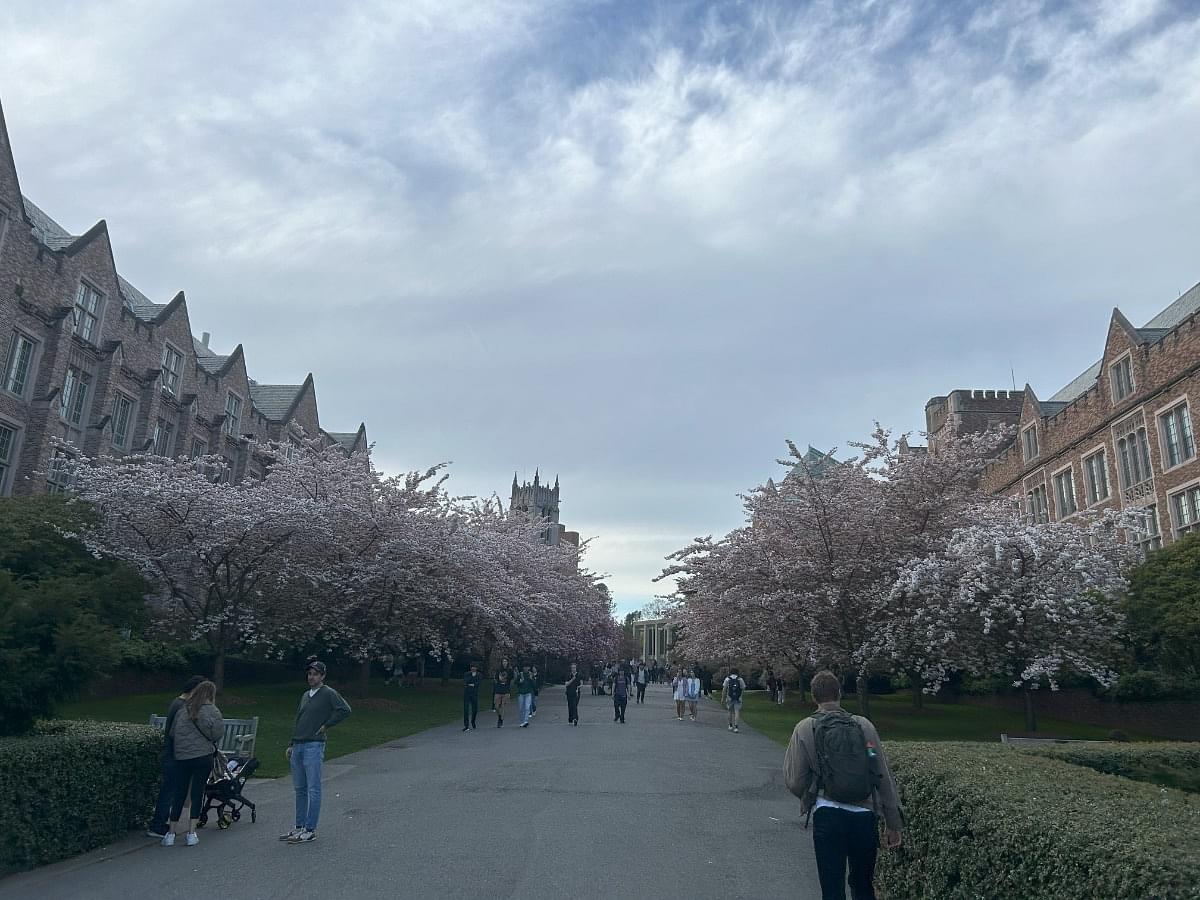
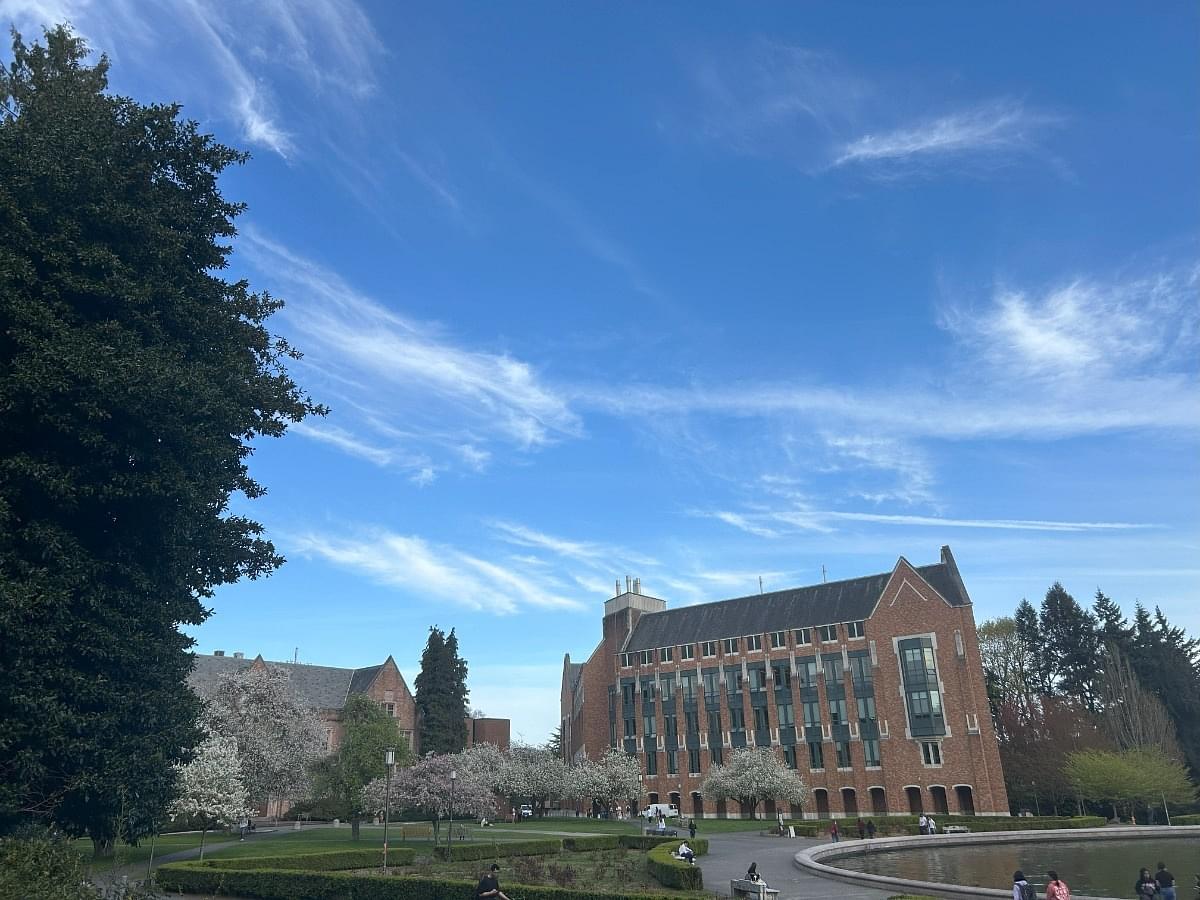
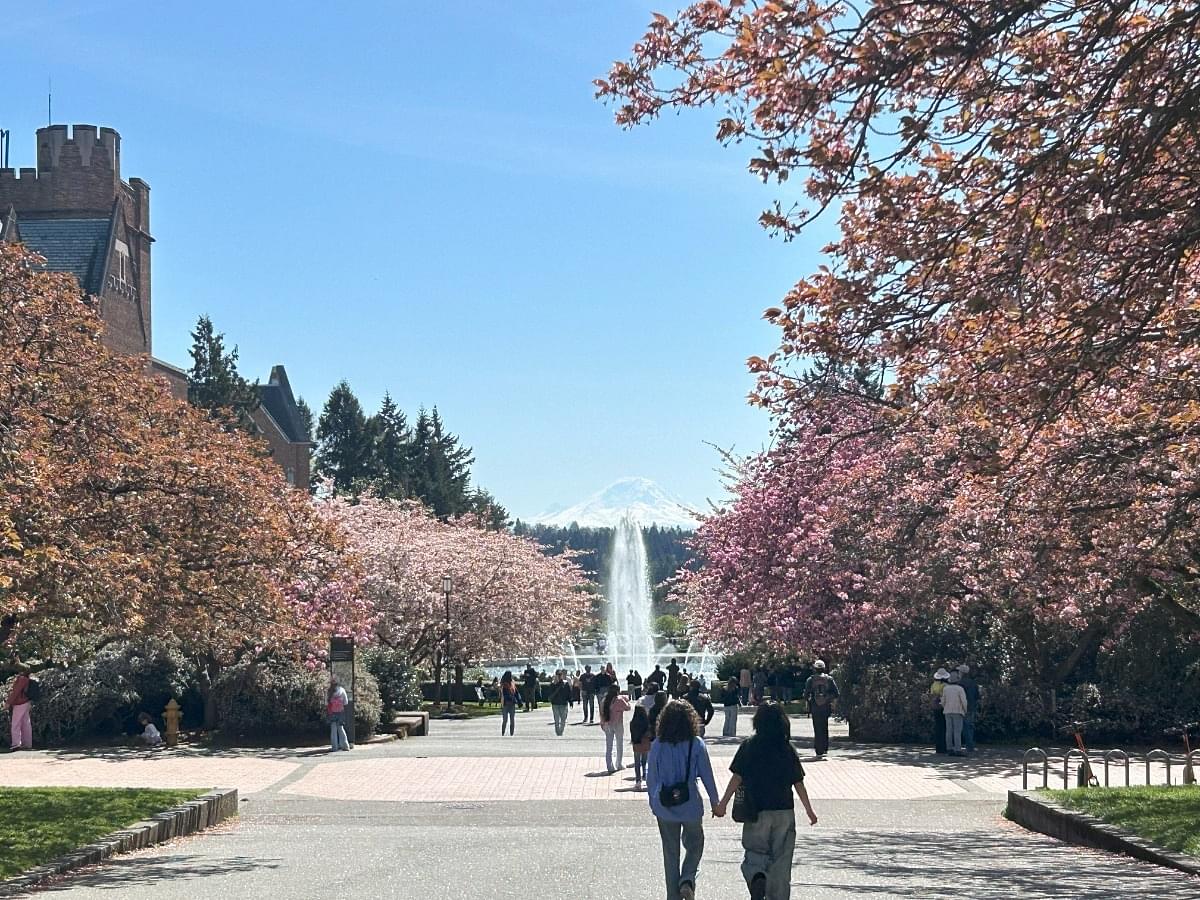
- Campus is very beautiful
- Good Public Transportation
- People are friendly and nice
Dislikes
- Weather is dull, and rainy
- Quarter system doesn’t give enough time to specialize
Course Curriculum
- Although mechanical engineering courses are not that updated, the courses offered by Paul G Allen are.
- Yes I interned at 2 companies - GH Labs and Amazon. Usually 2 classes are scheduled a day, timings vary. Average number of students in my class is around 40
Fees
- I paid around 50K. If I am not wrong, this time is around 56K - 62K.
Course Curriculum
I think its quite tough! I really wasnt expecting stem courses to be that difficult. When you compare university level to community College their is a huge difference in how "easy" it is to get a 4.0! Im planning to do some shadowing and research in pre med and reach out to some doctors to shadow!
Fees
Its roughly 5k each quarter (+textbook fees) so about 15k not including summer. This is in USD btw!
Likes
- I believe the program they have here is very good and complete. They invest a lot of resources, time and effort in research which gives students a lot of options depending on their field. As a university they feel like they care. I also chose because of the location, it’s a city that has become a high tech center and gives many opportunities, as well as the beautify and variety of nature and cultures.
Course Curriculum
I love that we have the freedom to chose our courses within certain guidelines. While there may not be a class focused on research techniques or with industrial exposure (to my knowledge), the huge amount of research opportunities make up for that quickly.
Fees
Total per quarter comes up a bit higher than 12k USD. This includes tuition itself, services and tech fees and u pass which gives you access to all public transportation.

Course Curriculum
Our art history curriculum is great, there are so many diverse options in terms of course content. The drawing and painting courses are also superb, my grasp of basic technical skills has dramatically increased thanks to the courses I have taken.
Fees
There are scholarships available for many students on campus. The international student center probably has a lot of that information. There are many scholarships for minorities and other groups. Tuition fees increase every year but financial aid is available. I was awarded a scholarship through my major by the art history department. A great way to get scholarships is to use your good academics. That way you can apply with the work you have already done till this point.
Course Curriculum
I find the curriculum very thorough. It is very hands on so you can get an idea of what it would be like to work in the field. You do a lot of clinical at hospitals around the area so that you can actually have the real-life experiences you wouldn't get in a classroom.
Fees
Books are around $825. Room and board run around $11,000. Tuition and fees are about $10,000 for in-state. Other expenses for me were around $3000.
Course Curriculum
Depends. I'm in a fairly new undergraduate program, and I think the staff is still working out the kinks. Not all of my required courses I would say have been as meaningful as they could have been. I don't want to say they were a waste of time, but they definitely could have been more developed and had a clearer structure of what to learn.
Fees
Tuition is the biggest fee. There is also a quarterly fee for a quarterly bus pass. The next largest expense is off-campus housing.
SUBSCRIBE TO OUR NEWS LETTER



Comments