



Education Journalist | Study Abroad Strategy Lead
Nitric Acid is a strong acid that is also represented by the formula HNO3. It is a highly erosive toxic compound and can cause severe skin burns. It is colorless in its pure form while as it gets older, it turns into a yellow cast. The color transition is due to the decomposition of the Nitric Acid to the oxides of water and nitrogen. It is used commonly as a chemical reactant in laboratories. It can be used as an oxidizing agent. It is also used in industries to produce explosives.
Read Also: Class 12 Group 15 Elements
| Table of Content |
Key Terms: Nitric acid, Aqua Fortis, Potential hazard, Lewis structure, Alchemy, Oxidizing agent
Early Use
[Click Here for Sample Questions]
The compound, in the past, was widely used by the alchemists though they knew nothing of its chemical composition. Nitric acid was prepared by Albert the great and Ramon lull, in the 1300 Century, who prepared it by distilling a mixture containing niter and green vitriol and called it “Aqua Forte”.
Read Also: Periodic Trends
In the year 1901, the Russian-born German chemist, Friedrich Wilhelm Ostwald, discovered the most commonly used method of preparation of nitric acid namely “The Ostwald process”. The process involves the oxidation of ammonia over a platinum catalyst.
In the year 1905, the industrial production of nitric acid began from the atmospheric air with the arc process. Under the arc process, atmospheric nitrogen is oxidized, by atmospheric oxygen, to nitric oxide with a very high-temperature electric arc. The remaining atmospheric oxygen cooled and oxidized the nitric oxide. It was a very energy-intensive process and therefore it was rapidly displaced by the Ostwald process.
Around 1913, a French Engineer, Albert Nodon, produced nitric acid from the electrolysis of calcium nitrate converted by bacteria from nitrogenous matter in peat bogs (an area from which peat is taken).
After the introduction of the Haber process for the efficient production of ammonia in the year 1913, the production of nitric acid from ammonia using the Ostwald process overhauled the production from Birkeland – Eyde process. This method is still in use today.
Read Also: Atomic Radius
Properties
[Click Here for Sample Questions]
- Alchemists are also called nitric acid “Aqua Fortis” which means strong water.
- Nitric acid is a colorless liquid with a bitter, choking, or suffocating odor.
- When exposed to light the acid tends to decompose resulting in the production of nitrogen oxide (NO2).
- The presence of a small amount of nitrogen oxide is the cause of its yellowish tint.
- The molecular weight of the acid is 63.01 g/mol.
- Its melting point is −41.6°C (−42.9°F) while the boiling point is 83°C (180°F).
- It reacts violently with most organic solvents.
Nitric acid is one of the strongest oxidizing agents as it attacks almost all metals (except gold and platinum). The reason for nitric acid being one of the strong acids is that when it is dissolved in water, the molecules of nitric acid dissociate into Hydrogen ions ( H+) and nitrate ions (NO3). The dissociation of nearly every molecule of nitric acid makes it a strong acid. The most commercially available Nitric acid is an azeotrope (a mixture of two or more liquids whose proportion cannot be altered or changed by simple distillation) with water at a concentration of 68% HNO3. The boiling temperature of this solution is 120.5°C. It is known as ‘concentrated nitric acid’.When the solution contains more than 86% HNO3, it is called ‘Fuming nitric acid’. It is often stored in brown-glass bottles as the acid is subject to thermal or light decomposition.
Read More: Electron Gain Enthalpy
Common uses
[Click Here for Sample Questions]
- Nitric acid is primarily used in the production of fertilizers and explosives. During World War I, the Germans were very much interested in using a salt of nitric acid, ammonium nitrate (NH4 NO3), as an explosive.
- The acid can also be used to make a variety of compounds. It is made by the reaction of ammonia with oxygen gas. Nitric acid is formed in automobile engines by the reaction of nitrogen oxides produced during the combustion of fossil fuels.
- It is used in the manufacture of agricultural chemicals, explosives, plastics, dyes, and rocket propellants.
Read More: Noble Gas
Potential hazards
[Click Here for Sample Questions]
- It is a highly toxic material. If it is in contact with the skin and other tissues, it leaves a distinctive yellow scar which is caused due to the destruction of proteins in the skin or tissues.
- If swallowed, inhaled, or spilled on the skin, it can cause severe damages to the mouth, throat, stomach including the respiratory system, and causes severe breathing problems and burns.
- In most severe cases, the acid can cause death.
Read More: Brown Ring Test
Nitric Acid Structure And Formula
[Click Here for Sample Questions]
The structure of nitric acid is planer, meaning the chemical structure is flat. Nitric acid has two major resonance forms. The Resonance structure occurs when there are multiple ways to describe or draw the Lewis structure of a compound.
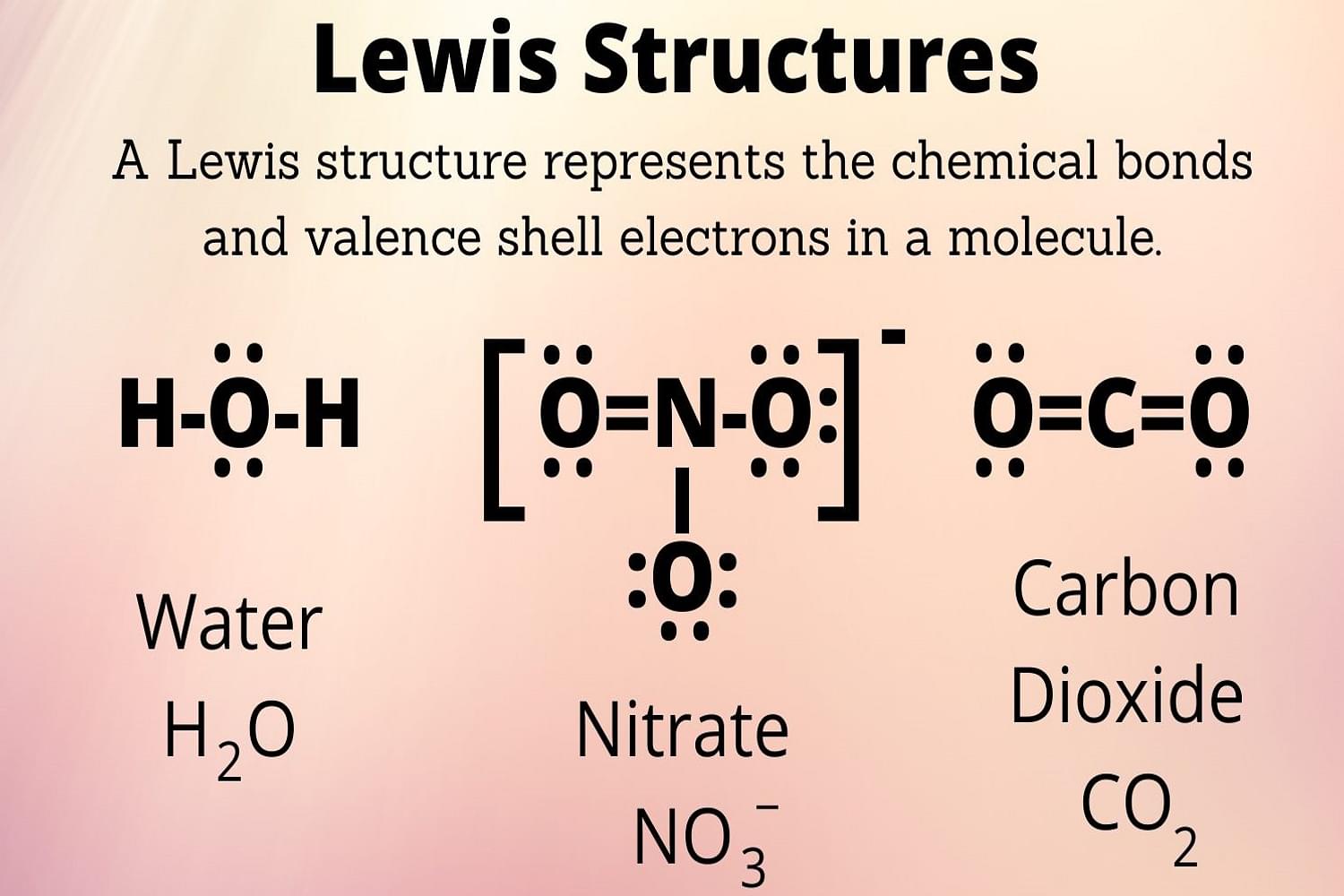
Lewis structure of a compound
The chemical formula of nitric acid is HNO3. It constitutes one Hydrogen(H) atom, one Nitrogen(N) atom, and three Oxygen(O) atoms. All three atoms of oxygen(O) are bonded to the Nitrogen(N) atom.
Also Read:
| Related Articles | ||
|---|---|---|
| Oxides of Nitrogen | Oxides of Phosphorus | Group 15 Elements |
| Phosphine | Aqua Regia | Nitrogen dioxide (NO2) |
Glossary
[Click Here for Sample Questions]
- DISTILLATION: This process involves the transformation of a liquid into the vapour form which is subsequently condensed back to liquid form.
- OXIDATION: It occurs when an atom, molecule, or ion loses one or more electrons in a chemical reaction.
- ELECTROLYSIS: An electric current is sent, in electrolysis, through an electrolyte into a solution to stimulate the flow of ions which is necessary to run an otherwise non-spontaneous reaction.
- CATALYST: A catalyst can be defined as a substance that speeds up a chemical reaction, but isn’t consumed by the reaction.
- HABER PROCESS: The Haber process combines the nitrogen, present in the air, with hydrogen, which is derived mainly from natural gas (methane), into ammonia.
- BIRKELAND EYDE PROCESS: This process is used for the fixation of nitrogen by passing air through an electric arc, to produce nitrogen oxides.
- LEWIS STRUCTURE: It is a very simple representation of the electrons of the valence shell in a molecule. It is mainly used to demonstrate how electrons are arranged around the individual atoms in a molecule.
- ALCHEMY: Alchemy is an ancient field of study from which the modern science of chemistry has evolved.
Read more: Electronegativity
Interesting facts about nitric acid
[Click Here for Sample Questions]
- Nitric acid is a component of acid rain.
- Nitric acid is also used as an oxidizing agent in the manufacturing of nylon.
- In 1946, Artist Allela Cornell committed suicide by drinking nitric acid.
- In 800 AD, Alchemist Jabir ibn Hayyan (Gerber) first recorded the synthesis of nitric acid.
Read more: Iodic Acid Formula
Sample Questions
Ques. What is the formula for Nitric Acid?(1 mark)
Ans. Nitric Acid is represented by the formula HNO3.
Ques. List down three uses of Nitric Acid.(1 mark)
Ans. Nitric Acid is used in industries to produce explosives.
- It is used commonly as a chemical reactant in laboratories.
- It can be used as an oxidizing agent.
Ques. Is Nitric Acid harmful? How?(1 mark)
Ans. Nitric Acid is a highly toxic material. If gets contacted with the skin and other tissues, it leaves a distinctive yellow scar. It can cause severe damages and in some extreme cases, it may cause death
Ques. Complete the following chemical reaction equations: (Delhi 2015C)
Cu + HNO3(dilute)
Ans. 
Ques. Complete the following chemical equations: (Delhi 2011)
I2 + HNO3 (1/5, Delhi 2011)
(Conc.)
Ans. 
For Latest Updates on Upcoming Board Exams, Click Here: https://t.me/class_10_12_board_updates
Check-Out:




Comments