



Study Abroad Expert
Germany stands out as a premier destination for pursuing fully-funded PhD programs, combining world-class education with comprehensive financial support. International students benefit from a range of scholarships, such as the DAAD Research Grants, which offer stipends of up to €1,300/month ( ₹1,14,000), and the prestigious International Max Planck Research Schools (IMPRS), which provide competitive salaries of up to €2,700/month (₹2,37,000). Renowned universities like Heidelberg University and the Technical University of Munich host these programs, with research opportunities spanning diverse fields, including engineering, natural sciences, and social sciences. Most programs are conducted in English, making them accessible to international students.
Explore: Popular Scholarship to Study in Germany
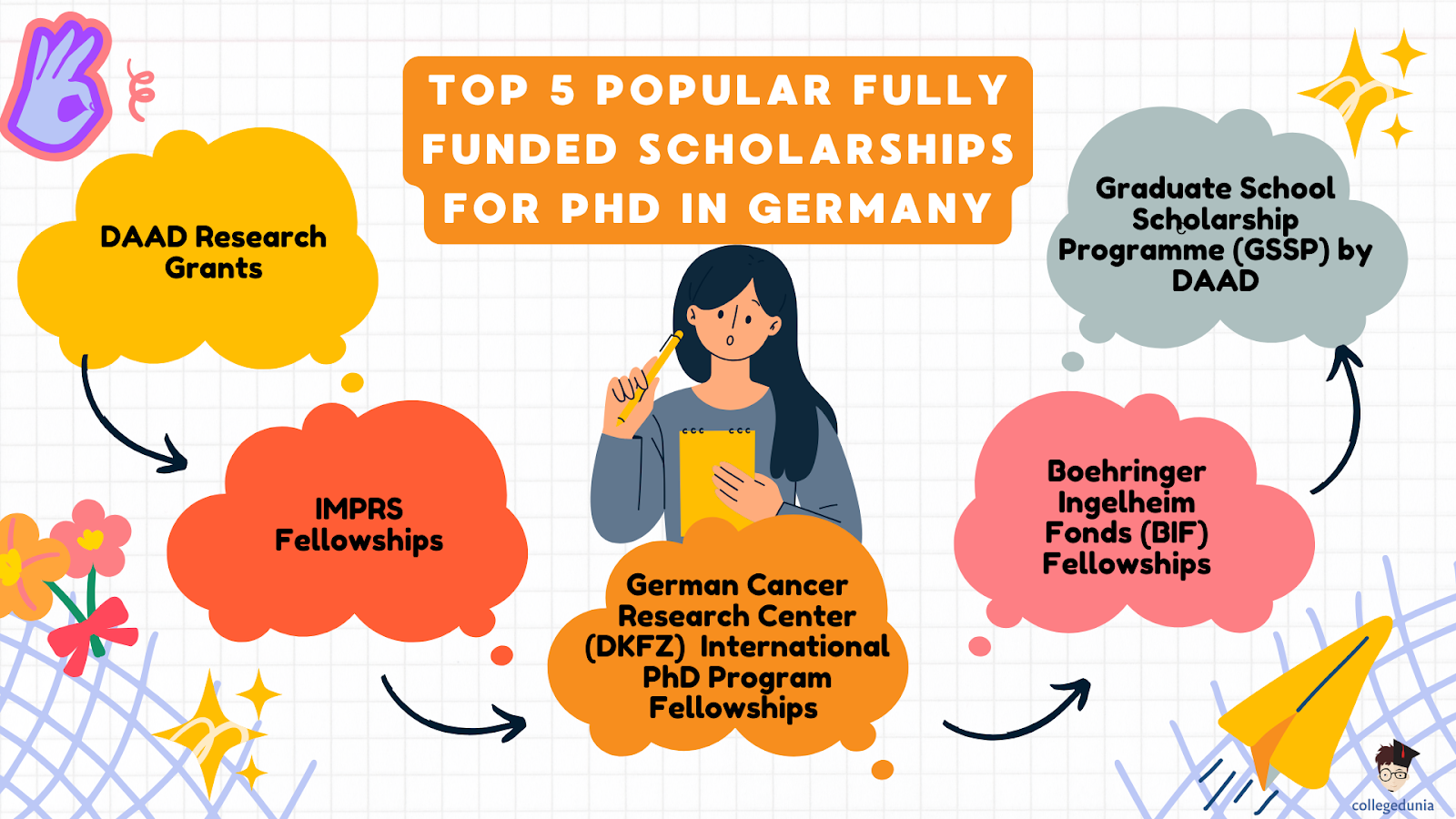
Popular Fully Funded PhD Programs in Germany
Here is a list of popular fully funded PhD programs in Germany for international students:
| Scholarship | PhD Program | University | Disciplines | Benefits | Eligibility Criteria |
|---|---|---|---|---|---|
| DAAD Research Grants | Doctoral Programs in Germany | Heidelberg University, Technical University of Munich, Freie Universität Berlin | Engineering, Natural Sciences, Humanities, Social Sciences | Monthly stipend (€1,300), insurance, travel allowance, research grant | Master's degree, strong academic record, language proficiency |
| International Max Planck Research Schools (IMPRS) | PhD in Interdisciplinary Research | Max Planck Institutes (e.g., Max Planck Institute for Biophysics, Max Planck Institute for Polymer Research) | Biology, Physics, Chemistry, Computer Science | Competitive salary (€2,700/month), research funding, bonuses | Master's/Bachelor’s degree, research experience, English fluency |
| German Cancer Research Center (DKFZ) International PhD Program | PhD in Cancer Research | DKFZ, Heidelberg | Cancer Biology, Bioinformatics, Molecular Medicine | Full funding for 3 years, salary, career support, training workshops | Master’s in natural sciences, excellent academic records, English proficiency |
| Boehringer Ingelheim Fonds (BIF) Fellowships | PhD in Biomedical Research | University of Freiburg, Charité - Universitätsmedizin Berlin | Biomedical Sciences | Monthly stipend (€2,100), research expenses, family allowance | Exceptional academic achievements, PhD in Europe, biomedical focus |
| Graduate School Scholarship Programme (GSSP) by DAAD | PhD at Structured Graduate Schools | Ludwig Maximilian University of Munich, RWTH Aachen University | Economics, Environmental Sciences, Mechanical Engineering | Monthly stipend (€1,300), insurance, research funding, travel grant | Master's degree, admission to graduate school, excellent grades |
| Heinrich Böll Foundation Scholarships | PhD Programs in Germany | Humboldt University of Berlin, University of Stuttgart | All Disciplines | Monthly stipend, travel allowances, research funding | Excellent academic record, social engagement, German language proficiency |
| Konrad-Adenauer-Stiftung (KAS) Scholarships | PhD in Germany | University of Bonn, University of Konstanz | Law, Economics, Journalism, Political Science | Monthly stipend (€1,200), health insurance subsidy, family allowance | Above-average academic performance, socio-political involvement, German language skills |
| Friedrich Ebert Foundation Scholarships | PhD Studies in Germany | University of Bremen, University of Mannheim | Social Sciences, Political Science, Humanities | Monthly stipend (€1,200), health insurance, family allowance | Outstanding academic performance, commitment to social democracy, German language proficiency |
| Rosa Luxemburg Foundation Scholarships | PhD Programs in Germany | University of Leipzig, University of Hamburg | Social Sciences, Humanities | Monthly stipend (€1,350), research allowance, travel grants | High academic achievement, political and social engagement, German language proficiency |
| Hans Böckler Foundation PhD Scholarships | PhD in Social Research | University of Cologne, Goethe University Frankfurt | Social Sciences, Economics, Law | Monthly stipend, research funding, travel allowances | Excellent academic record, commitment to trade unions or social movements, German language skills |
Eligibility Criteria for Fully Funded PhDs in Germany
To apply for a fully funded PhD in Germany, candidates must meet the following eligibility criteria:
| Criteria | Details |
|---|---|
| Academic Qualifications | A Master's degree in a relevant field with a minimum GPA equivalent to 3.5 |
| Language Proficiency | IELTS: Minimum overall band score of 6.5 TOEFL iBT: Minimum score of 88 TestDaF: Minimum Level 4 for German-taught programs. |
| GRE Scores | While not universally required, competitive GRE scores are often preferred for certain programs. A combined score of 300+ is recommended for Indian students to improve admission chances in technical and engineering fields. |
| Work Experience | Not mandatory, but 1–2 years of research experience in relevant fields or industries is highly valued. |
| Statement of Purpose (SOP) | A well-written SOP (500–800 words) explaining your research interests, motivation for pursuing a PhD in Germany, and how the program aligns with your career goals. |
| Letters of Recommendation (LOR) | 2-3 strong letters of recommendation from academic supervisors, professors, or employers highlighting your academic achievements, research potential, and personal qualities. |
| Research Proposal | A detailed research proposal (2–5 pages) outlining your intended research area, methodology, objectives, and expected outcomes. |
| CV/Resume | A comprehensive academic CV including educational background, publications (if any), relevant projects, work experience, and skills. |
| Transcripts and Certificates | Certified copies of academic transcripts and relevant certificates. |
Also Check: How to get Scholarship in Germany
Funding Benefits for International PhD Students in Germany
Some of the crucial benefits of fully funded PhD programs in Germany for international students are listed below:
- Financial Independence - Monthly stipends provided by scholarships ensure students can comfortably cover living expenses such as rent, food, and transportation without financial stress.
- No Tuition Fees - Public universities in Germany waive tuition fees for PhD students, requiring only a small semester fee, making education highly affordable.
- Comprehensive Health Insurance - Fully funded programs include health insurance coverage, giving students access to Germany’s excellent healthcare system without extra costs.
- Research Funding - Scholarships and grants cover expenses for research materials, laboratory equipment, and fieldwork, enabling students to focus on producing quality research.
- Travel and Relocation Support - Many funding programs provide financial assistance for travel to and from Germany, as well as relocation allowances to help students settle comfortably.
- Family Assistance - Married students or those with children receive additional financial support, such as family allowances and childcare subsidies.
- Global Networking - Funding often includes provisions for attending international conferences, seminars, and workshops, helping students build valuable professional connections.
- Tax-Free Income - Scholarships are usually exempt from taxes, allowing students to utilize the full amount of their stipend for personal and academic needs.
- Access to World-Class Facilities - Students gain access to advanced research labs, libraries, and cutting-edge resources in Germany’s renowned universities and research institutes.
- Career Opportunities - Completing a PhD in Germany positions students for excellent career prospects in academia, industry, or global research organizations.
Also Check: PhD in Germany for Indian Students in 2025
Step-by-Step Guide to Securing a Fully Funded PhD in Germany
Here is a step-by-step guide for international students to secure a fully funded PhD in Germany:
Step 1: Pick Your Research Area - Decide on the topic you want to research and ensure it matches your interests and expertise.
Step 2: Find Universities and Programs - Search for German universities offering fully funded PhD programs in your field using platforms like DAAD or university websites.
Step 3: Gather Documents and Meet Eligibility - Prepare your SOP, research proposal, transcripts, and other documents while ensuring you meet GPA and language proficiency requirements.
Step 4: Look for Funding Options - Explore scholarships like DAAD or Max Planck Fellowships to cover your expenses.
Step 5: Contact Supervisors - Email professors whose research aligns with your interests and share your CV and proposal.
Step 6: Submit Your Application - Apply to your chosen program through the university or scholarship portal, ensuring all documents are complete.
Step 7: Prepare for Interviews - Be ready to explain your research idea and academic background if called for an interview.
Step 8: Secure Your Visa - Once accepted, apply for a German student visa and arrange health insurance.
Step 9: Start Your PhD Journey - Relocate to Germany, settle in, and begin your fully funded PhD program.
Also Check: Benefits of Studying in Germany
Briefly, Germany is a great place for international students to pursue a fully funded PhD, which usually covers tuition fees and provides a monthly stipend. This allows you to concentrate on your research without worrying about finances. To boost your chances, it’s advisable to maintain a strong academic record and proactively connect with potential professors or universities early in the application process.
FAQs
Ques: Are there fully funded PhD programs in Germany that do not require prior research experience?
Ans: Yes, some structured PhD programs in Germany accept candidates directly after their undergraduate studies, provided they have exceptional academic records. For instance, the Graduate School of Quantitative Biosciences Munich (QBM) offers a structured PhD program that welcomes outstanding graduates without prior research experience.
Ques: Can international students apply for multiple fully funded PhD programs simultaneously in Germany?
Ans: Yes, students can apply to multiple programs; however, it's essential to tailor each application to the specific program and supervisor.
Ques: Are there fully funded PhD opportunities in Germany specifically for students from developing countries?
Ans: Yes, organizations like DAAD offer scholarships targeted at students from developing countries to promote international academic exchange.

















Comments