



Education Journalist | Study Abroad Strategy Lead | Updated On - Apr 18, 2026
Studying in Germany for free is not a myth. It is a policy. Public universities in 15 out of 16 German states charge zero tuition fees to all students, including Indian nationals. You pay only a small semester administrative fee of €100 to €400 (Rs. 10,900 to Rs. 43,600) per semester. That is it.
The catch is not the tuition. The catch is that most Indian students do not know which universities are actually free, which states charge fees, what the real living costs are and what documents they need to get there. This guide answers all of it.
Quick answer: Apply to a public university in any German state except Baden-Wurttemberg and Bavaria (TUM only). Pay only the semester fee of €100 to €400. Arrange a blocked account of €11,904 (Rs. 1.3L). Get your APS certificate. Apply for the student visa. That is the complete path to a free degree in Germany.
Exchange rate used in this article: 1 EUR = Rs. 108.93
Also Check: UK vs Germany for Indian Students 2026: Which is Better?

- Is Germany Really Free for Indian Students?
- Top Free Public Universities in Germany for Indian Students
- What Does Free Actually Mean? The Real Costs
- Step-by-Step Process to Study in Germany for Free
- Scholarships to Cover Living Costs in Germany
- Language Requirements: Do You Need German to Study for Free?
- Common Mistakes Indian Students Make When Applying to Germany
- FAQs
Is Germany Really Free for Indian Students?
Yes. Public universities in Germany charge no tuition fees to Indian students. This applies to Bachelor's, Master's and PhD programs at most public universities.
Germany abolished tuition fees at public universities in 2014. The policy applies to all students regardless of nationality. An Indian student at the University of Heidelberg pays the same tuition as a German student: zero.
This is not a scholarship. It is not a waiver. It is the standard fee structure for public universities funded by the German state governments.
There are two important exceptions in 2026.
- The first is Baden-Wurttemberg, which charges non-EU students €1,500 per semester (Rs. 1.63L), totalling €3,000 per year (Rs. 3.27L).
- The second is Bavaria, where TU Munich (TUM) now charges €2,000 to €3,000 per semester for Bachelor's programs and €4,000 to €6,000 per semester for Master's programs for non-EU students.
LMU Munich, also in Bavaria, remains free.
Check top universities in Germany for Indian Students
State-by-State Tuition Fee Overview for Indian Students (2026)
The table below shows which German states are free for Indian students and which charge fees in 2026.
| State | Tuition for Non-EU Students | Semester Fee | Key Universities |
|---|---|---|---|
| Berlin | Free | €100 to €350 (Rs. 10,900 to Rs. 38,100) | TU Berlin, FU Berlin, Humboldt University |
| North Rhine-Westphalia | Free | €150 to €350 (Rs. 16,300 to Rs. 38,100) | RWTH Aachen, University of Cologne, TU Dortmund |
| Saxony | Free | €100 to €250 (Rs. 10,900 to Rs. 27,200) | TU Dresden, Leipzig University |
| Hamburg | Free | €150 to €350 (Rs. 16,300 to Rs. 38,100) | University of Hamburg, Hamburg University of Technology |
| Hesse | Free | €150 to €350 (Rs. 16,300 to Rs. 38,100) | Goethe University Frankfurt, TU Darmstadt |
| Baden-Wurttemberg | €1,500 per semester (Rs. 1.63L) | Included in fee | University of Stuttgart, KIT, University of Freiburg |
| Bavaria (TUM only) | €4,000 to €6,000 per semester (Master's) | Included in fee | TU Munich |
| Bavaria (all others) | Free | €150 to €300 (Rs. 16,300 to Rs. 32,700) | LMU Munich, University of Erlangen-Nuremberg |
PhD programs in Baden-Wurttemberg are exempt from the non-EU tuition fee.
The practical recommendation for Indian students: target universities in Berlin, North Rhine-Westphalia, Saxony, Hamburg or Hesse for zero tuition. Avoid Baden-Wurttemberg unless the specific program is exceptional and worth the fee.
Also Check: Complete Guide to Studying in Germany for Indian Students
Top Free Public Universities in Germany for Indian Students
These universities charge zero tuition and offer strong English-taught programs at the Master's level.
The universities below are in states with zero tuition for non-EU students. All charge only a semester administrative fee. Over 1,800 English-taught programs are available across German public universities, with most Master's programs in STEM, data science, engineering and computer science available in English.
| University | QS Rank 2026 | State | Semester Fee | Strengths |
|---|---|---|---|---|
| LMU Munich | 58 | Bavaria | €157 (Rs. 17,100) | Sciences, humanities, medicine |
| Freie Universität Berlin | 98 | Berlin | €315 (Rs. 34,300) | Social sciences, humanities, life sciences |
| RWTH Aachen | 99 | North Rhine-Westphalia | €300 (Rs. 32,700) | Engineering, computer science, manufacturing |
| Humboldt University Berlin | 120 | Berlin | €315 (Rs. 34,300) | Natural sciences, humanities, social sciences |
| TU Berlin | 154 | Berlin | €307 (Rs. 33,400) | Engineering, computer science, architecture |
| TU Dresden | 237 | Saxony | €258 (Rs. 28,100) | Engineering, IT, natural sciences |
| University of Hamburg | 201 to 250 | Hamburg | €350 (Rs. 38,100) | Natural sciences, law, economics |
| Goethe University Frankfurt | 301 to 350 | Hesse | €340 (Rs. 37,000) | Finance, economics, social sciences |
| University of Bonn | 201 to 250 | North Rhine-Westphalia | €300 (Rs. 32,700) | Mathematics, natural sciences, agriculture |
Semester fees are approximate and vary by program. Always verify current fees on the official university website before applying.
What Does "Free" Actually Mean? The Real Costs
Tuition is free. Living costs are not. Budget Rs. 8.7L to Rs. 12.5L per year for living expenses in Germany.
This is the most important section for Indian students and their families. "Free education" does not mean zero cost. It means zero tuition. You still need to fund your living expenses, visa fees, health insurance and the blocked account.
One-Time Costs Before Arrival
| Cost Item | Amount (EUR) | Amount (INR) |
|---|---|---|
| APS Certificate | Fixed fee | Rs. 18,000 |
| Student Visa Fee | €75 | Rs. 8,200 |
| Blocked Account Setup Fee | €50 to €100 (varies by provider) | Rs. 5,500 to Rs. 10,900 |
| Blocked Account Deposit | €11,904 (refunded monthly after arrival) | Rs. 1.3L (your own money) |
| Flight to Germany | Varies | Rs. 35,000 to Rs. 60,000 |
The blocked account deposit of €11,904 (Rs. 1.3L) is your own money. It is not a fee. It is deposited into a German bank account before your visa is approved and released to you at €992 per month after you arrive. You get it all back over 12 months.
Monthly Living Costs in Germany (2026)
| Expense | Monthly Cost (EUR) | Monthly Cost (INR) |
|---|---|---|
| Accommodation (shared flat) | €300 to €600 | Rs. 32,700 to Rs. 65,400 |
| Food and groceries | €180 to €220 | Rs. 19,600 to Rs. 24,000 |
| Health insurance (student rate) | €130 to €150 | Rs. 14,200 to Rs. 16,300 |
| Public transport (semester ticket) | €63 | Rs. 6,900 |
| Semester fee (amortized monthly) | €25 to €75 | Rs. 2,700 to Rs. 8,200 |
| Miscellaneous | €80 to €120 | Rs. 8,700 to Rs. 13,100 |
| Total Monthly | €778 to €1,228 | Rs. 84,800 to Rs. 1.34L |
Costs vary significantly by city. Munich is the most expensive; Leipzig and Dresden are among the most affordable.
Read More: Cost of Living in Germany for Indian Students: Full Breakdown
Total Annual Cost: Germany vs UK
| Parameter | Germany (Free Public University) | UK (Average Master's) |
|---|---|---|
| Tuition | Rs. 0 | Rs. 17.7L to Rs. 48.1L |
| Living Costs (annual) | Rs. 10.2L to Rs. 16.1L | Rs. 11.5L to Rs. 17.9L |
| Visa and Insurance | Rs. 1.5L | Rs. 1.6L |
| Total Annual Cost | Rs. 11.7L to Rs. 17.6L | Rs. 30.8L to Rs. 67.6L |
A two-year Master's in Germany at a free public university costs Rs. 23.4L to Rs. 35.2L in total. The same duration at a UK university costs Rs. 61.6L to Rs. 1.35Cr. The difference is the single most compelling financial argument for Germany over any other English-speaking destination.
Step-by-Step Process to Study in Germany for Free
There are six steps. The APS certificate is the most time-sensitive. Start it at least 6 months before your target intake.
Step 1: Choose Your Program and University
Decide on your field of study and target intake (Winter Semester: October or Summer Semester: April). Search for English-taught programs on the DAAD database (daad.de) or MyGermanUniversity.com. Confirm the university is in a free-tuition state and verify the current semester fee on the official university website before applying.
Step 2: Get Your APS Certificate
The APS (Academic Evaluation Centre) certificate is mandatory for Indian students applying to German universities. It verifies the authenticity of your academic qualifications and is required before you can book a visa appointment.
| APS Certificate Details | Information |
|---|---|
| Fee | Rs. 18,000 (non-refundable) |
| Processing Time | 3 to 6 weeks (can extend to 8 weeks in peak season) |
| Documents Required | Class 10 and 12 marksheets, Bachelor's degree and transcripts, passport copy |
| New 2026 Rule | Minimum 70% marks in Class 12 required for undergraduate applicants from Winter 2026/27 |
| Validity | Lifetime (no expiry) |
| Where to Apply | APS India portal (aps-india.de) |
Apply for your APS certificate before you apply to universities. Many universities require it as part of the application. Do not leave this to the last minute.
Read More: APS Certificate Germany 2026: Full Form, Fees, Documents and Process
Step 3: Apply to Universities
Most German universities accept applications through their own portals or through Uni-Assist (uni-assist.de). Key deadlines are:
- Winter Semester (October start): Applications typically close between May and July
- Summer Semester (April start): Applications typically close between November and January
Prepare your Statement of Purpose, letters of recommendation, academic transcripts, APS certificate, language test scores (IELTS 6.0 to 6.5 for English-taught programs) and a German language certificate if required by the program.
Step 4: Open Your Blocked Account
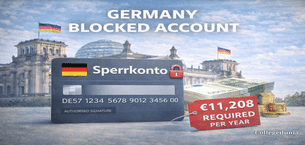
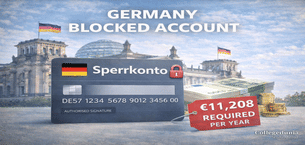
Once you receive your admission letter, open a German blocked account (Sperrkonto). Popular providers for Indian students include Expatrio, Fintiba and Deutsche Bank.
| Blocked Account Details | Information |
|---|---|
| Required Amount | €11,904 per year (Rs. 1.3L) |
| Monthly Release After Arrival | €992 per month (Rs. 1.08L) |
| Setup Fee | €50 to €100 depending on provider |
| Processing Time | 3 to 7 business days |
| Purpose | Mandatory proof of financial resources for student visa |
Step 5: Apply for the Student Visa
Apply at the German consulate or VFS Global center in your city. Book your appointment as early as possible as slots fill up 4 to 12 weeks in advance.
| Document | Details |
|---|---|
| Visa Application Form | Two signed copies |
| Valid Passport | Issued within last 10 years |
| Biometric Photos | 3 current identical photos |
| University Admission Letter | Original or certified copy |
| APS Certificate | Mandatory for Indian students |
| Blocked Account Proof | Statement showing €11,904 deposited |
| Health Insurance Proof | Valid German student health insurance |
| Academic Certificates | Class 10, 12, Bachelor's degree and transcripts |
| Visa Fee | €75 (Rs. 8,200) |
Processing time is typically 4 to 12 weeks. Apply at least 3 months before your program start date.
Read More: German Student Visa 2026: Requirements, Fee and Processing Time
Step 6: Arrive and Register
After arriving in Germany, complete the following within your first two weeks:
- Register your address at the local Einwohnermeldeamt (residents' registration office)
- Enroll at your university and pay the semester fee
- Activate your blocked account to start receiving monthly releases
- Enroll in German public health insurance (TK, AOK or Barmer are popular with students)
- Get your student ID which includes your public transport semester ticket
Scholarships to Cover Living Costs in Germany
Tuition is free but living costs are real. These scholarships cover monthly stipends, health insurance and travel for Indian students.
DAAD Scholarship (Most Accessible for Indians)
The DAAD (German Academic Exchange Service) is the world's largest international student funding organization. It offers over 31 scholarship programs accessible to Indian students. The monthly stipend of €934 (Rs. 1.02L) covers most of your living costs in Germany, making a German degree effectively free end to end for successful applicants.
| DAAD Scholarship Details | Information |
|---|---|
| Monthly Stipend | €934 (Rs. 1.02L) for Master's students |
| Additional Benefits | Travel allowance, health insurance, rent subsidy |
| Eligibility | Above-average academic record, relevant work experience |
| IIT-Specific Program | CGPA 8.5 or above in Engineering, Mathematics or Natural Sciences |
| Application Deadline | Varies by program (typically October to November for following year) |
| Where to Apply | daad.de/en |
Other Scholarships for Indian Students in Germany
| Scholarship | Monthly Benefit | Eligibility Focus |
|---|---|---|
| Deutschlandstipendium | €300 (Rs. 32,700) | Merit-based, applied through university |
| Heinrich Boll Foundation | €934 (Rs. 1.02L) | Political and social engagement focus |
| Konrad Adenauer Foundation | €850 (Rs. 92,600) | Academic excellence, leadership |
| Erasmus+ | Varies by program | Exchange students from partner universities |
Read More: Scholarships in Germany for Indian Students: DAAD, Erasmus and More
Language Requirements: Do You Need German to Study for Free?
No, for Master's programs. Yes, for most Bachelor's programs. And yes, for getting a job after graduation.
At the Master's level, over 1,800 programs are fully taught in English. You can complete your entire degree without speaking German. IELTS 6.0 to 6.5 is the standard requirement for English-taught programs.
At the Bachelor's level, over 90% of programs are taught in German. You will need DSH-2 or TestDaF Level 4 (equivalent to B2 to C1 German) to apply for most undergraduate programs.
For the job market after graduation, German language skills are a significant advantage. Most German engineering and manufacturing companies require B1 to B2 German for day-to-day work. International tech companies in Berlin and Frankfurt often hire in English.
The practical recommendation: start learning German at A1 level before you arrive. Aim for B1 by the end of your first year. This opens a much larger job market and qualifies you for faster permanent residency (21 months instead of 27 months via the EU Blue Card).
Common Mistakes Indian Students Make When Applying to Germany
Most application failures are avoidable. These are the five most common errors Indian students make.
- Applying to universities in Baden-Wurttemberg without checking the fee structure. Many students discover the €1,500 per semester fee only after receiving their admission letter. Always verify the fee structure on the official university website before applying.
- Starting the APS certificate process too late. The APS takes 3 to 6 weeks and is required before you can book a visa appointment. Students who apply in June for an October intake often miss the deadline entirely.
- Confusing the blocked account deposit with a fee. The €11,904 is your own money. It is not lost. It is released back to you monthly after you arrive. Many families panic at this number unnecessarily.
- Applying only to TU Munich because of its brand name. TUM now charges €4,000 to €6,000 per semester for non-EU Master's students. RWTH Aachen, TU Berlin and LMU Munich offer comparable engineering and STEM programs at zero tuition.
- Not learning any German before arrival. Students who arrive with zero German struggle to find Werkstudent jobs, navigate daily life and build professional networks. Even A2 German makes a significant difference in your first semester.
FAQs
Ques. Can Indian students really study in Germany for free?
Ans. Yes. Public universities in 15 out of 16 German states charge zero tuition fees to all students including Indian nationals. You pay only a semester administrative fee of €100 to €400 (Rs. 10,900 to Rs. 43,600) per semester. The exception is Baden-Wurttemberg which charges €1,500 per semester for non-EU students and TU Munich in Bavaria which charges €4,000 to €6,000 per semester for non-EU Master's students.
Ques. What is the total cost of studying in Germany for an Indian student?
Ans. At a free public university, the total annual cost is approximately Rs. 11.7L to Rs. 17.6L covering living expenses, health insurance, transport and semester fees. Tuition is zero. The blocked account deposit of €11,904 (Rs. 1.3L) is your own money returned to you monthly and is not an additional cost.
Ques. Is the APS certificate mandatory for Indian students applying to Germany?
Ans. Yes. The APS certificate is mandatory for most Indian students applying to German universities. It verifies the authenticity of your academic qualifications. The fee is Rs. 18,000 and processing takes 3 to 6 weeks. Apply for it before you apply to universities, as many institutions require it as part of the application. From Winter 2026/27, undergraduate applicants must have a minimum of 70% marks in Class 12.
Ques. Do I need to know German to study in Germany for free?
Ans. Not for Master's programs. Over 1,800 Master's programs in Germany are fully taught in English. IELTS 6.0 to 6.5 is the standard requirement. For Bachelor's programs, most are taught in German and require DSH-2 or TestDaF Level 4. For the job market after graduation, B1 to B2 German is strongly recommended.
Ques. What is the blocked account, and how much do I need?
Ans. The blocked account (Sperrkonto) is a mandatory German bank account where you deposit €11,904 (Rs. 1.3L) before applying for your student visa. This proves you have sufficient funds to support yourself in Germany. After you arrive, the money is released to you at €992 (Rs. 1.08L) per month. It is your own money and is fully returned to you over 12 months.
Ques. Which are the best free universities in Germany for Indian students?
Ans. The top free public universities for Indian students in 2026 include RWTH Aachen (QS 99, engineering and computer science), Freie Universitat Berlin (QS 98, social sciences and humanities), LMU Munich (QS 58, sciences and medicine), TU Berlin (QS 154, engineering and architecture) and Humboldt University Berlin (QS 120, natural sciences and humanities). All charge only a semester administrative fee of €150 to €350.
Ques. Is TU Munich free for Indian students?
Ans. No. TU Munich (TUM) now charges non-EU students €2,000 to €3,000 per semester for Bachelor's programs and €4,000 to €6,000 per semester for Master's programs following Bavaria's 2024 policy change. TUM is the only Bavarian public university currently charging fees. LMU Munich, also in Bavaria, remains free for all students.
Ques. What scholarships are available for Indian students in Germany?
Ans. The DAAD scholarship is the most accessible, offering €934 per month (Rs. 1.02L) plus travel allowance and health insurance for Master's students. Other options include the Deutschlandstipendium (€300 per month), Heinrich Boll Foundation scholarship (€934 per month) and Konrad Adenauer Foundation scholarship (€850 per month). University-specific scholarships are also available at most public universities.
Ques. How long does the German student visa take for Indian students?
Ans. The German student visa typically takes 4 to 12 weeks to process. Book your VFS Global appointment as early as possible as slots fill up 4 to 12 weeks in advance. Apply at least 3 months before your program start date. The visa fee is €75 (Rs. 8,200).
Ques. Can I work while studying in Germany for free?
Ans. Yes. Indian students on a German student visa can work 140 full days or 280 half-days per year. During semester breaks, you can work full-time. The Werkstudent system allows you to work up to 20 hours per week in a field-related role during the semester, earning €800 to €1,500 per month. This can significantly offset your living costs.
















Comments