



Education Journalist | Study Abroad Strategy Lead | Updated On - Mar 26, 2026
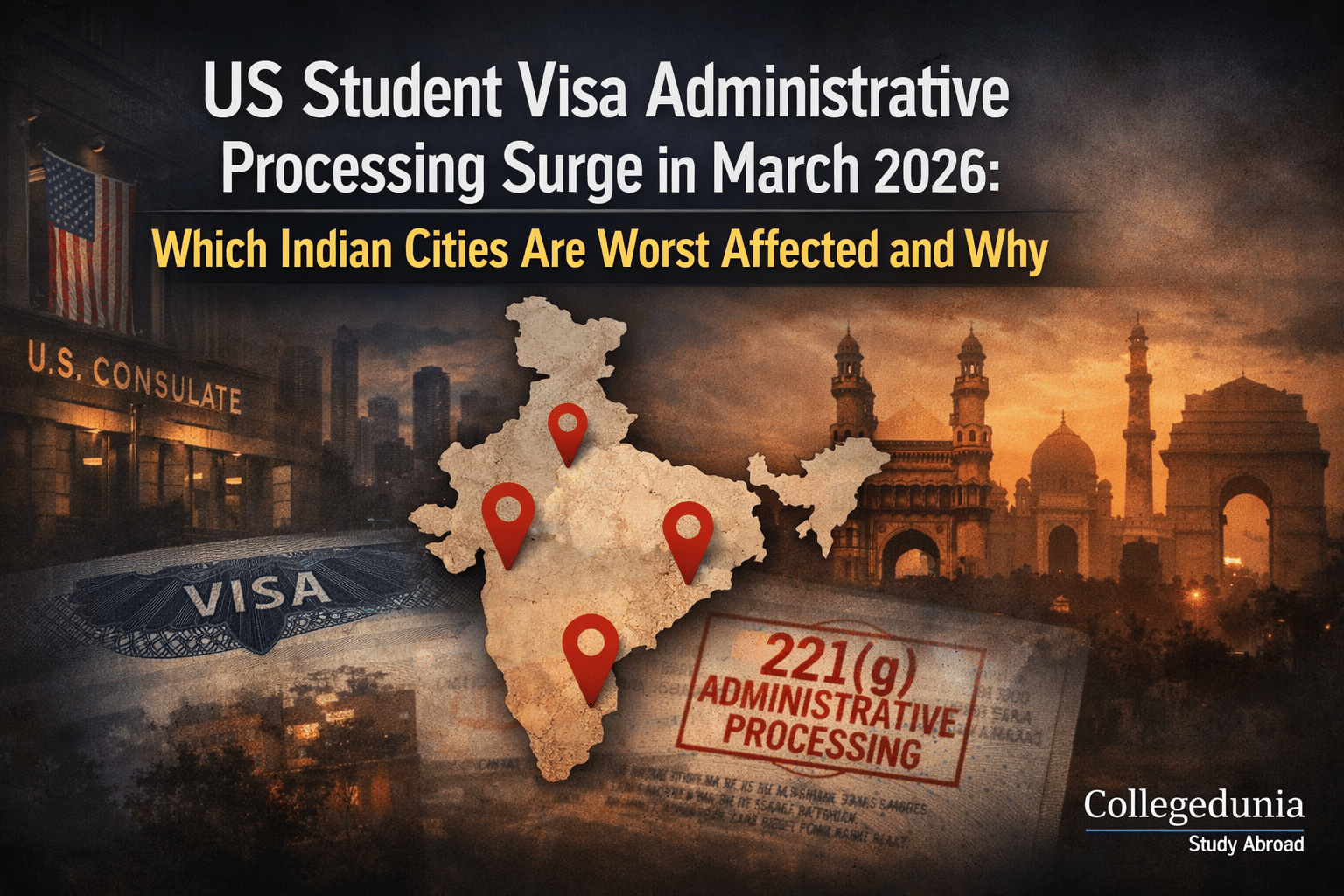
Indian students who cleared their F-1 visa interview in March 2026 are now facing a new obstacle: a sharp rise in administrative processing (AP) holds that can delay visa issuance by 60 days to 6 months — with no guaranteed resolution before August. Over 4.2 lakh Indian students are currently enrolled in US universities, and tens of thousands more are applying for Fall 2026 — making this surge in post-interview delays one of the most consequential visa developments of the current application cycle.
Administrative processing is not a visa refusal. It is a post-interview hold under Section 221(g) of the Immigration and Nationality Act, triggered when a consular officer determines that additional security checks are needed before a visa can be issued. The US State Department does not notify applicants when AP begins or ends — students must monitor their status independently via the CEAC portal.
Check Latest US News:
- H-1B FY2027: Why 1.43 Lakh Indian OPT Students Must Check USCIS Accounts by March 31
- US Proposes to End Duration of Status for F-1 Students: What 4.2 Lakh Indians Must Know
- US OPT Under Threat? New Bipartisan Bill Aims to Protect 1.4 Lakh Indian Students' Careers in US
What Changed: Mandatory Social Media Vetting From June 2025
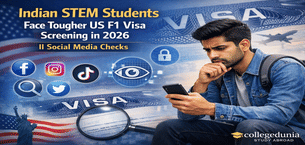
Before June 2025, social media screening was selective and applied primarily to applicants flagged for security concerns. That changed on June 18, 2025, when the US State Department announced expanded screening for all F, M, and J visa applicants — covering every student and exchange visitor category.
- Under the new policy, consular officers now conduct a comprehensive review of an applicant's online presence, including up to five years of activity across Facebook, X (formerly Twitter), Instagram, LinkedIn, and GitHub.
- All applicants are required to set their social media profiles to "public" before their interview.
- Any inconsistency between an applicant's online persona and their stated travel purpose — a post expressing political views, a research interest flagged on the Technology Alert List, or even a gap in employment history — can trigger a 221(g) administrative processing hold.
By January 2026, US consulates across India were already reporting a sharp jump in 221(g) notices, according to reporting by the Times of India and VisaHQ. Immigration lawyers describe the surge as "the new norm" — not a temporary spike.
Why Mumbai and Hyderabad Are Worst Affected?
Not all Indian consulates are equally exposed. The AP surge compounds differently depending on interview volume and applicant profile mix.
Mumbai and Hyderabad are the two most affected consulates for Indian F-1 applicants in March 2026, for two compounding reasons:
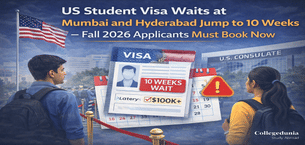
- Longest interview appointment queues. According to US State Department Global Visa Wait Times data (February 2026), both Mumbai and Hyderabad show 2.5-month waits for the next available F/M/J student visa interview slot — the longest of any Indian consulate. A student who books today in Mumbai or Hyderabad will not reach the interview stage until mid-June at the earliest.
- Highest concentration of STEM applicants. Mumbai and Hyderabad are the primary application hubs for Indian students pursuing MS and PhD programmes in Computer Science, AI, Electrical Engineering, and Biotechnology — fields that appear on the US Technology Alert List (TAL). TAL-flagged fields are among the most common triggers for extended AP, with security reviews in these cases running 4–6 months or longer.
The combined effect: a Mumbai-based STEM applicant who books their interview today could face a mid-June interview, followed by a 4–6 month AP hold — pushing their visa decision to October or November 2026, well past the August start date for Fall 2026.
F/M/J Visa Interview Wait Times — India (February 2026)
| Consulate | Next Available Slot | AP Risk Level for STEM |
|---|---|---|
| Mumbai | 2.5 months | Highest |
| Hyderabad | 2.5 months | Highest |
| Kolkata | 2 months | Moderate |
| Chennai | 1 month | Moderate |
| New Delhi | <0.5 months (~2 weeks) | Lower (lower STEM volume) |
Source: US State Department Global Visa Wait Times portal, February 2026. travel.state.gov
What Triggers Administrative Processing for Indian F-1 Applicants?
Immigration attorneys identify the following as the most common AP triggers for Indian student visa applicants in 2026:
- STEM fields on the Technology Alert List — AI, machine learning, nuclear physics, advanced materials, biotechnology. These fields require interagency security clearance before a visa can be issued.
- Social media inconsistencies — Posts, shares, or affiliations that appear inconsistent with the stated purpose of study, or that raise national security flags during the 5-year review window.
- Prior US visa refusals — Any previous 214(b) or 221(g) refusal creates a flag in the system and typically triggers deeper review.
- Gaps or inconsistencies in the DS-160 — Discrepancies between the DS-160 form and supporting documents, or between the DS-160 and social media profiles.
- Military or government service history — Applicants with prior service in defence or government agencies face additional scrutiny.
Critically, AP can be triggered even after a consular officer appears satisfied at the interview. The hold is applied at the system level and is not always communicated clearly to the applicant.
Impact on Fall 2026 Indian Applicants: The Timeline Problem
For Fall 2026, most US universities require students to arrive by mid-to-late August 2026. Working backward from that deadline, the AP surge creates a serious timing risk:
| Scenario | Interview Date | AP Duration | Likely Visa Decision |
|---|---|---|---|
| Books now, New Delhi | Early April | 60 days (standard) | Early June – Safe |
| Books now, Chennai | Late April | 60 days (standard) | Late June – Safe |
| Books now, Hyderabad/Mumbai | Mid-June | 60 days (standard) | Mid-August – Borderline |
| Books now, Hyderabad/Mumbai (STEM, TAL-flagged) | Mid-June | 4–6 months | Oct–Dec 2026 – Misses Fall |
The State Department's own guidance states that applicants should wait at least 180 days from the interview date before making inquiries about AP status — except in cases of genuine emergency. This means a student placed in AP after a June interview has no recourse until December.
What Indian Students Should Do Now?
If you have not yet booked your interview:
- Book immediately — every week of delay in March compounds the risk. New Delhi and Chennai currently offer the shortest queues and should be considered even if you are based in Mumbai or Hyderabad.
- You are not required to apply at your nearest consulate. If you can travel to New Delhi or Chennai, the shorter queue significantly reduces your AP exposure window.
If you are in a STEM field (CS, AI, Engineering, Biotech, Physics):
- Assume AP is a possibility, not an exception. Build a minimum 90-day buffer beyond your interview date when planning your travel and housing arrangements.
- Do not book non-refundable flights or accommodation until your visa is physically in hand.
- Speak to your university's international student office about deferred enrolment options in case AP extends beyond August.
Before your interview — social media audit:
- Set all social media profiles to public as required by the State Department.
- Review your last 5 years of posts on Facebook, X, Instagram, LinkedIn, and GitHub for anything that could be misread as inconsistent with your stated purpose of study.
- Do not delete posts — deletion can itself raise flags. Instead, consult an immigration attorney if you have concerns about specific content.
If you receive a 221(g) notice:
- Check your CEAC status at ceac.state.gov regularly.
- If the officer requested additional documents, submit them immediately and completely.
- If no documents were requested and the status shows "Administrative Processing," monitor for 60 days before seeking legal advice.
- After 180 days with no resolution, contact the consulate's emergency line or consult an immigration attorney about next steps.
The AP surge is not a temporary anomaly. The US State Department's June 2025 announcement made mandatory social media vetting a permanent feature of the F, M, and J visa process. Immigration lawyers and university advisors across the US are now treating extended AP timelines as a baseline planning assumption — not an edge case.
For Indian students, who make up 27% of all international students in the US and are disproportionately concentrated in STEM fields, this structural shift in the visa process requires a structural shift in how they plan their applications. The window to act safely for Fall 2026 is narrowing. Students who book their interviews in March or early April — and particularly those who choose New Delhi or Chennai over Mumbai or Hyderabad — are in a materially better position than those who wait.







Comments